Pharm'Up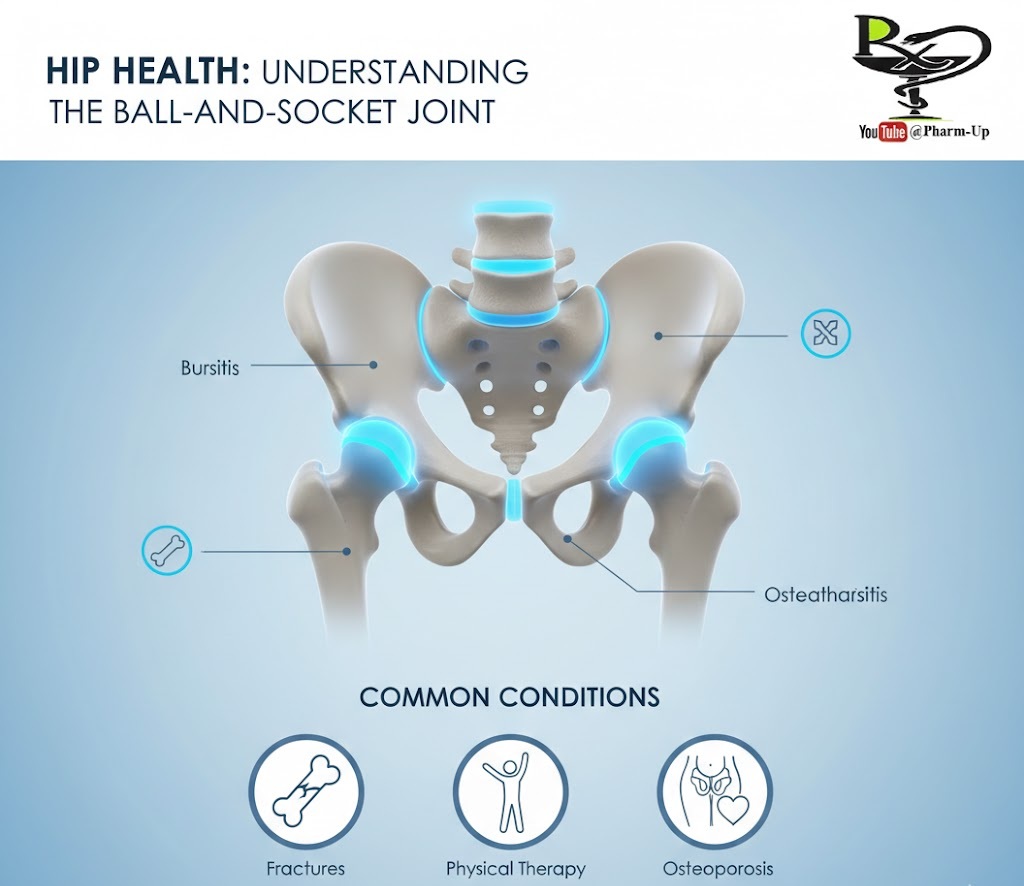
The hip is one of the body’s largest and most essential weight-bearing joints. As a ball-and-socket joint, it provides a unique combination of extreme stability and a wide range of motion, allowing you to walk, run, and climb. However, because it carries the weight of your entire upper body, it is susceptible to specific injuries and age-related conditions.
Common Hip Injuries and Conditions
While the hip is built to withstand great force, various factors—from high-impact sports to chronic disease—can cause dysfunction:
- Acute Injuries: Strains (muscle/tendon tears), dislocations, and fractures are often the result of sudden trauma or falls.
- Bursitis: Inflammation of the small, fluid-filled sacs (bursa) that cushion the hip joint, causing localized aching.
- Osteoarthritis: The gradual wear and tear of the protective cartilage, leading to stiffness and bone-on-bone friction.
- Osteoporosis: A systemic thinning of the bones that makes the hip particularly vulnerable to life-altering fractures, especially in older adults.
- Hip Dysplasia: A condition, often present from birth, where the socket doesn’t fully cover the ball portion of the upper thighbone, increasing the risk of dislocation.
[Image showing the anatomy of the hip joint highlighting the femur and pelvic socket]
Diagnostic and Treatment Paths
If you experience persistent groin pain, limping, or a “clicking” sensation in the hip, a healthcare provider will typically use physical exams and imaging (X-rays or MRIs) to find the cause.
| Treatment Type | Goal |
| Physical Therapy | Strengthens the glutes and core to stabilize the joint. |
| Medication | Anti-inflammatories to manage pain and swelling. |
| Lifestyle Changes | Weight management to reduce the load on the joint. |
| Surgery | Includes arthroscopy for minor repairs or Total Hip Replacement for severe arthritis. |
About the Author