Pharm'Up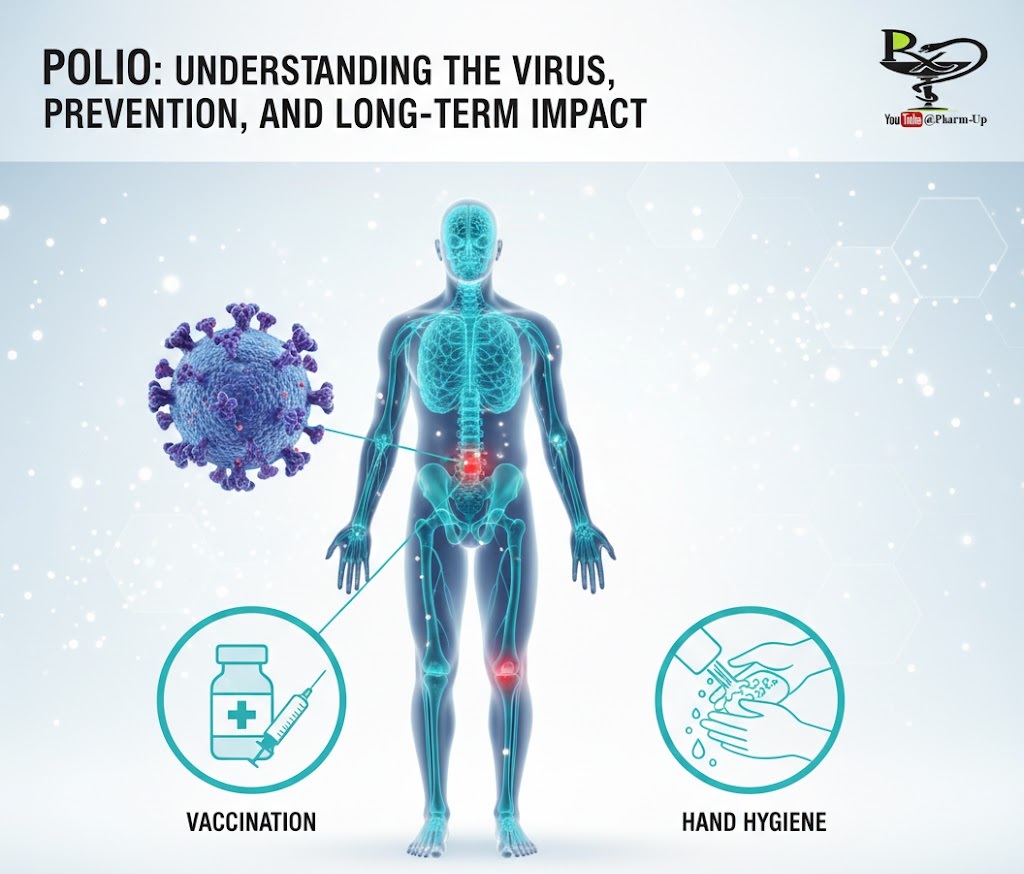
Polio (poliomyelitis) is a highly contagious disease caused by the poliovirus. While it has been largely eradicated in many parts of the world due to global vaccination efforts, it remains a serious health threat where vaccination rates are low. The virus primarily attacks the nervous system and, in severe cases, can lead to irreversible paralysis.
Transmission and Risk Factors
The poliovirus is incredibly resilient and spreads through person-to-person contact, often before a person even realizes they are ill.
- How it Spreads: Primarily through the “fecal-oral” route (contaminated food, water, or hands) and through respiratory droplets from sneezes or coughs.
- The Silent Spread: Most infected people show no symptoms but can still shed the virus in their stool for weeks, unknowingly infecting others.
- Who is at Risk: Children under age 5 are most vulnerable, but any unvaccinated individual—regardless of age—can contract the disease.
Symptoms: From Flu-Like to Life-Threatening
Approximately 75% of people infected will have no visible symptoms. For others, the disease follows different paths:
| Severity | Common Symptoms |
| Mild (Abortive) | Fever, sore throat, fatigue, and headache (lasting 2–5 days). |
| Non-Paralytic | Symptoms of meningitis (stiffness in the neck, back, or legs). |
| Paralytic | Permanent loss of muscle function; can be fatal if breathing muscles are involved. |
Post-Polio Syndrome (PPS)
A unique aspect of this disease is Post-Polio Syndrome, which appears 15 to 40 years after a person has recovered from the initial infection. It is characterized by new, progressive muscle weakness and extreme fatigue. PPS is not contagious but can significantly impact daily mobility and independence.
The Power of Prevention
Since there is no cure for polio, vaccination is the only effective defense.
- IPV (Inactivated Poliovirus Vaccine): An injectable vaccine used in the U.S. and many other countries.
- OPV (Oral Poliovirus Vaccine): Given as drops; used globally to help stop outbreaks.
- Hygiene Note: Poliovirus is resistant to alcohol-based hand sanitizers. Washing hands with soap and water is the only effective way to remove the virus from your skin.
About the Author