Pharm'Up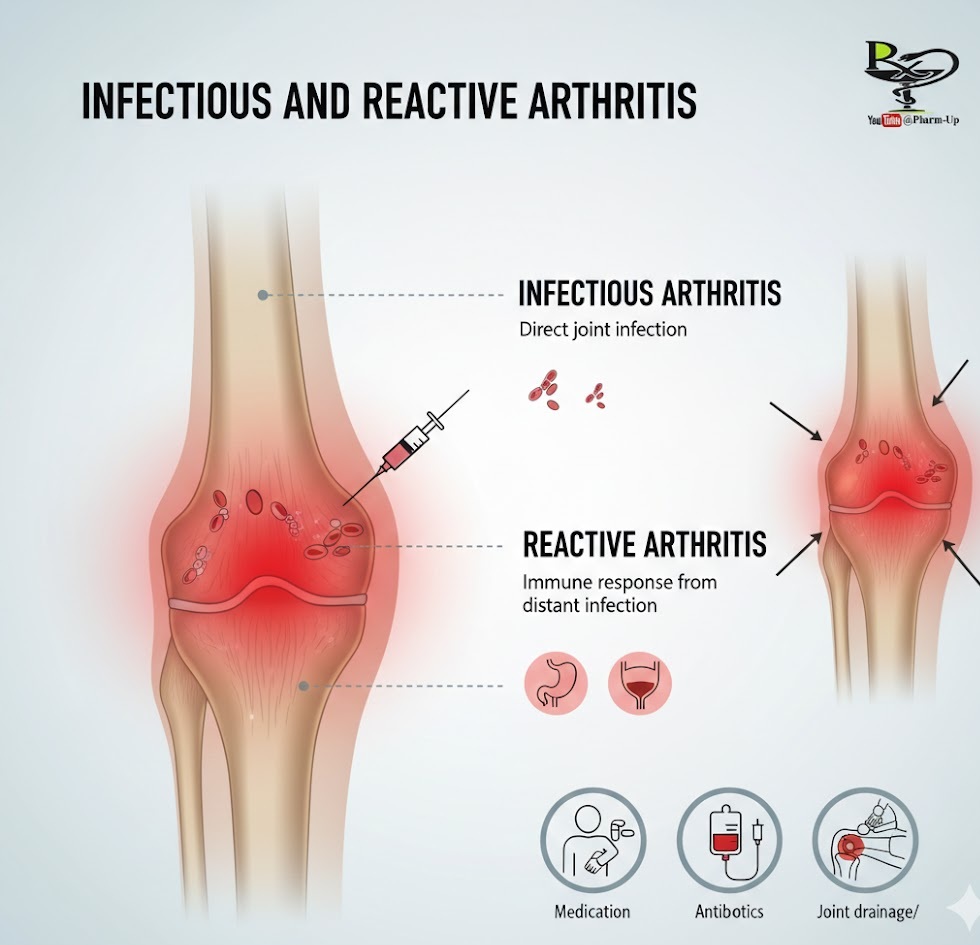
Arthritis is generally associated with wear-and-tear or autoimmune issues, but infectious arthritis (also called septic arthritis) occurs when a joint becomes the site of an active infection. This is a medical emergency because the infection can rapidly destroy cartilage and bone within the joint.
Understanding Infectious Arthritis
Infectious arthritis happens when bacteria, viruses, or fungi travel through the bloodstream from another part of the body to a joint. It can also occur if a joint is directly exposed to germs via an injury or surgery.
- Common Targets: Usually affects one large joint, such as the knee, hip, or shoulder.
- Emergency Symptoms: Intense, throbbing pain that comes on quickly, accompanied by a high fever, chills, and a joint that is hot to the touch and impossible to move.
The Unique Case of Reactive Arthritis
Reactive arthritis is a “misplaced” immune response. The joint itself is not infected, but it becomes inflamed as a reaction to an infection elsewhere in the body—typically the digestive tract or the urogenital system.
| Trigger Source | Common Causes |
| Urogenital | Infections in the bladder, urethra, or vagina; often linked to STIs. |
| Gastrointestinal | Bacteria from contaminated food (e.g., Salmonella or Campylobacter). |
| Common Joints | Most often affects the knees, ankles, or feet (specifically the toes). |
Diagnosis and Urgent Treatment
Because joint damage can happen within hours or days, rapid diagnosis is critical.
- Arthrocentesis: A doctor uses a needle to pull a sample of fluid from the joint to check for white blood cells and germs.
- Laboratory Tests: Blood and urine tests help identify the original source of the infection.
- Treatment: Antibiotics/Antifungals: Delivered intravenously or orally to kill the pathogen.
- Joint Drainage: Removing the infected fluid to reduce pressure and damage.
- Surgery: In severe cases, the joint may need to be surgically washed out (lavage).
About the Author