Pharm'Up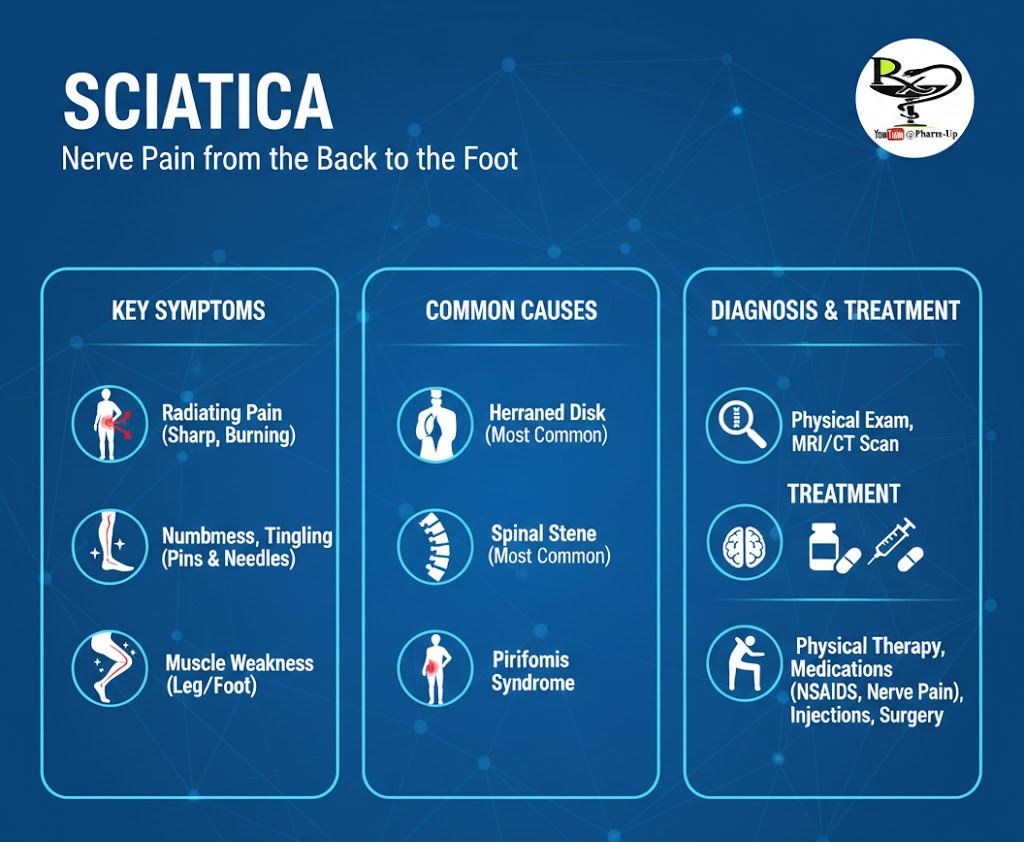
Sciatica is not a medical diagnosis in itself, but rather a symptom of an underlying condition affecting the sciatic nerve. This nerve is the thickest and longest nerve in the human body, originating in the lower back and traveling through the hips and buttocks down each leg.
How Sciatica Feels
While the sensations vary based on which part of the nerve is compressed, common symptoms include:
- Radiating Pain: A sharp, burning, or “electric shock” sensation that travels from the lower spine to the buttock and down the back of the leg.
- Numbness or Tingling: Often described as “pins and needles” in the calf or sole of the foot.
- Muscle Weakness: Difficulty moving the leg or foot, or a feeling of the leg “giving out.”
- Unilateral Effect: It almost always affects only one side of the body.
Common Causes of Nerve Compression
Sciatica occurs when the sciatic nerve becomes pinched or inflamed. The most frequent causes include:
- Herniated (Ruptured) Disk: The most common cause. A spinal disk bulges or leaks, putting direct pressure on the nerve root.
- Spinal Stenosis: A narrowing of the spinal canal (often due to aging or arthritis) that creates a cramped environment for the nerves.
- Spondylolisthesis: When one vertebra slips forward over another, pinching the nerve.
- Piriformis Syndrome: A small muscle in the buttock (the piriformis) becomes tight or spasms, compressing the nerve.
Diagnosis and Management
Diagnosis
To identify the source of the pain, healthcare providers use:
- Physical Exam: Specifically the “Straight Leg Raise” test to see if stretching the nerve triggers pain.
- Imaging: MRI or CT scans are used to see if a disk or bone spur is pressing against the nerve.
- EMG (Electromyography): To measure how well electrical signals are moving through the nerve.
Treatment Options
In many cases, sciatica resolves with conservative care within a few weeks.
- Physical Therapy: Specialized exercises to improve posture and strengthen the muscles supporting the back.
- Medications: Anti-inflammatories, muscle relaxants, or nerve pain medications (like Gabapentin).
- Epidural Steroid Injections: Injecting anti-inflammatory medicine directly around the nerve root for temporary relief.
- Surgery: Reserved for severe cases involving significant leg weakness or loss of bowel/bladder control (Microdiscectomy or Laminectomy).
About the Author