Pharm'Up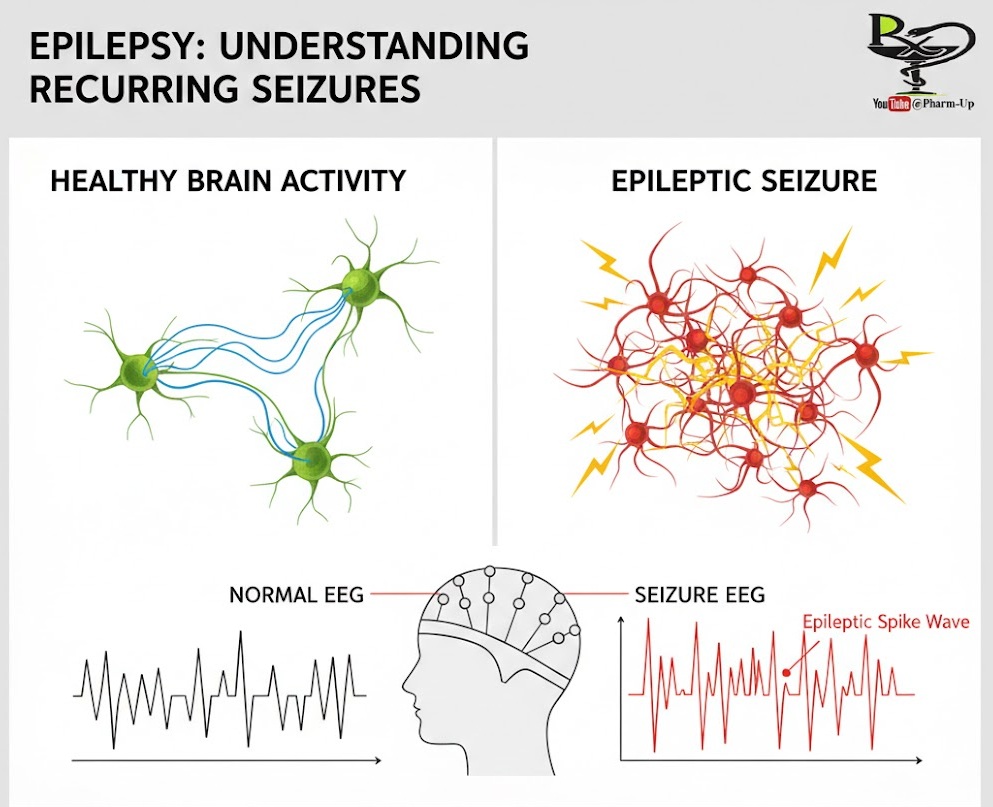
Epilepsy is a chronic neurological disorder characterized by recurrent, unprovoked seizures. A seizure is a sudden surge of electrical activity in the brain that occurs when neurons (nerve cells) send out disorganized or “misfired” signals.
What Happens During a Seizure?
Depending on which part of the brain is affected, a person experiencing a seizure might:
- Physical: Experience violent muscle spasms (convulsions) or sudden loss of muscle tone.
- Sensory: Have “auras,” smell things that aren’t there, or feel intense emotional shifts.
- Consciousness: Stare blankly into space, appear confused, or lose consciousness entirely.
Causes and Triggers
While the exact cause is unknown in about half of all cases (idiopathic epilepsy), common identified causes include:
- Structural: Brain injury (trauma), stroke, or tumors.
- Developmental: Abnormal brain development or genetic influences.
- Infectious: Conditions like meningitis or neurocysticercosis.
Diagnosis and Treatment
Early intervention is critical to prevent injury and long-term neurological impact.
How it’s Diagnosed:
- EEG (Electroencephalogram): The most common test, which records the electrical activity of the brain to find “spikes” or waves associated with epilepsy.
- Imaging: MRI or CT scans to look for physical abnormalities in the brain structure.
Management Options:
- Medications: Anti-epileptic drugs (AEDs) successfully control seizures for approximately 70% of patients.
- Specialized Diets: The Ketogenic Diet, a high-fat, low-carbohydrate regimen, is often used for children when medication fails.
- Medical Devices: Vagus Nerve Stimulators (VNS) are implanted devices that send regular pulses of electricity to the brain to calm irregular activity.
- Surgery: If seizures consistently originate in a single, small area of the brain that doesn’t control vital functions, that tissue may be removed.
Seizure First Aid
If you see someone having a seizure:
- Stay Calm: Time the seizure if possible.
- Keep them Safe: Move sharp objects away and cushion their head.
- Do NOT Restrain: Never hold the person down or put anything in their mouth.
- Turn them over: Once the shaking stops, gently turn them onto their side to keep their airway clear.
About the Author