Pharm'Up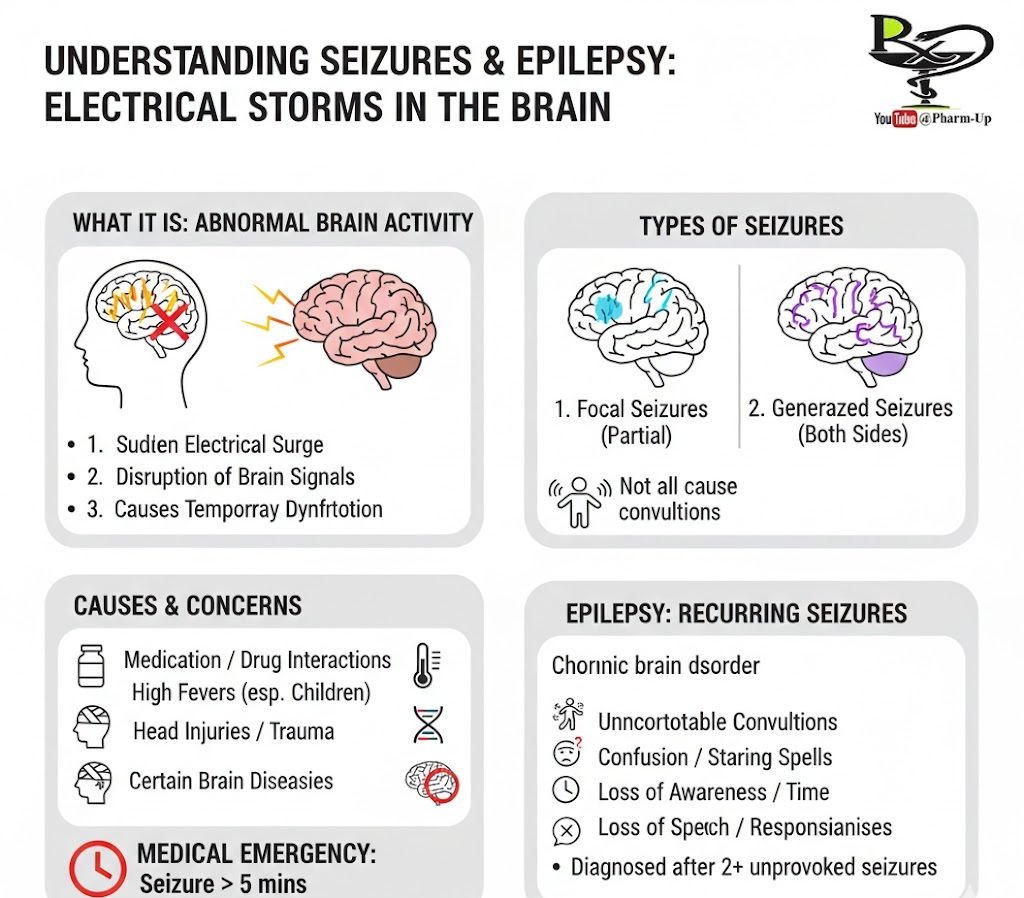
A seizure is a sudden, uncontrolled electrical disturbance in the brain. It can cause changes in your behavior, movements, or feelings, and in levels of consciousness. If you have two or more unprovoked seizures at least 24 hours apart, it is generally considered epilepsy.
How Seizures Happen
The brain’s nerve cells (neurons) create, send, and receive electrical impulses, which allow the brain’s nerve cells to communicate. Anything that disrupts these communication pathways can lead to a seizure.
- Sudden Surge: A seizure is essentially a temporary “electrical storm” where neurons fire in an abnormal, synchronized way.
- Temporary Dysfunction: This surge interferes with the brain’s normal function, leading to the various symptoms associated with different types of seizures.
Types of Seizures
Seizures are classified by where and how they begin in the brain:
- Focal (Partial) Seizures: These originate in just one area or network of cells on one side of the brain. They can occur with or without a loss of consciousness.
- Generalized Seizures: These involve all areas of the brain from the start. Examples include:
- Absence Seizures: Often seen in children; characterized by staring into space or subtle body movements.
- Tonic-Clonic Seizures: The most well-known type, involving a loss of consciousness, body stiffening, and shaking (convulsions).
Causes and Triggers
While many seizures have no identifiable cause, common factors include:
- Trauma: Head injuries or strokes.
- Infection: Diseases like meningitis or encephalitis.
- Developmental: Brain abnormalities present from birth or genetic factors.
- Environmental: High fevers (especially in young children), extreme sleep deprivation, or flashing lights (photosensitivity).
When is a Seizure an Emergency?
Most seizures are not medical emergencies and end on their own within 2 minutes. However, seek immediate medical help if:
- The seizure lasts longer than 5 minutes.
- The person does not wake up or regain consciousness between multiple seizures.
- A second seizure follows immediately.
- The person is pregnant, injured, or has diabetes.
About the Author