Pharm'Up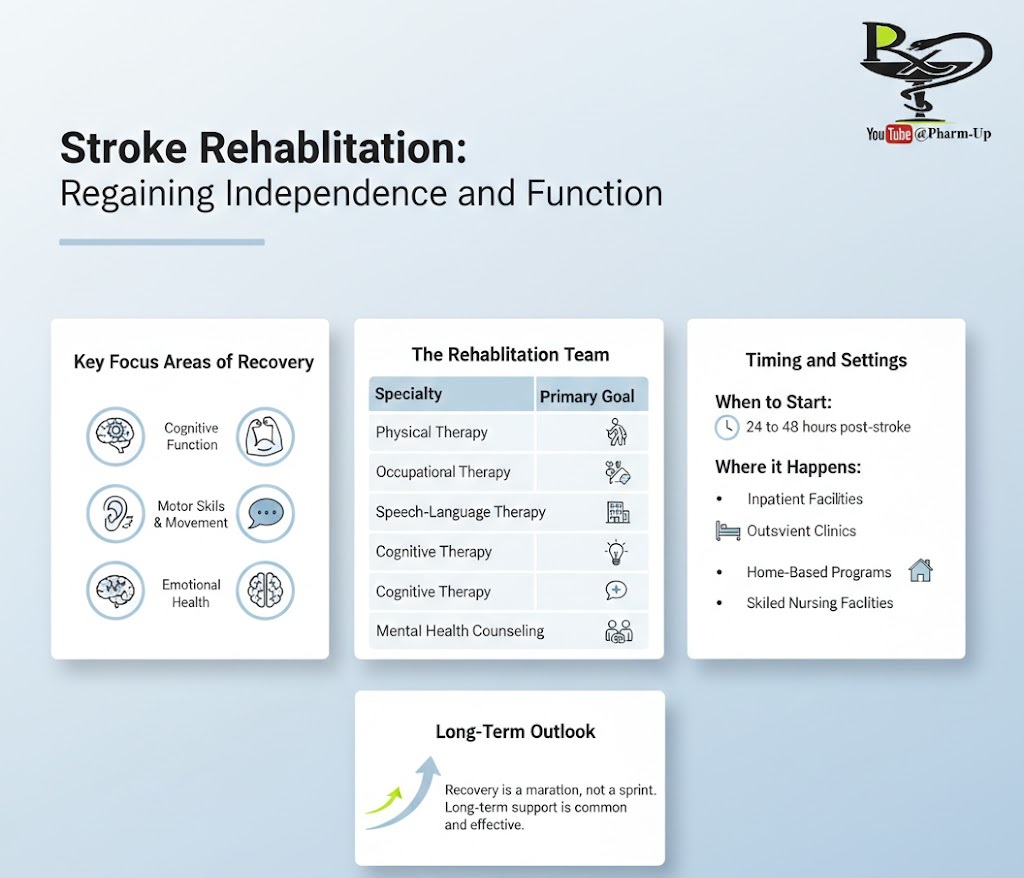
Stroke rehabilitation is a comprehensive, goal-oriented program designed to help survivors relearn skills lost due to brain damage. When a stroke occurs, the resulting loss of blood flow can damage areas responsible for movement, language, and cognition. Rehabilitation focuses on neural plasticity—the brain’s ability to rewire itself—to help patients become as independent as possible.
Key Focus Areas of Recovery
Because every stroke is unique, disabilities vary based on the location and severity of the brain injury. Common areas of focus include:
- Motor Skills & Movement: Addressing paralysis or lack of coordination.
- Sensory Perception: Managing pain, numbness, or loss of sensation.
- Communication: Treating aphasia (difficulty speaking or understanding language).
- Cognitive Function: Improving memory, decision-making, and planning.
- Emotional Health: Helping survivors cope with depression, anxiety, or emotional shifts.
The Rehabilitation Team
A successful recovery often involves a multidisciplinary team of specialists:
| Specialty | Primary Goal |
| Physical Therapy | Rebuilding strength, balance, and the ability to walk. |
| Occupational Therapy | Mastering daily tasks like dressing, bathing, and eating. |
| Speech-Language Therapy | Recovering communication and safe swallowing techniques. |
| Cognitive Therapy | Restoring mental processing and memory skills. |
| Mental Health Counseling | Providing emotional support and behavioral strategies. |
Timing and Settings
When to Start: Research shows that the sooner rehab begins, the better the outcome. Most programs start within 24 to 48 hours after the patient is stabilized in the hospital.
Where it Happens:
- Inpatient Facilities: Intensive programs (3+ hours of therapy daily) for those with significant needs.
- Outpatient Clinics: For those who can live at home but need regular specialist visits.
- Home-Based Programs: Therapy provided in the patient’s own environment.
- Skilled Nursing Facilities: For those requiring longer-term, lower-intensity care.
Long-Term Outlook
Recovery is a marathon, not a sprint. While some survivors regain skills quickly, many require long-term support. Success is largely driven by the intensity of the program, the support of family, and the patient’s personal motivation to progress
About the Author