Pharm'Up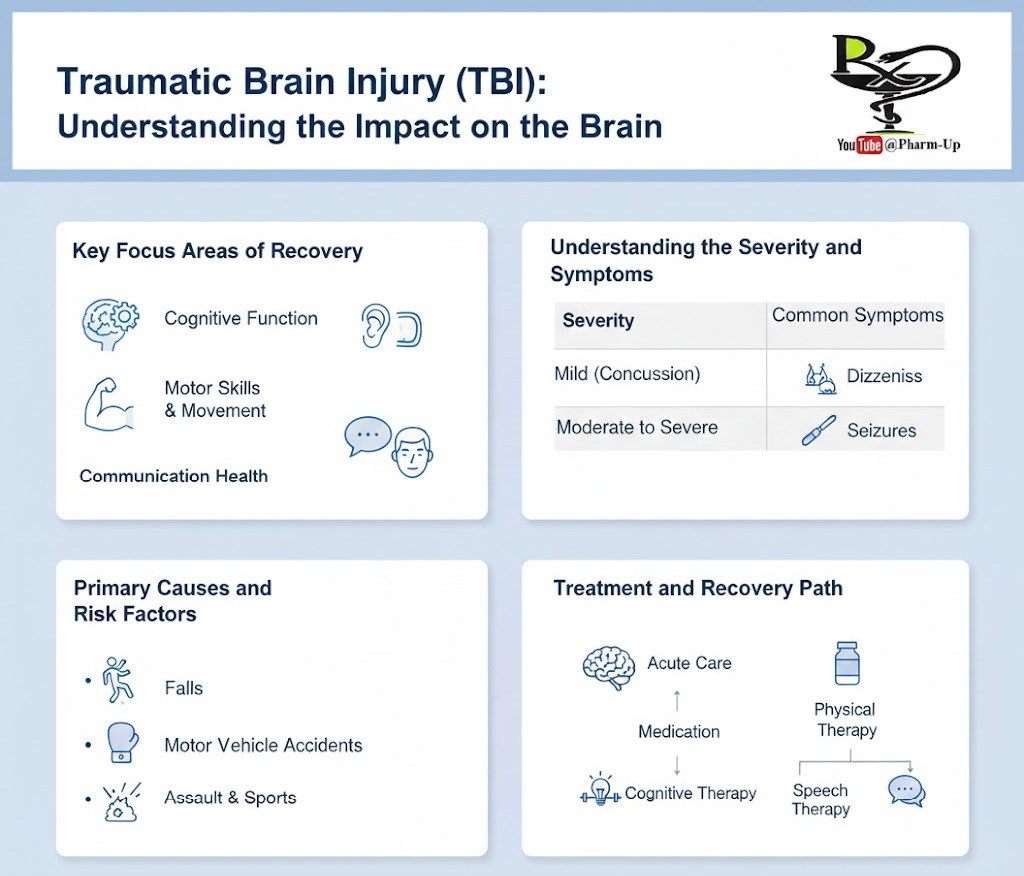
A Traumatic Brain Injury (TBI) is a sudden disruption of normal brain function caused by an external physical force. These injuries are categorized into two primary types based on how the injury occurs:
- Closed Head Injury: Resulting from a blow, bump, or jolt that causes the brain to move rapidly back and forth inside the skull.
- Penetrating Injury: Resulting from an object (like a bullet or bone fragment) piercing the skull and entering the brain tissue.
Understanding the Severity and Symptoms
The clinical presentation of a TBI varies significantly depending on whether the injury is mild, moderate, or severe.
| Severity | Common Symptoms |
| Mild (Concussion) | Brief loss of consciousness, confusion, headache, dizziness, ringing in ears, and fatigue. |
| Moderate to Severe | Persistent headache, repeated vomiting, seizures, inability to awaken, dilated pupils, slurred speech, and loss of coordination. |
Primary Causes and Risk Factors
Causes often differ by age group and environment:
- Falls: The leading cause for adults over 65 and young children.
- Motor Vehicle Accidents: The most common cause for teens and young adults.
- Assault & Sports: High-impact activities and physical violence remain major contributors.
- Blast Injuries: A common cause of TBI in military personnel due to pressure waves from explosions.
Treatment and Recovery Path
Treatment is highly individualized and focuses on preventing secondary brain damage (damage that occurs after the initial impact due to swelling or bleeding).
- Acute Care: For severe cases, surgeons may remove hematomas (blood clots) or perform a craniectomy to relieve intracranial pressure.
- Medication: Doctors use a range of drugs including anticonvulsants (for seizures), stimulants (for alertness), and antidepressants.
- Rehabilitation: This is the cornerstone of long-term recovery, involving:
- Physical/Occupational Therapy: To regain motor skills and daily independence.
- Cognitive Therapy: To address issues with memory, planning, and judgment.
- Speech Therapy: Essential for communication and swallowing disorders.
Prevention Strategies
- Safety Gear: Always wear seatbelts and helmets tailored to the specific sport or activity.
- Environmental Safety: Install grab bars and remove trip hazards (rugs, cords) to prevent falls, especially for seniors.
- Responsible Habits: Never drive under the influence of alcohol or drugs.
About the Author


 Pharm'Up