Pharm'Up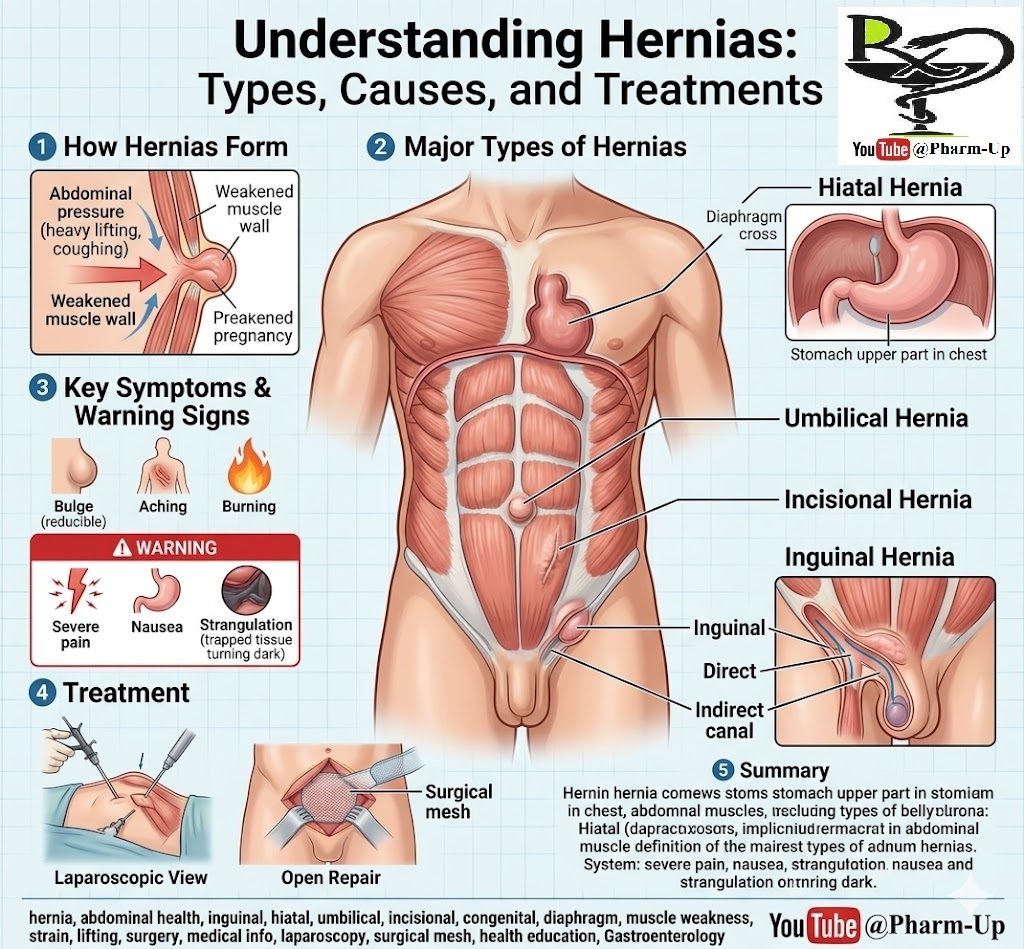
A hernia occurs when an internal organ, or the fatty tissue surrounding it, protrudes through a weak spot or tear in the surrounding muscle or connective tissue (fascia). While they most commonly manifest in the abdominal wall, they can occur in several regions of the body.
Common Types of Hernias
Hernias are categorized primarily by their location and how they develop.
- Inguinal Hernia: The most prevalent type, occurring when the intestines push through a weak spot in the inguinal canal in the groin. These are significantly more common in men.
- Umbilical Hernia: Occurs when muscle fibers around the navel (belly button) do not close completely. While common in newborns, they can also affect adults due to abdominal strain.
- Incisional Hernia: These develop at the site of a previous surgical scar where the abdominal wall has been weakened by the incision.
- Hiatal Hernia: This involves the upper stomach pushing upward through the hiatus (a small opening in the diaphragm). This type is unique because it often causes internal symptoms like acid reflux rather than a visible external bulge.
- Congenital Diaphragmatic Hernia (CDH): A birth defect where the diaphragm does not form fully, allowing abdominal organs to move into the chest cavity. This is a critical condition requiring immediate surgical intervention after birth.
Causes and Risk Factors
A hernia is typically the result of a “perfect storm” between pressure and a weakness in the muscle.
| Factor | Description |
|---|---|
| Muscle Weakness | Can be congenital (present at birth), caused by aging, or result from chronic coughing or previous surgery. |
| Physical Strain | Heavy lifting, sudden twists, or persistent straining during bowel movements or urination. |
| Life Events | Pregnancy increases abdominal pressure, as does obesity or sudden weight gain. |
| Chronic Conditions | Persistent sneezing/coughing (e.g., from smoking or allergies) can gradually wear down the muscle wall. |
Export to Sheets
Complications: When is it an Emergency?
Most hernias do not disappear on their own and generally require surgical repair. However, certain complications are life-threatening:
- Incarceration: The protruding tissue becomes “trapped” and cannot be pushed back into the abdomen.
- Strangulation: If the trapped tissue is pinched so tightly that blood flow is cut off, the tissue can die (necrosis). This requires emergency surgery.
Warning Signs: If a hernia bulge becomes firm, dark-colored, or is accompanied by severe pain, nausea, and vomiting, seek immediate medical attention.
Treatment and Recovery
Surgery is the standard of care for symptomatic hernias.
- Laparoscopic Surgery: A minimally invasive approach using small incisions and a camera, usually leading to faster recovery.
- Open Surgery: A traditional incision is made to push the tissue back and reinforce the area, often using a surgical mesh to prevent recurrence.
About the Author