Pharm'Up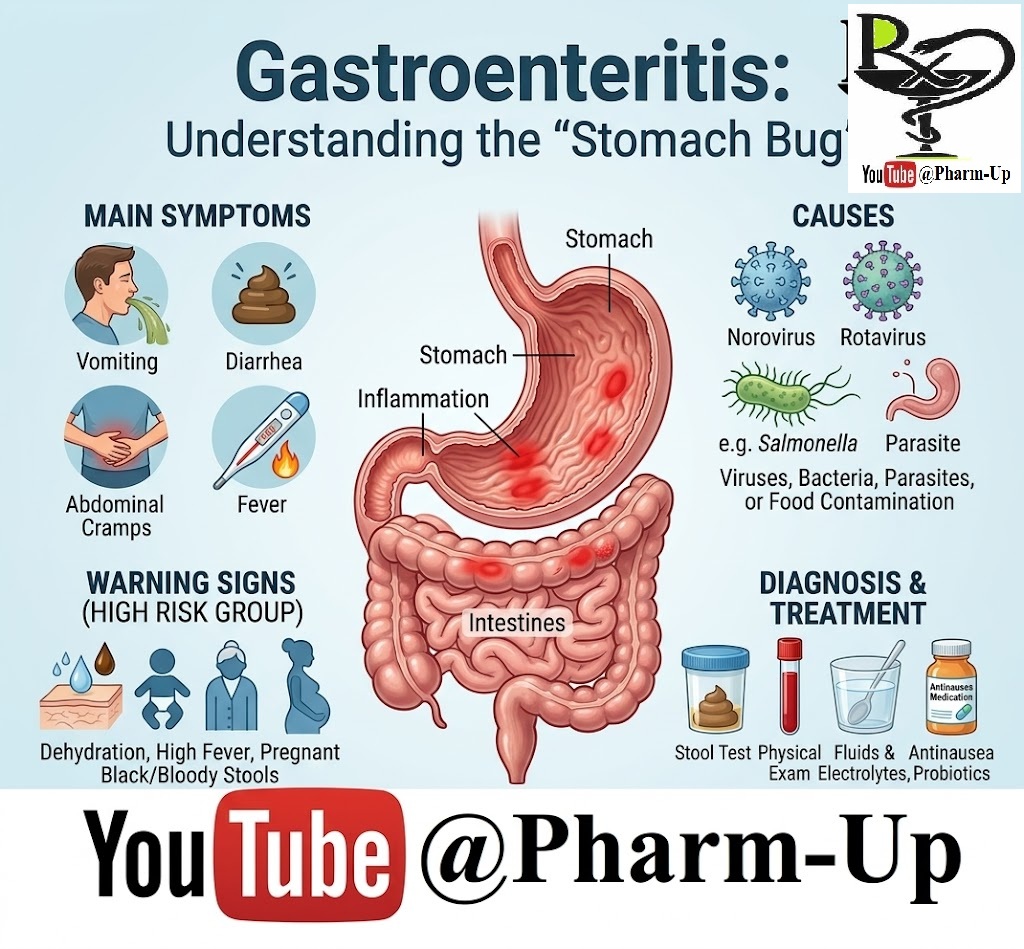
Gastroenteritis is the inflammation of the stomach and intestinal lining, primarily characterized by vomiting and diarrhea. While often referred to as the “stomach flu,” it is medically unrelated to the actual influenza virus, which is a respiratory illness.
Common Causes
Gastroenteritis can be triggered by several different factors:
- Viruses: The most common cause, including Norovirus and Rotavirus.
- Bacteria & Parasites: Often introduced through contaminated food or water (commonly known as Food Poisoning).
- Chemicals & Medications: Reactions to certain drugs or toxins.
- Transmission: Highly contagious; germs spread through contaminated surfaces, food, or direct contact with an infected person.
Key Symptoms and Warning Signs
Most cases are mild, but it is vital to monitor for Dehydration, especially in high-risk groups like infants, older adults, and pregnant women.
Common Symptoms:
- Nausea and vomiting
- Watery diarrhea
- Abdominal cramps and pain
- Occasional fever
Seek Medical Attention If (Adults):
- Symptoms of dehydration (extreme thirst, dark urine, dry mouth).
- Diarrhea lasting more than 2 days or 6+ loose stools in 24 hours.
- Black, tarry, or bloody stools.
- Severe abdominal or rectal pain.
Diagnosis and Treatment
Diagnosis: Typically involves a physical exam and symptom review. In persistent cases, a stool test may be ordered to identify the specific pathogen.
Treatment:
- Rehydration: The priority is replacing lost fluids and electrolytes.
- Rest: Allowing the digestive system to recover.
- Medication: Probiotics may shorten diarrhea duration. Antibiotics or antiparasitics are only used if a specific bacterial or parasitic cause is identified.
Prevention Tips
- Hand Hygiene: Frequent and thorough hand washing is the most effective defense.
- Food Safety: Proper cooking and cleaning of food preparation surfaces.
- Vaccination: Rotavirus vaccines are available for infants to prevent severe viral cases.
About the Author