Pharm'Up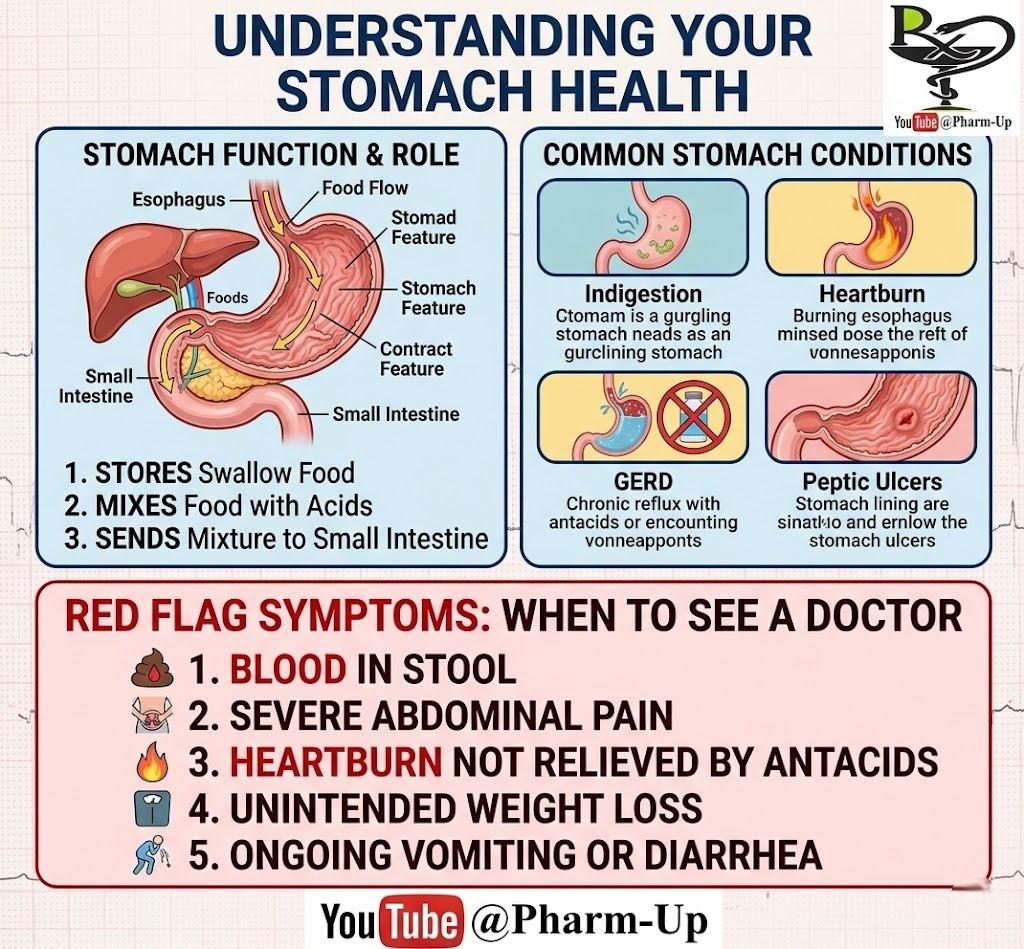
The stomach serves as a critical bridge between the esophagus and the small intestine, acting as the primary site where protein digestion begins. To keep your digestive system running smoothly, the stomach performs three essential roles: storing swallowed food, mixing it with potent gastric acids, and transporting the resulting mixture into the small intestine for further nutrient absorption.
Common Stomach Concerns
Almost everyone experiences digestive discomfort at some point. Most minor issues can be managed with simple adjustments:
- Indigestion & Heartburn: Often triggered by lifestyle factors, these can frequently be managed by eating more slowly, avoiding fatty or spicy foods, and using over-the-counter (OTC) medications.
- Chronic Conditions: Issues like GERD (Gastroesophageal Reflux Disease) and Peptic Ulcers are more serious and require professional medical diagnosis and long-term management plans.
When to Seek Medical Advice
While occasional discomfort is normal, certain “red flag” symptoms indicate it is time to consult a healthcare provider:
- Bowel Changes: Noticing blood during a bowel movement.
- Persistent Pain: Severe or worsening abdominal pain.
- Refractory Heartburn: Heartburn that does not improve even after taking antacids.
- Systemic Signs: Unintended weight loss or continuous vomiting and diarrhea.
Tips for Better Digestion
- Mindful Eating: Chew thoroughly and reduce your eating speed to aid the stomach’s mixing process.
- Dietary Awareness: Identify and limit “trigger” foods that cause acid reflux or bloating.
- Regular Check-ups: Address recurring symptoms early to prevent complications like ulcers.
About the Author