Pharm'Up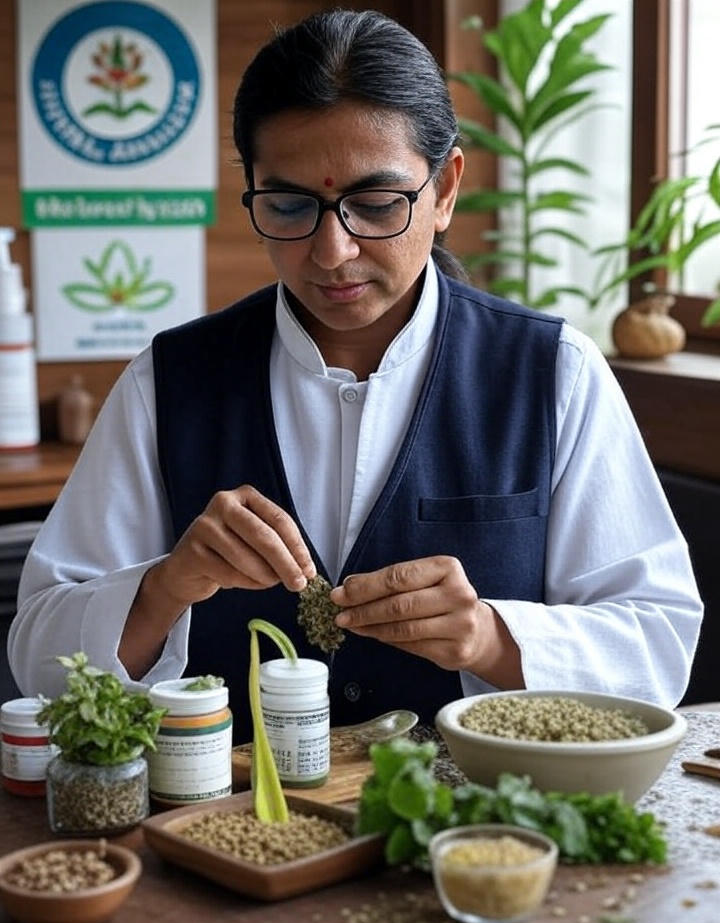
The Ministry of Ayush is ramping up efforts to promote and regulate AYUSH systems—Ayurveda, Yoga & Naturopathy, Unani, Siddha, Sowa-Rigpa, and Homoeopathy—across India through a robust strategy backed by centrally sponsored and central sector schemes. Under the National Ayush Mission (NAM), the government has disbursed ₹5670.82 crore to States and Union Territories to enhance AYUSH infrastructure, including upgrading Ayushman Arogya Mandirs, co-locating services in Primary Health Centres (PHCs), Community Health Centres (CHCs), and District Hospitals (DHs), and establishing new AYUSH colleges and hospitals. The initiative also supports essential medicine supply and upgrades to educational institutions.
Public awareness is being elevated through the Information, Education and Communication (IEC) scheme, which includes Arogya Fairs, Yoga festivals, Ayurveda Parvs, and nationwide multimedia campaigns. On the global stage, the Central Sector Scheme for International Cooperation has secured 25 government-to-government MoUs, 15 AYUSH Chair MoUs, and 52 institutional MoUs to boost AYUSH’s international presence.
Regulation is fortified under the Drugs & Cosmetics Act, 1940, with the Pharmacopoeia Commission for Indian Medicine & Homoeopathy (PCIM&H) standardizing AYUSH drugs. Quality is ensured by 108 private and 34 government-run Drug Testing Laboratories, supported by the Ayush Oushadhi Gunvatta Evam Uttpadan Samvardhan Yojana (AOGUSY), which allocates ₹122 crore over five years to improve pharmacies and labs. The AYUSH vertical within the Central Drugs Standard Control Organization (CDSCO) issues WHO Certificates of Pharmaceutical Product (WHO-CoPP), while the Quality Council of India (QCI) certifies AYUSH products with Standard and Premium Marks.
These measures reflect India’s commitment to integrating traditional medicine into the national healthcare system while ensuring safety and global competitiveness.
About the Author