Cilta-Cel Shows Promise, but Experts Caution Against Calling it a Cure for Multiple Myeloma
 Pharm'Up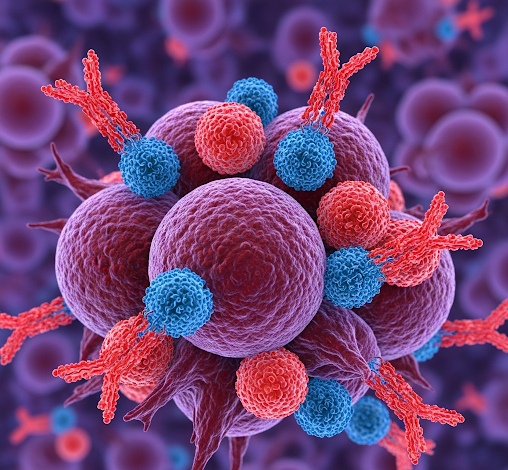
The recent presentation of 5-year follow-up data from the CARTITUDE-1 trial for ciltacabtagene autoleucel (cilta-cel) has sparked a conversation in the oncology community about the possibility of a “cure” for relapsed/refractory multiple myeloma (R/R MM). While the results show unprecedented durable remissions, experts are urging caution in using the term “cure” and instead focusing on the therapy’s potential to redefine long-term remission.
Cilta-Cel and the CARTITUDE-1 Trial
Cilta-cel is an innovative chimeric antigen receptor (CAR) T-cell therapy. This advanced immunotherapy works by taking a patient’s own T cells, genetically modifying them in a lab to recognize and attack a specific protein called B-cell maturation antigen (BCMA), which is highly overexpressed on multiple myeloma cells. These modified T cells are then infused back into the patient, where they multiply and actively seek out and destroy cancer cells.
The CARTITUDE-1 trial was a pivotal phase 1b/2 study designed to evaluate the safety and efficacy of a single infusion of cilta-cel in patients with heavily pretreated R/R MM. The patients in this trial had received a median of six prior lines of therapy and were triple-class exposed, meaning their disease was resistant to three major classes of multiple myeloma drugs.
Groundbreaking Results and the “Cure” Controversy
The 5-year data from the trial, presented at the European Hematology Association (EHA) 2025 Congress, showcased remarkable results:
- Overall Response Rate (ORR): A staggering 98% of patients responded to the treatment, with nearly all achieving a stringent complete response (sCR).
- Progression-Free Survival (PFS): A significant finding was that 33% of patients remained progression-free at 5 years after a single infusion, without the need for any additional maintenance therapy.
- Minimal Residual Disease (MRD): Favorable MRD-negativity results further highlighted the depth of the response, with all evaluated patients achieving negative results at the 5-year mark.
Despite this success, experts like Victoria Nachar and Gabe Hinojosa expressed hesitancy about using the word “cure.” Historically, the 5-year mark is often considered a key milestone for potential cure in hematologic malignancies, but multiple myeloma is known for late relapses, sometimes occurring 10 to 15 years later. The consensus among professionals is that while these data are highly promising and “changing the game,” a longer follow-up period (e.g., 10-year data) is needed to confidently declare cilta-cel as a curative agent.
What’s Next?
The results from CARTITUDE-1 underscore the potential of cilta-cel to provide deep, durable responses in a population with limited treatment options. The therapy’s approval has already been expanded to include patients with at least one prior line of therapy, suggesting a move toward its use earlier in the treatment landscape. Further research will focus on:
- Longer-term follow-up from the CARTITUDE-1 trial to understand the true durability of the responses.
- Evaluating the efficacy and safety of cilta-cel in earlier lines of therapy through ongoing trials.
- Understanding the optimal timing for administering the therapy and managing its acute and long-term toxicities.
The coming years will be crucial in determining whether cilta-cel and other CAR T-cell therapies can establish a new paradigm in multiple myeloma care, moving the conversation from “prolonged remission” to a more hopeful discussion of a “cure.”
About the Author