Pharm'Up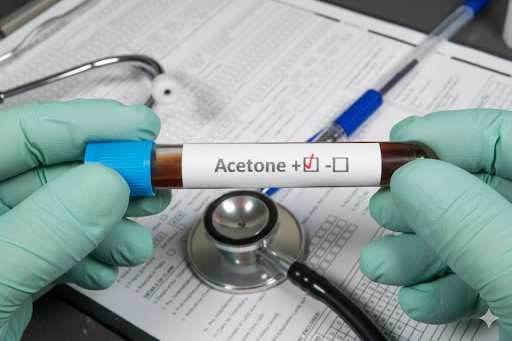
A research team at Penn State has developed a new, high-performance room-temperature acetone gas sensor that could revolutionize how diabetes is diagnosed. Published in the Chemical Engineering Journal, the study details a sensor that can quickly detect acetone levels in a person’s breath, offering a simple and non-invasive alternative to traditional blood tests.
Why Acetone is a Diabetes Biomarker
Diabetes is a global health crisis, with hundreds of millions of people currently undiagnosed. Early detection is crucial for managing the disease and preventing its devastating complications. When a person with diabetes or prediabetes doesn’t have enough insulin to process glucose for energy, their body starts breaking down fat for fuel. This process produces ketones, including acetone, which can be detected in the breath. Acetone levels above 1.8 parts per million (ppm) are a key indicator of diabetes.
How the Sensor Works
Unlike existing methods for detecting acetone, which often require bulky and expensive equipment, this new sensor is practical and portable. It’s made from a composite of zinc oxide and a porous laser-induced graphene (LIG) foam.
- High Sensitivity: The combination of these materials creates a unique junction that is highly sensitive to acetone, with an incredibly low detection limit of 4 parts per billion (ppb).
- Fast and Efficient: The sensor has a rapid response and recovery time, providing results within minutes.
- Resistant to Humidity: The device includes a molecular sieve that makes it resistant to humidity, ensuring accurate readings from exhaled breath.
Currently, the sensor requires a breath sample to be collected in a bag, but the researchers plan to refine the design so it can be used more conveniently, such as under the nose or inside a face mask. The lead researcher, Huanyu “Larry” Cheng, believes this technology could also be used to monitor how acetone levels fluctuate with diet and exercise, opening up exciting new possibilities for personal health management beyond just diagnosis.
About the Author