Pharm'Up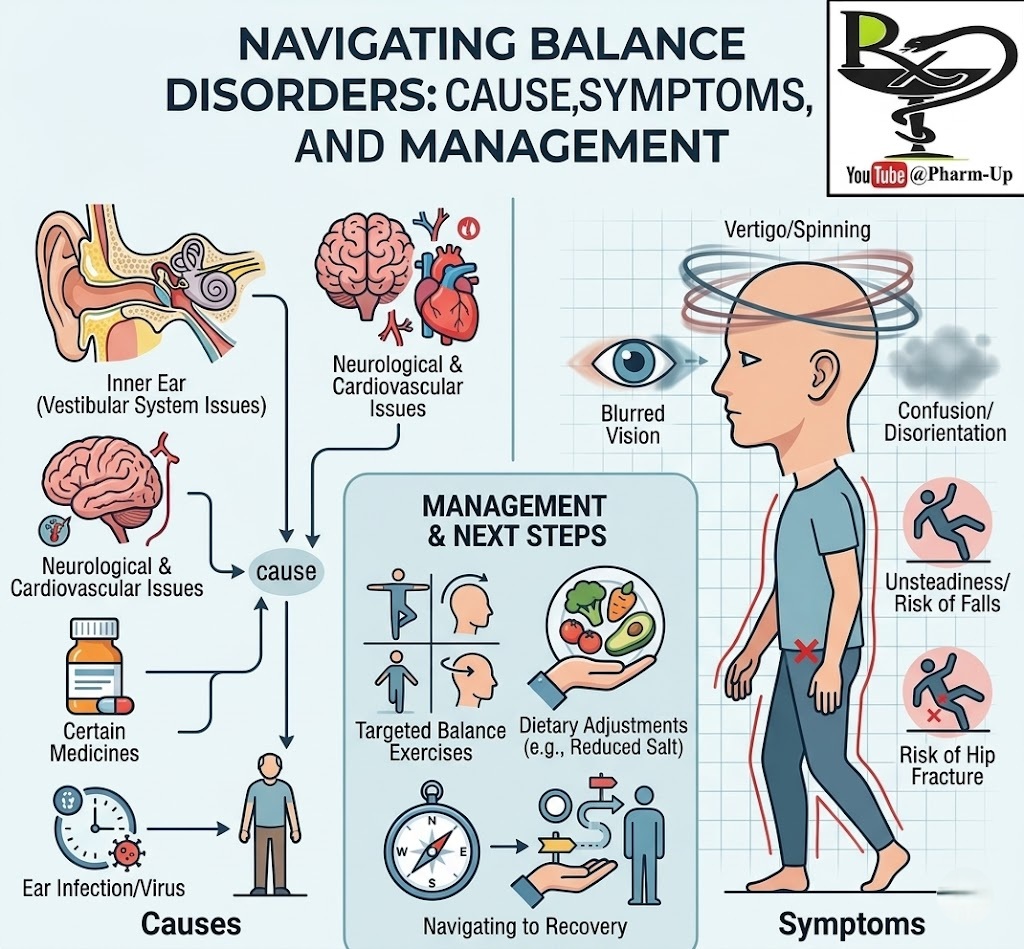
Feeling dizzy, lightheaded, or experiencing the sensation that the room is spinning (vertigo) can be more than just a fleeting moment of discomfort. When these sensations occur frequently, they often indicate an underlying balance problem, which can significantly increase the risk of falls and serious injuries, such as hip fractures.
Recognizing the Symptoms
Balance disorders often manifest through a variety of physical and cognitive signals:
- Instability: Feeling unsteady on your feet or as if you might tip over.
- Sensory Changes: Blurred vision and a sense of disorientation.
- Cognitive Impact: Feelings of confusion or being “foggy.”
Potential Causes and Triggers
The equilibrium of the body is a complex system involving the ears, brain, and heart. Common causes for disruption include:
- Inner Ear Issues: The vestibular system in the ear is crucial for maintaining balance.
- Systemic Problems: Issues with blood circulation, heart health, or neurological conditions (including the brain).
- External Factors: Aging, viral or bacterial infections, head injuries, and side effects from certain medications.
Diagnosis and Professional Evaluation
Because balance issues can be symptoms of serious conditions like a stroke or ear infection, seeking medical advice is essential. A healthcare provider may recommend:
- Hearing & Blood Tests: To check for infections or inner ear irregularities.
- Imaging Studies: MRI or CT scans of the head and brain.
- Specialized Movement Tests: Observing eye movements and how the body reacts to specific physical shifts.
Treatment and Recovery Path
Recovery often depends on addressing the root cause of the disorder. Common strategies include:
- Targeted Exercises: Vestibular rehabilitation to retrain the brain and body.
- Lifestyle Adjustments: Specific dietary changes (such as reducing salt) and staying hydrated.
- Medical Intervention: Medications to manage dizziness or treating the primary illness causing the imbalance.
About the Author