Pharm'Up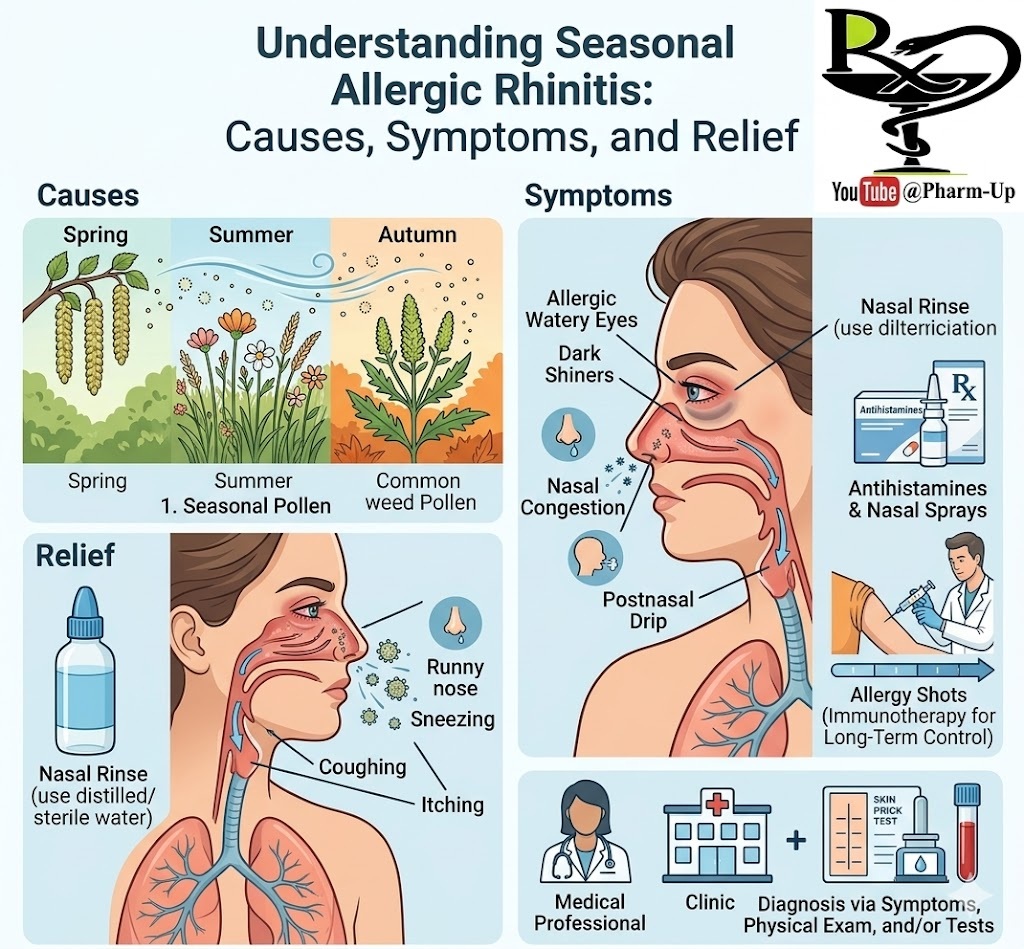
As the seasons transition through spring, summer, and autumn, trees, grasses, and weeds disperse fine pollen grains into the atmosphere. When these particles enter the respiratory system via the nose or throat, they can trigger Hay Fever, an allergic response that affects millions of individuals worldwide.
Identifying the Symptoms
The body’s reaction to pollen can manifest in several ways, ranging from mild irritation to significant daily discomfort:
- Nasal Issues: Frequent sneezing, a runny nose, or chronic congestion.
- Throat & Lungs: Persistent coughing and the sensation of postnasal drip.
- Eye Irritation: Red, itchy, or watery eyes, often accompanied by dark circles (allergic shiners).
- General Itching: Sensitivity localized in the nose, throat, and roof of the mouth.
Diagnosis and Professional Care
A healthcare provider typically diagnoses hay fever by evaluating your symptoms and performing a physical exam. To pinpoint specific triggers, they may recommend:
- Skin Prick Tests: Small amounts of allergens are introduced to the skin to monitor reactions.
- Blood Tests: Measuring the level of specific antibodies in the bloodstream.
Effective Treatment Strategies
Managing seasonal allergies involves a combination of environmental control and medical intervention:
- Immediate Relief: Oral antihistamines and medicated nasal sprays can significantly reduce inflammation and itching.
- Nasal Hygiene: Rinsing the nasal passages with a saline solution helps clear out trapped pollen.Note: For safety, only use distilled, sterilized, or cooled boiled water for nasal irrigation.
- Long-Term Solutions: Allergy shots (immunotherapy) are available for those seeking to build a tolerance to pollen, providing relief that lasts beyond the current season.
About the Author