Groundbreaking Approval Kygevvi Receives FDA Nod as First Treatment for TK2 Deficiency (TK2d)
 Pharm'Up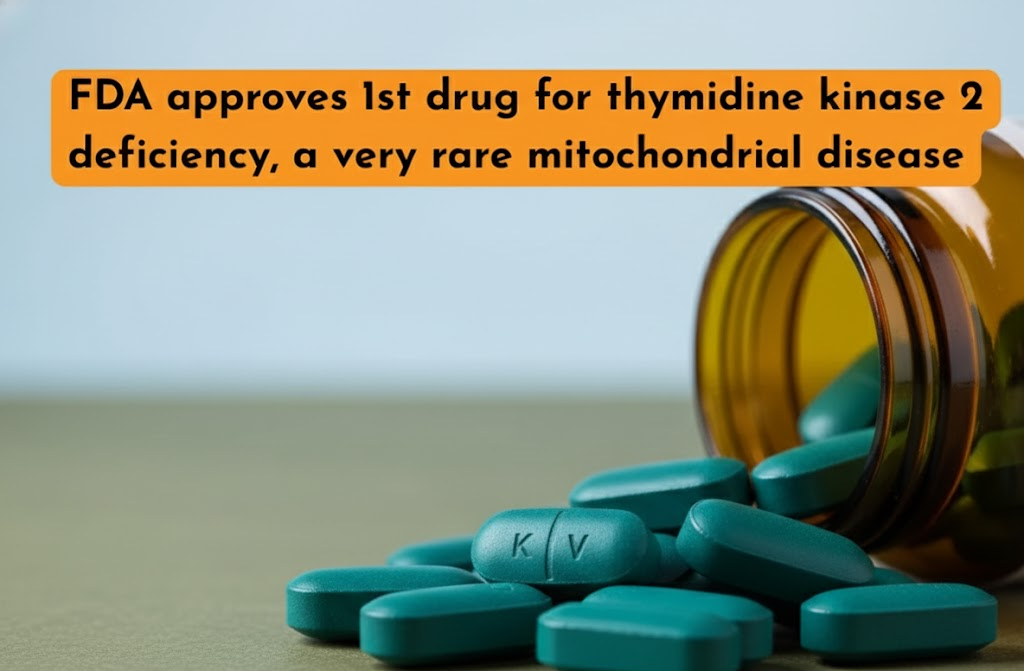
The U.S. Food and Drug Administration (FDA) has announced a landmark decision, approving Kygevvi (doxecitine and doxribtimine) powder as the very first therapeutic option for patients suffering from thymidine kinase 2 deficiency (TK2d). This pivotal approval offers a new path for patients battling this ultra-rare, severe mitochondrial disorder.
Target Population and Regulatory Status
The approval covers adult and pediatric patients who begin showing symptoms of TK2d at 12 years of age or younger. Recognizing the immense unmet medical need, the FDA previously granted Kygevvi Breakthrough Therapy Designation, a status aimed at accelerating the development and review of drugs for serious conditions where preliminary evidence suggests a substantial improvement over existing therapy.
Understanding Thymidine Kinase 2 Deficiency
TK2d is an inherited, rare genetic disorder that falls under the category of mitochondrial depletion syndromes. It is caused by the body’s inability to adequately produce and repair mitochondrial DNA (mtDNA). Since mitochondria are responsible for generating most cellular energy, this deficiency leads to severe energy failure, predominantly affecting muscles.
- Symptoms: Clinical manifestations typically include progressive muscle weakness and, critically, respiratory (breathing) failure.
- Rarity: The condition is exceedingly rare. While its exact frequency is not fully known, only around 120 patients have been documented in medical literature, suggesting a high degree of underdiagnosis.
Evidence of Efficacy and Survival Benefit
The FDA’s decision was supported by robust data collected from multiple sources, including a Phase 2 clinical study, two retrospective chart reviews, and an expanded access program. Efficacy was primarily demonstrated by comparing the survival of treated patients to an untreated external control group derived from published literature and clinical data.
In a survival analysis involving 78 matched pairs of treated and untreated patients, Kygevvi showed a clear and life-saving benefit:
- Patients receiving Kygevvi experienced only 3 deaths (4% mortality).
- The untreated external control group saw 28 deaths (36% mortality).
Furthermore, the mean survival time at 10 years was nearly doubled for the treatment group:
- Kygevvi Group: 9.6 years
- Control Group: 5.7 years
Safety and Side Effects
While providing a significant survival benefit, the drug is associated with several common side effects, including:
- Diarrhea
- Vomiting
- Increase in liver enzymes
- Abdominal pain
This approval represents a major victory for patients with TK2d, providing them with the first-ever disease-specific intervention to slow the progression of this devastating disorder.
About the Author





 Pharm'Up