Advocating for Home-Based Kidney Care A Roadmap for Scaling Peritoneal Dialysis (PD) in India
 Pharm'Up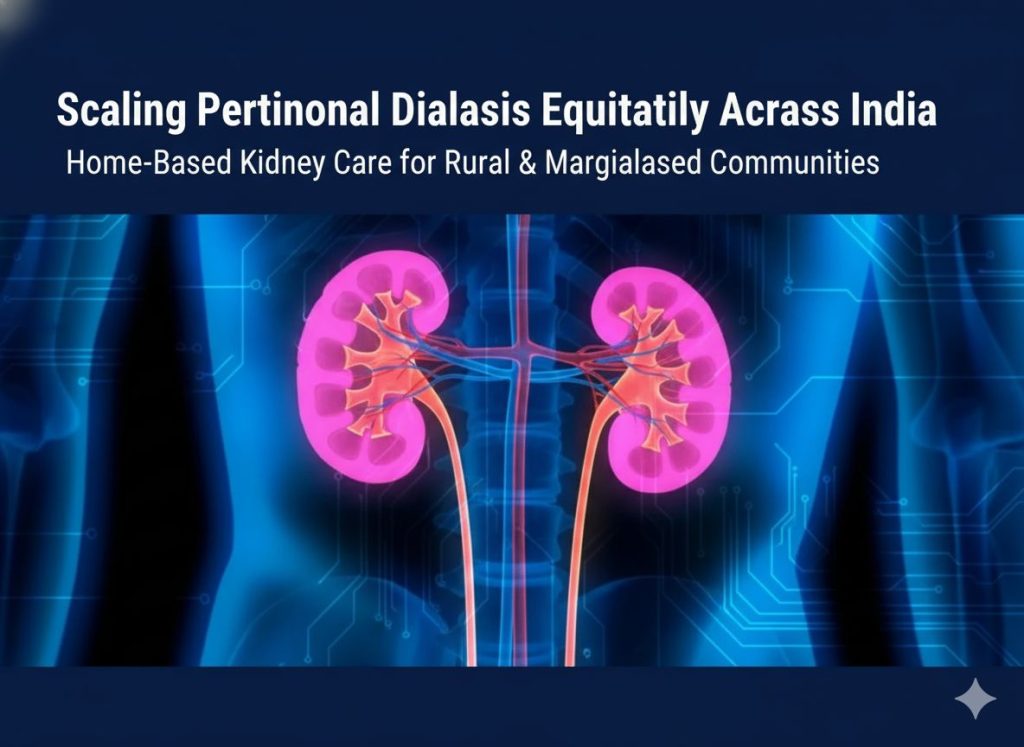
A new Advocacy Paper, developed by leading nephrology experts, outlines a strategic roadmap to overcome the barriers to equitable kidney failure treatment in India, particularly for patients in rural and low-income settings. The focus is on scaling peritoneal dialysis (PD), a simple, life-saving, home-based therapy.
The Emergency and the Equity Gap
India faces a severe kidney failure emergency, with millions requiring dialysis. While public funding schemes have increased access to center-based haemodialysis (HD), this modality presents significant barriers:
- Travel Burden: Patients must travel to centers 2-3 times a week, heavily disadvantaging those in rural and geographically isolated areas.
- Capacity Limitation: Availability is constrained by the limited number of dialysis machines at each center.
- Low PD Uptake: Currently, only 5% of all dialysis patients in India utilize the home-based PD therapy.
PD, which uses the lining of the abdomen (peritoneum) to filter blood, offers key advantages:
- Home-based care and reduced travel burden.
- Continuity of education (especially for children).
- Greater treatment flexibility and continuity in fragile settings.
- Potential to reduce the overall cost of treatment when scaled strategically.
Global Best Practices and Sustainability Framework
The advocacy paper cites international examples where “PD-first” policies have successfully expanded access:
- PD-First Nations: Countries like Thailand, Hong Kong, and Mexico have implemented PD-first policies, increasing equitable access. Hong Kong, for instance, has successfully implemented a PD-first policy since 1985.
- Active Promotion: Nations including the UK, Australia, and New Zealand actively promote PD as a preferred treatment choice.
To assess the feasibility in India’s resource-constrained setting, the researchers employed the Program Sustainability Assessment Tool (PSAT) Framework. PSAT, a globally recognized approach, identified the following as critical for success:
- Political Support
- Funding Stability
- Strong Partnerships
- Trained Health Workforce
- Ongoing Evaluation
Policy Recommendations for Implementation
The experts propose clear, actionable steps to transition to equitable, home-based kidney care:
- PM-JAY Inclusion: Mandate the inclusion of comprehensive PD packages under the Pradhan Mantri Jan Arogya Yojana (PM-JAY), covering consumables, patient training, and essential telehealth support.
- State-Level Strategy: Develop specific State-level PD blueprints tailored to regional needs and resources.
- National PD Registry: Establish a national PD registry with equity-focused monitoring and transparent reporting to track access and outcomes.
- Partnerships and Education: Institute structured public-private partnerships and launch community-level education campaigns to improve PD acceptance and sustainability.
- Financial Protection: Ensure families are not burdened with catastrophic costs due to insurance exclusions for home-based care.
The foundation is set, with National Guidelines for implementing the PD program already developed. The key remaining step is the political will and inclusion of PD packages within the PM-JAY framework.
About the Author