Skip to content
  • YouTube
  • Facebook
  • LinkedIn
Pharm'Up

Pharm'Up

An E-platform for Learners

Primary Menu
  • Home
  • News
  • Industries
  • Disease
  • Drugs
  • Events
  • Jobs
  • Trainings
  • Conferences
  • Syllabus
  • Previous Papers
  • Notes
  • Colleges
Live
  • Home
  • 2026
  • April
  • 26
  • Liver Cancer: Understanding Risk Factors and Early Detection
  • Disease

Liver Cancer: Understanding Risk Factors and Early Detection

Pharm'Up 2 min read

The liver is the body’s largest internal organ, performing critical tasks like digesting food, storing energy, and filtering toxins. Primary liver cancer begins within the liver itself, whereas metastatic liver cancer originates in another part of the body and spreads to the liver.


Key Risk Factors

While anyone can develop liver cancer, certain conditions and lifestyle factors significantly increase the risk:

  • Viral Infections: Long-term infection with Hepatitis B or Hepatitis C.
  • Liver Damage: Cirrhosis (permanent scarring of the liver tissue).
  • Lifestyle & Metabolic Health: Heavy alcohol consumption, obesity, and diabetes.
  • Genetic Disorders: Hemochromatosis, a condition that causes the body to store too much iron.

Symptoms and Diagnosis

Liver cancer is often called a “silent” disease because symptoms typically don’t appear until the cancer is in an advanced stage. When they do occur, symptoms may include:

  • Abdominal Issues: A hard lump or persistent pain on the right side of the abdomen.
  • Jaundice: Yellowing of the skin and the whites of the eyes.

Early Detection: Because early-stage liver cancer is difficult to feel during a physical exam, doctors rely on specialized blood tests and imaging to monitor those at high risk.


Treatment Options

If diagnosed, medical teams determine treatment based on the cancer’s stage and the overall health of the liver:

  1. Surgery: Removing the tumor and a margin of healthy tissue.
  2. Liver Transplantation: Replacing the diseased liver with a healthy donor organ.
  3. Radiation & Chemotherapy: Using high-energy beams or drugs to kill cancer cells.

About the Author

Pharm'Up

Author

An E-platform for Pharma Learners

View All Posts

Post navigation

Previous: Hepatitis C: A Guide to Risks, Symptoms, and Recovery
Next: Wilson Disease: Managing Copper Buildup and Protecting Vital Organs

Related Stories

Pharmup 30
1 min read
  • Disease

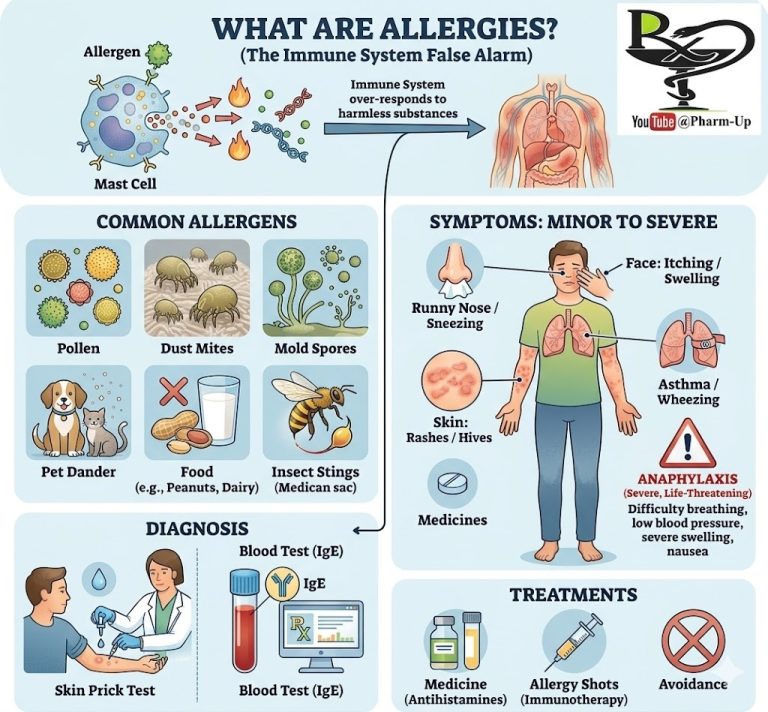
Understanding Allergies: Immune System Overreactions

Pharm'Up
Pharmup 29
1 min read
  • Disease

The Vital Roles of Taste and Smell

Pharm'Up
Pharmup 28
2 min read
  • Disease

Understanding Enlarged Adenoids in Children

Pharm'Up

Recent Posts

  • IBSD Ph.D. Admissions 2026 (Junior Research Fellows)
  • JRF Opportunity at Gujarat Biotechnology University (GBU)
  • Project-JRF Opportunity at Regional Centre for Biotechnology (RCB)
  • NIMS Hyderabad Recruitment 2026: Clinical Research Coordinator Post
  • NEIAFMR Recruitment 2026: Pharmacognosist (Group ‘A’) Post

Recent Comments

No comments to show.

Archives

  • April 2026
  • March 2026
  • February 2026
  • January 2026
  • December 2025
  • November 2025
  • October 2025
  • September 2025
  • August 2025
  • July 2025

Categories

  • Colleges
  • Conferences/ Workshops
  • Disease
  • Drugs
  • Events
  • Industries
  • Notes
  • Pharma Jobs
  • Pharma News
  • Previous Papers
  • Syllabus
  • Trainings/ Courses
  • Uncategorized

Read These Too

Pharmup 42
1 min read
  • Pharma Jobs

IBSD Ph.D. Admissions 2026 (Junior Research Fellows)

Pharm'Up
Pharmup 41
1 min read
  • Pharma Jobs

JRF Opportunity at Gujarat Biotechnology University (GBU)

Pharm'Up
Pharmup 40
1 min read
  • Pharma Jobs

Project-JRF Opportunity at Regional Centre for Biotechnology (RCB)

Pharm'Up
Pharmup 39
1 min read
  • Pharma Jobs

NIMS Hyderabad Recruitment 2026: Clinical Research Coordinator Post

Pharm'Up
  • YouTube
  • Facebook
  • LinkedIn
Copyright ©Pharm'UP All rights reserved by Eduversity India | MoreNews by AF themes.