Pharm'Up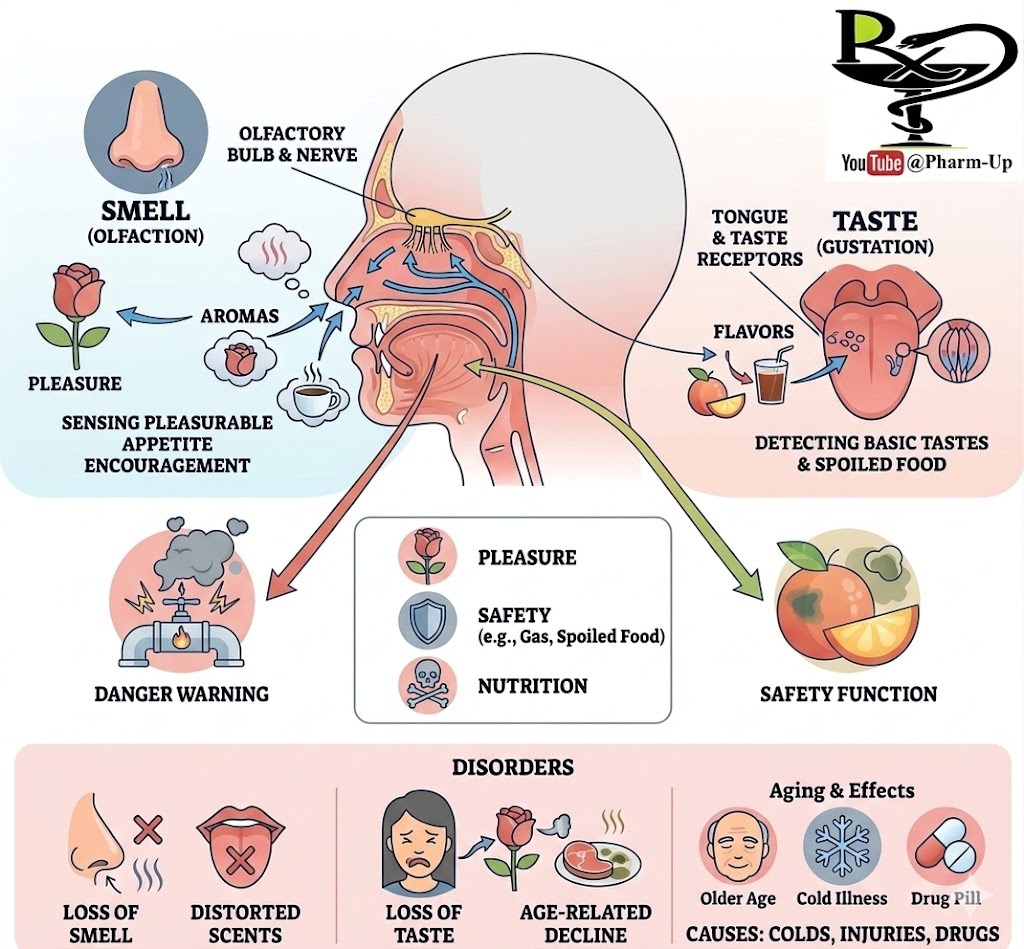
Our senses of taste and smell are far more than just sources of pleasure; they are essential systems for health and safety. While they allow us to enjoy the complex flavors of food and the delicate fragrance of a flower, they also function as internal warning systems. By alerting us to dangers like spoiled food or chemical leaks, these senses provide a critical layer of protection in our daily lives.
Understanding Sensory Disorders
When these senses are compromised, it can significantly impact quality of life and nutrition. Disorders often manifest in several ways:
- Taste Disorders: Individuals may experience phantom tastes, an inability to distinguish between flavors, or a complete loss of the sense of taste (ageusia).
- Smell Disorders: This can involve a total loss of smell (anosmia) or a distortion of scents (parosmia), where once-pleasant smells become offensive or metallic.
Causes and Management
Sensory changes are often linked to underlying medical conditions or external factors. Common causes include:
- Illness & Injury: Viral infections like the common cold, sinus issues, and head traumas.
- Medications: Certain drugs can alter how we perceive flavors and scents as a side effect.
- Aging: A gradual decline in sensory sharpness is a natural part of the aging process for many.
Because the cause of these disorders varies widely, treatment is highly individualized. It may range from managing an underlying infection to adjusting medications or seeking specialized sensory therapy.
About the Author