Pharm'Up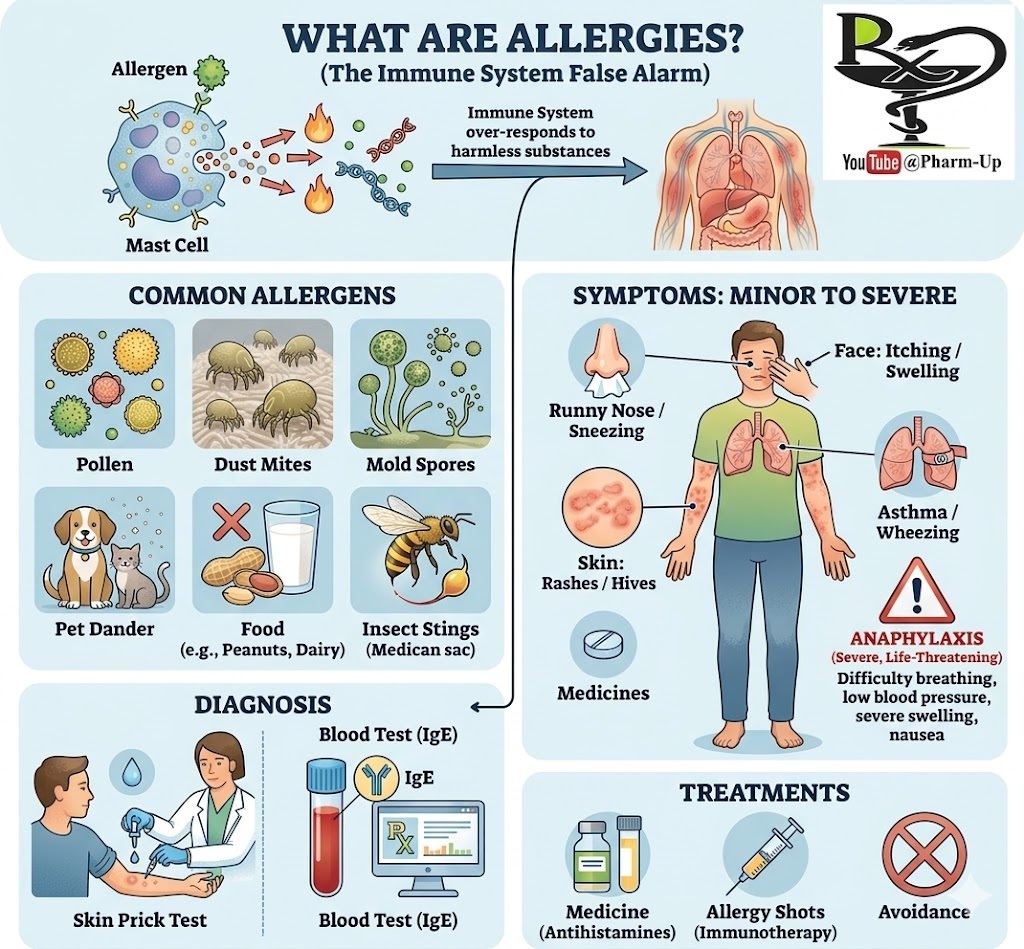
An allergy occurs when your immune system reacts to a substance that is typically harmless to most people. While your immune system is designed to defend the body against dangerous germs, an allergic reaction is essentially a “false alarm” where the body over-responds to environmental triggers.
Common Allergic Triggers
Most people with allergies are sensitive to multiple substances. Common allergens include:
- Inhaled Triggers: Pollen, dust mites, mold spores, and pet dander.
- Ingested Triggers: Specific foods and various medicines.
- Environmental Triggers: Insect stings and chemicals.
Symptoms and Severity
Allergic reactions manifest differently depending on the individual and the trigger. Symptoms can range from minor irritations to medical emergencies:
- Mild to Moderate: Runny nose, sneezing, itchy eyes, skin rashes, and swelling.
- Respiratory: Development or worsening of asthma symptoms.
- Severe (Anaphylaxis): A sudden, life-threatening systemic reaction that requires immediate medical intervention.
Diagnosis and Management
Both genetics and environmental factors influence the development of allergies. To identify specific triggers, doctors typically utilize skin prick tests or blood tests.
Once diagnosed, management strategies include:
- Avoidance: Minimizing contact with known allergens.
- Medication: Antihistamines and other drugs to control symptoms.
- Immunotherapy: Allergy shots designed to desensitize the immune system over time.
About the Author