Pharm'Up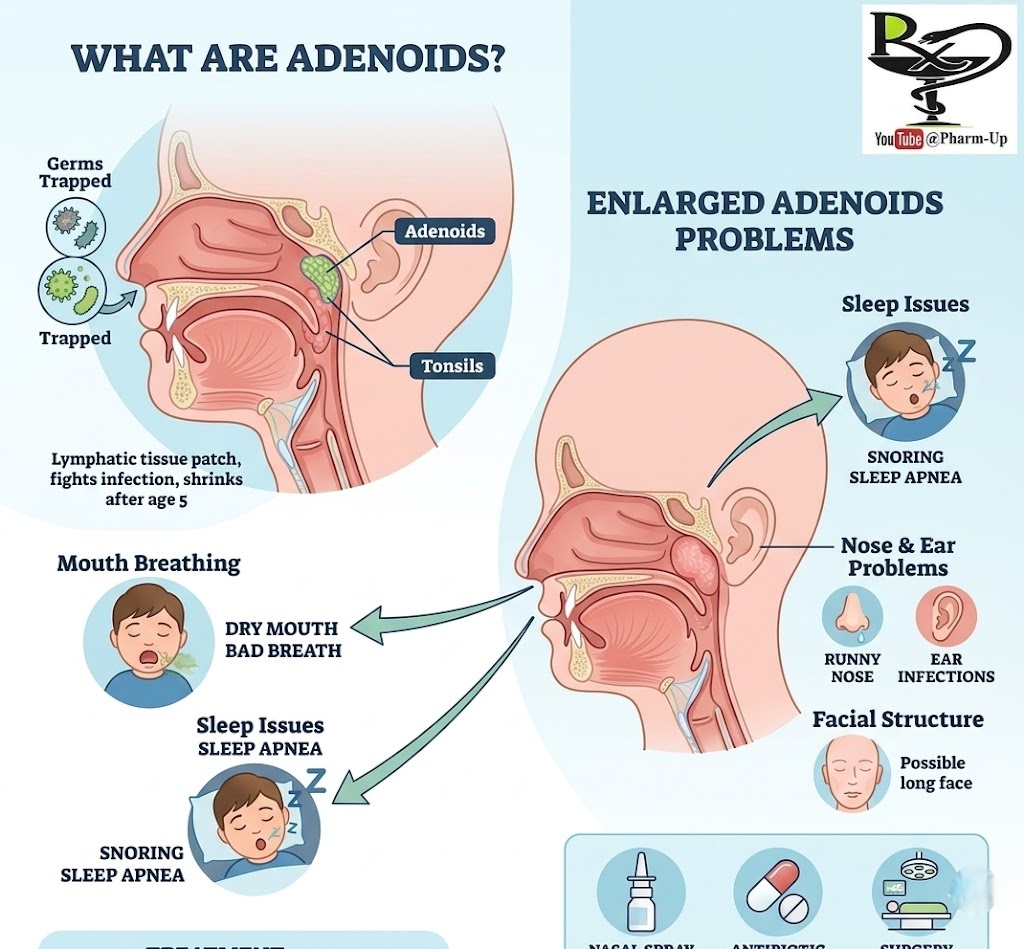
Adenoids are small patches of tissue located high in the throat, directly behind the nose. Along with the tonsils, they act as part of the lymphatic system, serving as a first line of defense by trapping germs that enter through the nose and mouth.
While they play an important role in early childhood, adenoids typically begin to shrink around age 5 and almost completely disappear by the teenage years as the body develops other ways to fight infection.
Causes and Symptoms of Enlargement
Adenoids often become swollen while fighting off an infection and may remain enlarged even after the illness has passed. Some children are simply born with larger adenoids.
When adenoids are enlarged, they can block the nasal airway, leading to:
- Mouth Breathing: Which can result in dry mouth, bad breath, and cracked lips.
- Sleep Disturbances: Including loud breathing, snoring, and restless sleep.
- Sleep Apnea: A serious condition where breathing repeatedly stops and starts during sleep.
- Chronic Issues: Persistent runny nose or frequent ear infections.
Diagnosis and Treatment Options
Because adenoids are hidden behind the nose, a healthcare provider cannot see them during a standard throat exam. Diagnosis may require a special mirror, a flexible endoscope, or an X-ray.
Treatment pathways include:
- Observation: If symptoms are mild, no immediate treatment may be necessary.
- Medication: Nasal sprays to reduce swelling or antibiotics for bacterial infections.
- Adenoidectomy: Surgery to remove the adenoids is considered if infections are chronic, antibiotics fail, or the airway is significantly blocked. This is often performed alongside a tonsillectomy if the tonsils are also problematic.
About the Author