Pharm'Up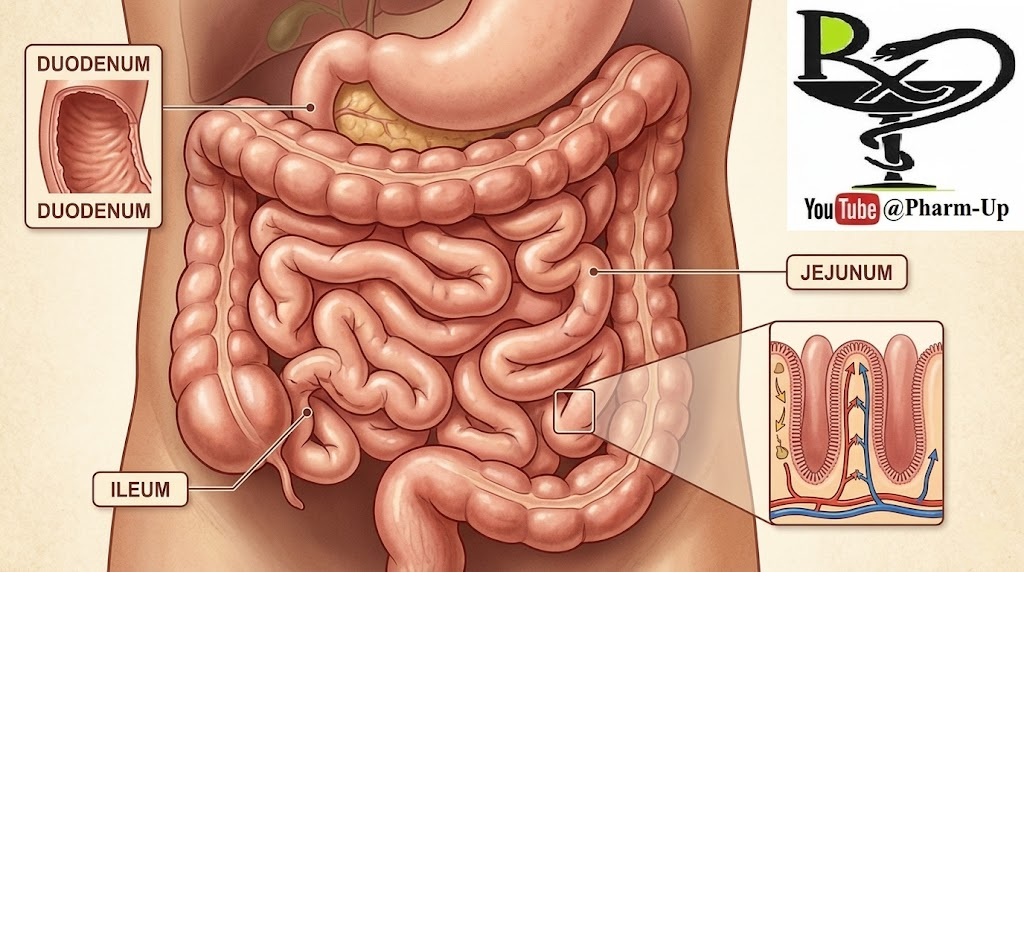
Though it is called “small” due to its diameter, the small intestine is actually the longest part of your digestive system, measuring approximately 20 feet in length. It is intricately folded within the abdomen to connect the stomach to the large intestine.
Key Functions and Anatomy
The small intestine is where the vast majority of food digestion and nutrient absorption occurs. It is divided into three distinct sections:
- Duodenum: The first section that receives semi-digested food from the stomach.
- Jejunum: The middle section where most nutrient absorption takes place.
- Ileum: The final section that leads into the large intestine.
Common Disorders
Because of its complex role and significant surface area, the small intestine can be affected by various medical conditions:
- Inflammatory Diseases: Such as Crohn’s disease and Celiac disease (an immune reaction to gluten).
- Structural Issues: Including intestinal obstructions (blockages) or peptic ulcers.
- Functional & Malignant Problems: Such as Irritable Bowel Syndrome (IBS), infections, bleeding, or intestinal cancer.
Diagnosis and Care
Treatment for small intestine disorders is highly specific to the underlying cause. If you experience persistent abdominal pain, changes in digestion, or unexplained weight loss, healthcare providers may use imaging or endoscopic procedures to examine these twenty feet of critical tissue.
About the Author