Pharm'Up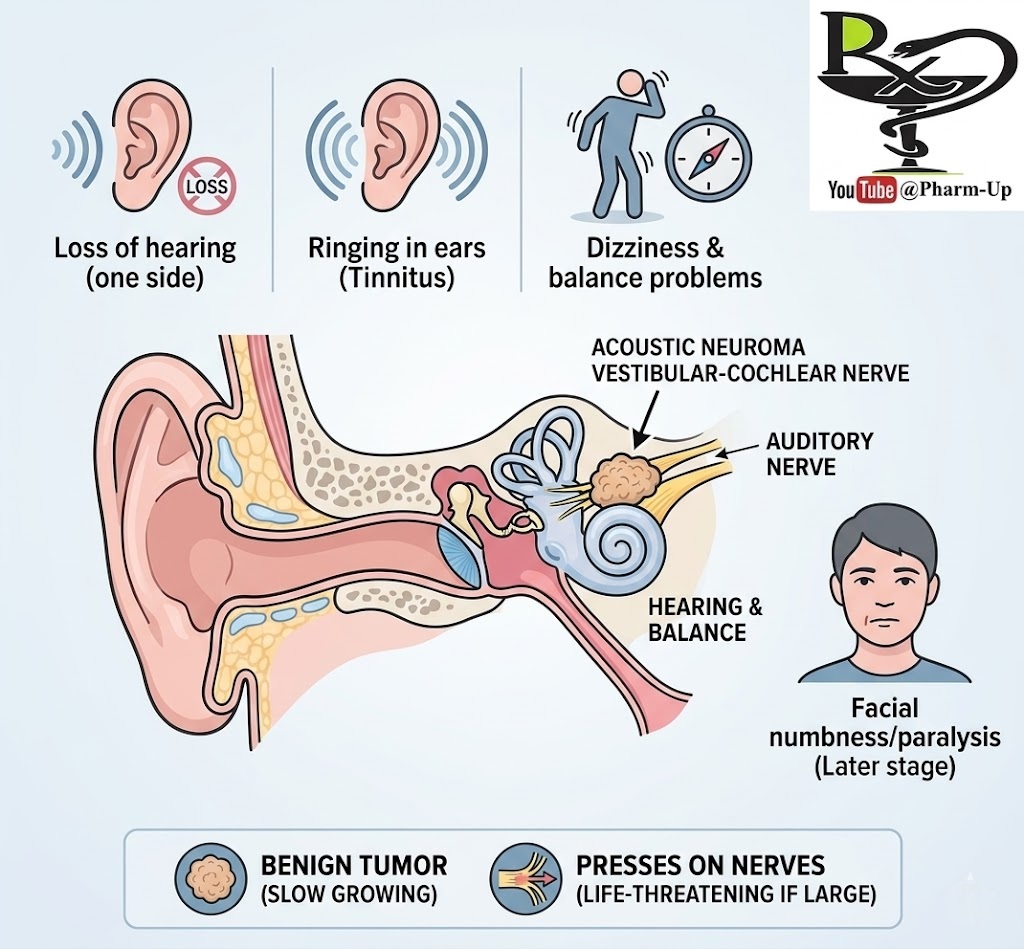
An acoustic neuroma is a non-cancerous (benign) tumor that develops on the vestibular nerve, which connects the inner ear to the brain. Because this nerve influences both balance and hearing, the tumor’s growth can significantly impact these functions. While these tumors typically grow slowly, their location near critical cranial structures makes monitoring and early diagnosis essential.
Common Symptoms
In the early stages, symptoms may be subtle or even non-existent. As the tumor gradually presses against surrounding nerves, you might experience:
- Unilateral Hearing Loss: Gradual or sudden hearing loss occurring on only one side.
- Tinnitus: A persistent ringing or buzzing sensation in the affected ear.
- Equilibrium Issues: Dizziness, unsteadiness, or general balance problems.
- Facial Impact: In later stages, the tumor may cause numbness or weakness (paralysis) in facial muscles.
Diagnosis and Treatment
Because the symptoms mimic common middle ear infections or aging, doctors rely on specialized tools for a definitive diagnosis, including comprehensive ear exams, audiometry (hearing tests), and imaging scans (MRI or CT).
Treatment approaches depend on the tumor’s size and growth rate:
- Observation: Small tumors that aren’t growing may simply be monitored with regular scans.
- Radiation: Stereotactic radiosurgery can be used to stop the growth of the tumor without invasive surgery.
- Surgery: Necessary for larger tumors or those causing significant neurological symptoms.
Note: If tumors occur on both hearing nerves, it is frequently linked to a genetic condition known as Neurofibromatosis Type 2 (NF2).
About the Author