Navigating the Future of Pharmacy Essential Strategies for Student Pharmacists to Use AI Responsibly
 Pharm'Up
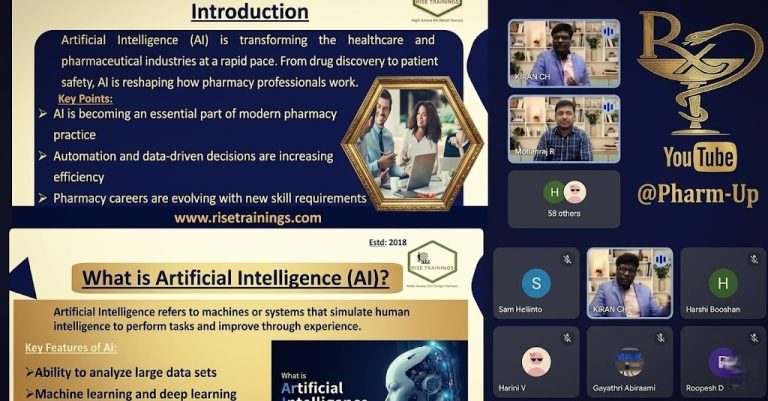
The rapid evolution of the healthcare landscape makes the integration of artificial intelligence (AI) tools into pharmacy education not just beneficial, but essential. As future medication specialists, student pharmacists must develop proficiency in utilizing these technologies, not to replace their judgment, but to complement it. While some concerns exist regarding potential over-dependence or diminished critical thinking, AI’s ability to swiftly analyze, generate, and organize information can free up cognitive resources for complex problem-solving.
This proficiency prepares students for a future workforce where AI is significant, helping them to navigate these tools through the lens of their own clinical acumen. It also prepares them to educate patients and fellow professionals on AI’s limitations and the critical need to verify AI-generated information. Popular tools like Google Gemini, ChatGPT, Anthropic’s Claude, and Microsoft Copilot offer robust capabilities that support students across various academic tasks.
Responsible Application in Key Academic Areas
1. Clinical Case Simulations
AI platforms are invaluable for preparing for Objective-Structured Clinical Examinations (OSCEs) and skills-based courses by generating diverse patient case scenarios.
- Be Specific with Prompts: Effective results require clear, detailed prompts. Direct the AI using action verbs (list, explain) and provide context.
- Case-Specific Detail: Include the relevant pharmacy setting (hospital vs. community), medical conditions, and patient considerations (e.g., past medical history, socioeconomic factors).
- Request Evolving Scenarios: Challenge yourself by asking AI to simulate complex cases where a patient’s condition progresses over time or necessitates alternative therapies.
- Prioritize Patient Confidentiality: Crucially, never include personal data or sensitive issues in your AI prompts, maintaining the ethical standard of a healthcare professional.
2. Study Guides and Review Materials
AI can transform dense lecture material and notes into structured study aids, making complex concepts more accessible.
- Specify Subject and Scope: Clearly outline the topic and the level of detail required (e.g., “Create a study guide for pharmacology focusing on the mechanisms of action for antihypertensive medications”).
- Request Summarization: Use AI to distill the key points of lengthy texts or lecture notes into concise guides.
- Vary the Format: Ask for formats like bullet points, tables, flash cards, or practice exam questions of varying complexity to facilitate active recall.
- Utilize Advanced Tools: Platforms like Google NotebookLM allow users to upload materials and generate an Audio Overview (podcast) that summarizes key points and highlights connections between topics using dynamic conversation.
3. Proofreading and Refining Written Work
AI assistants can significantly enhance the quality of written work by providing detailed feedback on mechanics and style.
- Grammar and Spell Check: Use AI tools (like Grammarly) or built-in features to catch basic errors and ensure a professional tone (e.g., for emails to preceptors).
- Analyze Tone and Style: Request feedback on whether the writing tone is appropriate for the intended audience, ensuring alignment with professional standards.
- Improve Structure and Flow: Get suggestions for enhancing the overall organization and logical flow of research papers or documents.
- Incorporate Visuals: Use AI image generators (e.g., Canva AI, Craiyon) to create professional, visually engaging elements for presentations and newsletters.
4. Scheduling and Time Management
AI is a powerful ally against the common challenge of time management in pharmacy school, helping to streamline schedules and prioritize tasks.
- Personalized Study Schedules: Upload class and exam schedules and ask AI to develop a tailored study timetable that balances academic requirements with personal commitments and well-being.
- Break Down Complex Projects: Use AI to outline the steps for heavy workload projects (e.g., a research paper), breaking them into smaller, manageable tasks with deadlines.
5. Interview Preparation
For jobs, residencies, or fellowships, AI can significantly boost preparation and confidence.
- Simulate Mock Interviews: Upload a job description and ask AI to generate common behavioral and situational interview questions. Engage in role-playing to practice your responses.
- Develop Thoughtful Questions: Request that AI generate appropriate, insightful questions to ask the interviewer, demonstrating your genuine interest in the program or position.
- Request Feedback on Responses: Input your answer to a question (e.g., “Why are you a good fit?”) and ask the AI for suggested enhancements to strengthen your argument.
The Cornerstones of Responsible AI Use
Responsible use is what differentiates good work from excellent work. It involves moving beyond mere AI output and applying reputable evidence, clinical judgment, and critical thinking.
- Strict Adherence to Academic Integrity: This is non-negotiable. Always follow institutional and course-specific rules. If using AI is permitted, consider using a transparency statement to clearly outline its role (e.g., generating an outline or proofreading).
- Verify All Information: AI may produce “artificial hallucination”—fictional or erroneous content that sounds plausible. Cross-check every piece of AI-generated information with credible, reputable sources and ensure proper citation.
- Maintain Your Authentic Voice: Do not submit work that appears inauthentic. Review and edit AI-assisted text to infuse it with your own experiences, perspectives, and unique style. Your work must reflect your personal critical thinking and pharmacy expertise.
- AI as a Supplement, Not a Substitute: AI output is only as accurate as the data it was trained on. Ensure the tool complements your work rather than replaces your original ideas. Rely on AI as a generator of ideas, but use your professional training to deliver the final, verified product.
Conclusion
As the healthcare sector rapidly adopts new technology, familiarity with AI tools is crucial for student pharmacists. By adopting these strategies, students can utilize AI as a powerful supplementary resource to enhance their studies, refine their writing, and prepare for their careers, all while upholding the highest standards of ethics and academic integrity.
About the Author