Researchers Uncover ‘Perineural Pathway’ Allowing HIV to Escape the Brain and Reseed the Body Despite Antiretroviral Therapy
 Pharm'Up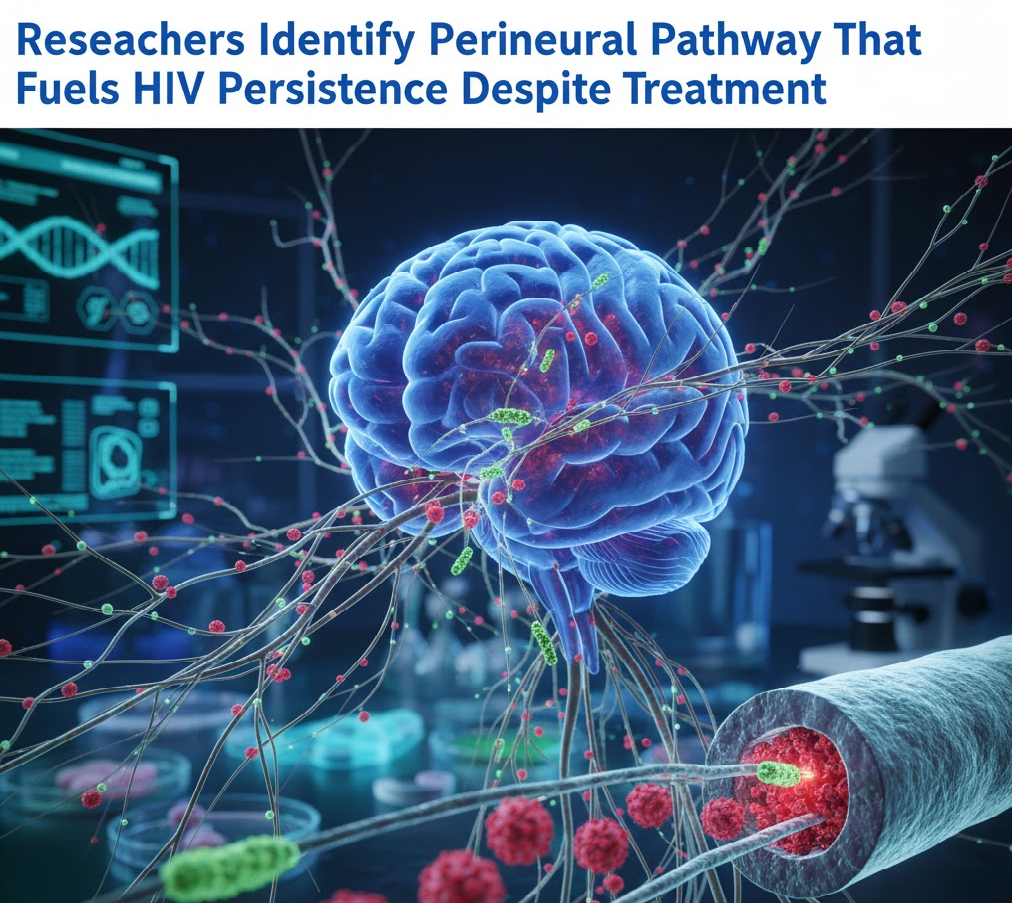
New research published in The American Journal of Pathology by investigators from Boston College and the Tulane National Primate Research Center has identified a crucial, previously overlooked mechanism by which HIV-infected immune cells (macrophages) exit the central nervous system (CNS), allowing the virus to redistribute and sustain inflammation throughout the body.
Challenging the Blood-Brain Barrier Myth
For decades, the CNS (brain and spinal cord) was considered strictly isolated from the rest of the body due to the blood-brain barrier and limited lymphatic drainage. The new findings reveal that the HIV reservoir in the brain is not static, but rather an active source of infection.
- The Overlooked Connection: The study highlights the importance of the often-neglected connection between the CNS and the Peripheral Nervous System (PNS) (the nervous system outside the brain and spinal cord).
- The Exit Route: Researchers discovered that macrophages (which are the primary HIV/SIV-infected cells in the CNS) can exit the brain and spinal cord by utilizing cranial and peripheral nerves—a pathway described as the perineural pathway.
Scientific Methodology
To track this cellular movement, researchers used a monkey model of HIV (SIV, Simian Immunodeficiency Virus):
- Nanoparticle Labeling: They injected two distinct colors of nanoparticles directly into the cerebrospinal fluid (CSF), the protective liquid surrounding the CNS.
- Tracking: These particles were absorbed by CNS macrophages, effectively labeling cells at different stages of infection (early vs. late).
- Discovery: By tracking these labeled cells, researchers confirmed that macrophages exit the CNS not only under normal conditions but also via the newly identified perineural pathway.
Impact on HIV Eradication
The CNS is a well-known, critical reservoir for HIV. This discovery explains how this reservoir actively contributes to the challenge of persistent viral activity:
- Reseeding Infection: Infected macrophages travel out of the CNS and reseeds HIV into the rest of the body.
- Sustained Inflammation: This traffic contributes to persistent myeloid activation (inflammation) in peripheral nerves and the dorsal root ganglia, even while patients are successfully adhering to antiretroviral therapy (ART).
Co-lead investigator Dr. Kenneth C. Williams concluded that these results “provide critical insights that will inform new strategies in the challenge of eradicating HIV,” emphasizing the need to target this active macrophage traffic between the nervous systems.
This research opens a completely new avenue for developing HIV cure strategies that focus on neutralizing this dynamic reservoir.
About the Author





 Pharm'Up