Novel Antibody-Drug Conjugate Patritumab Deruxtecan Shows Strong Efficacy Against Active Brain Metastases
 Pharm'Up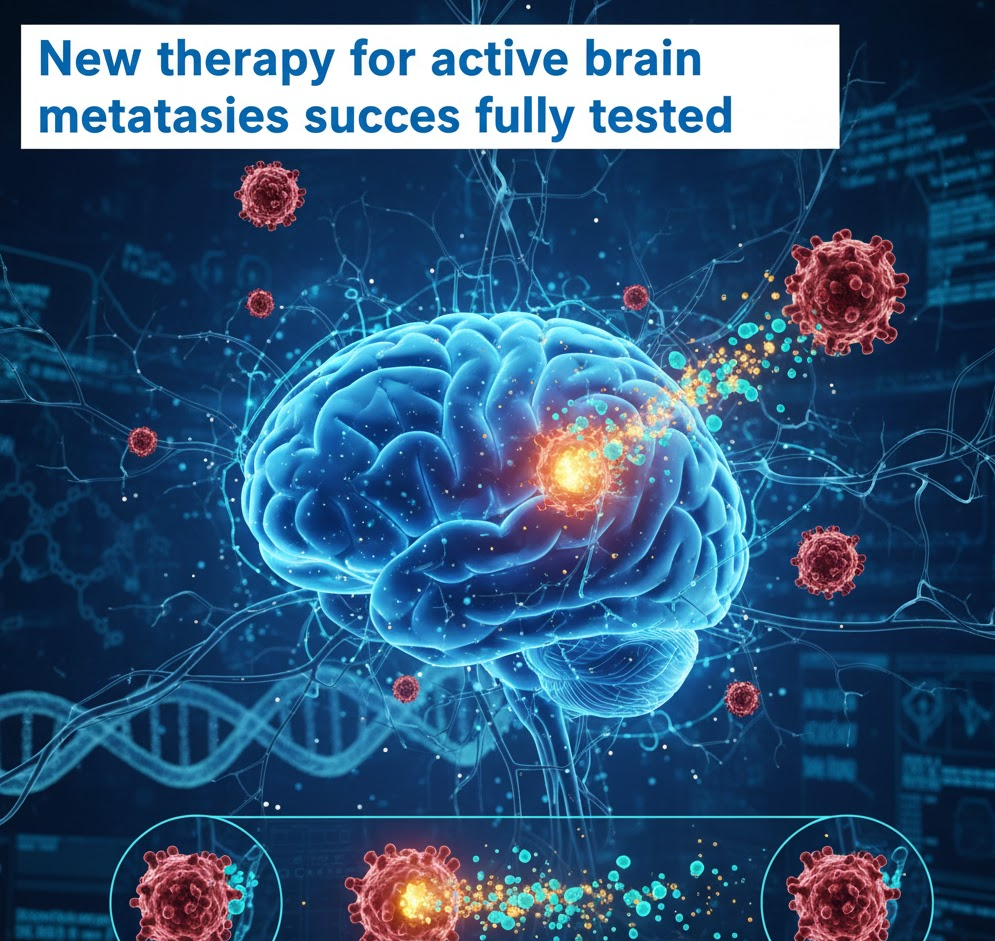
An international Phase 2 clinical study, TUXEDO-3, led by the Medical University of Vienna, has yielded highly encouraging results: the investigational antibody-drug conjugate (ADC), patritumab deruxtecan (HER3-DXd), demonstrated significant clinical activity against active brain metastases in heavily pretreated patients with both non-small cell lung cancer (NSCLC) and metastatic breast cancer.
The dual findings were simultaneously published in the prestigious journal The Lancet Oncology.
Addressing a Critical Unmet Need
Brain metastases are a common and devastating complication in advanced cancer, affecting approximately one-third of NSCLC patients and a significant proportion of metastatic breast cancer patients. Treatment options are severely limited, especially when the metastases progress after standard local therapies (like radiation).
The breakthrough relies on the observation that the cell surface protein HER3 is often highly expressed in brain metastases. HER3-DXd is a targeted Antibody-Drug Conjugate (ADC) that specifically binds to the HER3 protein. Once bound, the drug is internalized by the cancer cell, where it releases a potent chemotherapy payload (a topoisomerase I inhibitor) to induce targeted cell death.
Key Efficacy Results by Cohort
The TUXEDO-3 study was structured in multiple cohorts to test the drug’s efficacy across different tumor types:
| Cohort (Tumor Type) | Patients (n) | Primary Endpoint | Intracranial Response Rate (Objective Response Rate) | Notable Finding |
| Cohort 1: Metastatic Breast Cancer (mBC) | 21 | Intracranial ORR | 23.8% (nearly one quarter) | Responses were observed across all breast cancer subtypes (HR+/HER2+, Triple-Negative). |
| Cohort 2: Non-Small Cell Lung Cancer (NSCLC) | 20 | Intracranial ORR | 30.0% | Responses were observed even in patients without common oncogenic driver mutations. |
Rupert Bartsch, lead author for the breast cancer cohort, noted that a response rate of around 25% in heavily pretreated mBC patients with no effective remaining options is a “notable achievement,” especially given the ability to maintain or improve the patient’s quality of life.
Broad Applicability and Future Potential
Study leader Matthias Preusser highlighted the implications, stating the results provide the “initial prospective evidence” that HER3-DXd could become a novel, targeted option for these patients.
The findings suggest the ADC may have a broader therapeutic applicability than originally thought, as responses were seen across various breast cancer subtypes and in NSCLC patients regardless of their molecular defined subgroups (i.e., whether they had specific driver mutations).
The drug, which is being jointly developed by Daiichi Sankyo and Merck, represents a significant step forward in extending the reach of ADCs to the central nervous system, where the blood-brain barrier often limits the effectiveness of conventional therapies.
About the Author





 Pharm'Up