Pharm'Up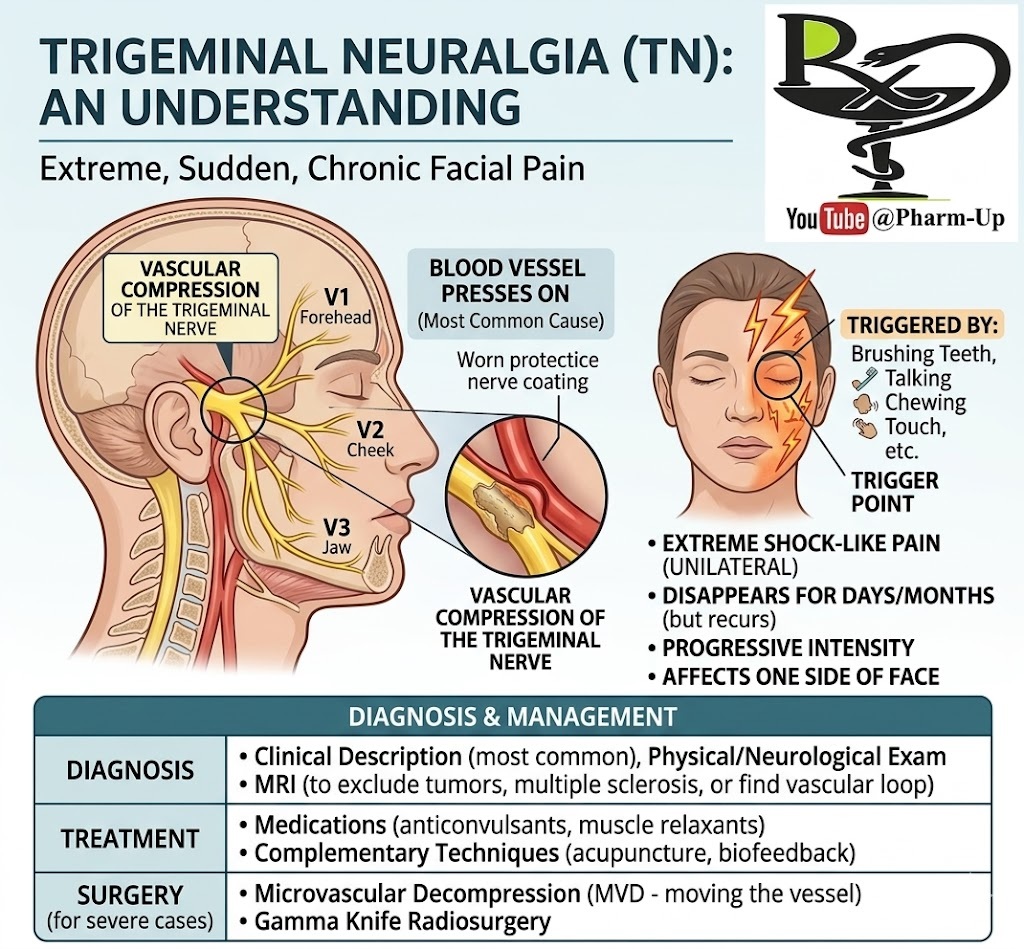
Trigeminal neuralgia is a chronic pain condition characterized by sudden, severe, and episodic facial pain. Often described as feeling like an electric shock or a burning sensation, it is considered one of the most painful conditions known to medicine. The pain stems from the trigeminal nerve (the fifth cranial nerve), which carries sensation from your face to your brain.
Even the mildest stimulation of your face—such as brushing your teeth, applying makeup, or feeling a light breeze—can trigger a surge of excruciating pain.
Causes and Risk Factors
The trigeminal nerve has three main branches that control sensation in the forehead, cheek, and jaw. In most cases, the pain is caused by:
- Vascular Compression: A normal blood vessel (usually an artery) coming into contact with the trigeminal nerve at the base of the brain, putting pressure on it and wearing away the nerve’s protective coating (myelin).
- Secondary Conditions: Less commonly, tumors or the nerve damage associated with Multiple Sclerosis (MS) can cause the disorder.
- Demographics: It most frequently affects women and individuals over the age of 50.
Symptoms and Patterns
The symptoms of TN are distinct, though they can sometimes be mistaken for dental issues:
- Shock-like intensity: Brief periods of stabbing or electric shock-like pain.
- Spontaneous triggers: Pain triggered by touching the face, chewing, speaking, or washing.
- One-sided: It almost always affects only one side of the face (unilateral).
- Progression: While it may begin with short, mild episodes, the condition often progresses, with attacks becoming more frequent and intense over time.
Diagnosis and Treatment Options
Because there is no single test for TN, doctors rely on the patient’s description of the pain and the triggers. They may use an MRI to look for blood vessels pressing against the nerve or to rule out tumors and MS.
Treatment Pathways:
- Medications: Traditional painkillers usually don’t work. Instead, doctors prescribe anticonvulsants (to block nerve firing) or muscle relaxants.
- Surgery: * Microvascular Decompression (MVD): Moving the blood vessel away from the nerve.
- Gamma Knife Radiosurgery: Using radiation to damage the nerve just enough to block pain signals.
- Complementary Techniques: Some patients find relief through acupuncture or biofeedback alongside medical treatment.
About the Author