Skip to content
  • YouTube
  • Facebook
  • LinkedIn
Pharm'Up

Pharm'Up

An E-platform for Learners

https://www.youtube.com/watch?v=xuTKPPZrxy4
Primary Menu
  • Home
  • News
  • Industries
  • Disease
  • Drugs
  • Events
  • Jobs
  • Trainings
  • Conferences
  • Syllabus
  • Previous Papers
  • Notes
  • Colleges
Live
  • Home
  • 2025
  • August
  • 21
  • COVID-19 NPIs Disrupted Pneumococcal Disease Trends, Underscoring Vaccine Importance
  • Disease
  • Pharma News

COVID-19 NPIs Disrupted Pneumococcal Disease Trends, Underscoring Vaccine Importance

Pharm'Up 2 min read

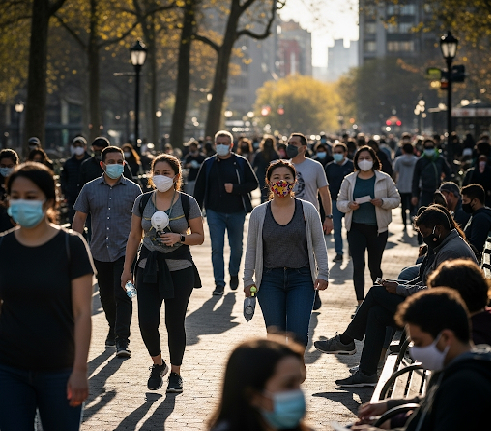
A study published in Frontiers in Cellular and Infection Microbiology reveals how non-pharmaceutical interventions (NPIs) during the COVID-19 pandemic, such as lockdowns and social distancing, significantly altered the typical patterns of invasive pneumococcal disease (IPD). The research found that while these measures led to a sharp decrease in IPD cases, a rebound was observed once they were relaxed. This finding reinforces the critical and ongoing importance of vaccination programs in controlling IPD.

The Interplay Between Viruses and Bacteria

IPD is caused by the bacterium Streptococcus pneumoniae. It is a well-established fact that viral infections, such as influenza and respiratory syncytial virus (RSV), often precede and facilitate pneumococcal infections by altering lung physiology. Until this study, the specific relationship between SARS-CoV-2 and Streptococcus pneumoniae was not well understood.

To investigate this, researchers analyzed IPD trends from 2019 to 2023. They found that the seasonal fluctuations and overall incidence of IPD were dramatically interrupted by the pandemic. The number of IPD episodes dropped from 105 in 2019 to just 31 in 2021, a decline attributed to NPIs reducing the overall circulation of respiratory viruses. However, with the relaxation of these measures, IPD numbers began to recover, reaching 65 episodes in the 2022-2023 winter season.

Co-infection and Severity

The study also examined the rate of co-infection in COVID-19 patients. Researchers found a very low prevalence of pneumococcal colonization (2.8%) in patients with SARS-CoV-2. However, a key observation was that colonization was more common in patients with severe COVID-19 compared to those with a mild form of the disease. This suggests that while mild SARS-CoV-2 may have a limited impact on pneumococcal colonization, a severe viral infection could increase the severity of pneumococcal disease if a co-infection were to occur.

Implications for Public Health

The study’s findings provide valuable insights into the complex relationship between viral and bacterial infections. They highlight the effectiveness of NPIs in disrupting respiratory disease transmission but also serve as a reminder that these are temporary measures. The authors conclude that ongoing surveillance of pneumococcal serotypes and continued emphasis on vaccination are essential for informing long-term prevention strategies and protecting public health. Pharmacists, in particular, play a crucial role in counseling patients about their risk of co-infection and ensuring they are up-to-date on their pneumococcal vaccines.

About the Author

Pharm'Up

Author

An E-platform for Pharma Learners

View All Posts

Post navigation

Previous: Biosimilar for Tocilizumab Confirmed as Highly Effective and Safe for Rheumatoid Arthritis
Next: AAP Releases 2025 Immunization Schedule, Taking a Stance Divergent from Federal Health Agencies

Related Stories

Pharmup 1
1 min read
  • Pharma News

Piramal Pharma Expands Global Injectables Footprint with Kenalog® Acquisition

Pharm'Up
Pharmup 21
2 min read
  • Disease

Understanding Small Intestine Cancer: Risks, Symptoms, and Treatment

Pharm'Up
Pharmup 20
2 min read
  • Disease

Infant Reflux (GER) and GERD: Spitting Up and Growth

Pharm'Up

Recent Posts

  • Nanded-Waghala City Municipal Corporation Recruitment 2026: Vacancies for Pharmacists and Public Health Managers
  • NIPER Guwahati Recruitment 2026: CCRAS Fellowships for Pharma & Science Graduates
  • Faculty Recruitment 2026: Kota College of Pharmacy Announces Openings for Assistant and Associate Professors
  • CSIR-NIScPR New Delhi Walk-in Interview 2026: Recruitment for Various Project Staff Positions
  • Shodhana Laboratories Walk-In Drive: Openings in Production, QC, R&D & TSD

Recent Comments

No comments to show.

Archives

  • April 2026
  • March 2026
  • February 2026
  • January 2026
  • December 2025
  • November 2025
  • October 2025
  • September 2025
  • August 2025
  • July 2025

Categories

  • Colleges
  • Conferences/ Workshops
  • Disease
  • Drugs
  • Events
  • Industries
  • Notes
  • Pharma Jobs
  • Pharma News
  • Previous Papers
  • Syllabus
  • Trainings/ Courses
  • Uncategorized

Read These Too

Pharmup 21
2 min read
  • Pharma Jobs

Nanded-Waghala City Municipal Corporation Recruitment 2026: Vacancies for Pharmacists and Public Health Managers

Pharm'Up
Pharmup 20
2 min read
  • Pharma Jobs

NIPER Guwahati Recruitment 2026: CCRAS Fellowships for Pharma & Science Graduates

Pharm'Up
Pharmup 19
1 min read
  • Pharma Jobs

Faculty Recruitment 2026: Kota College of Pharmacy Announces Openings for Assistant and Associate Professors

Pharm'Up
Pharmup 18
2 min read
  • Pharma Jobs

CSIR-NIScPR New Delhi Walk-in Interview 2026: Recruitment for Various Project Staff Positions

Pharm'Up
  • YouTube
  • Facebook
  • LinkedIn
Copyright ©Pharm'UP All rights reserved by Eduversity India | MoreNews by AF themes.