Pharm'Up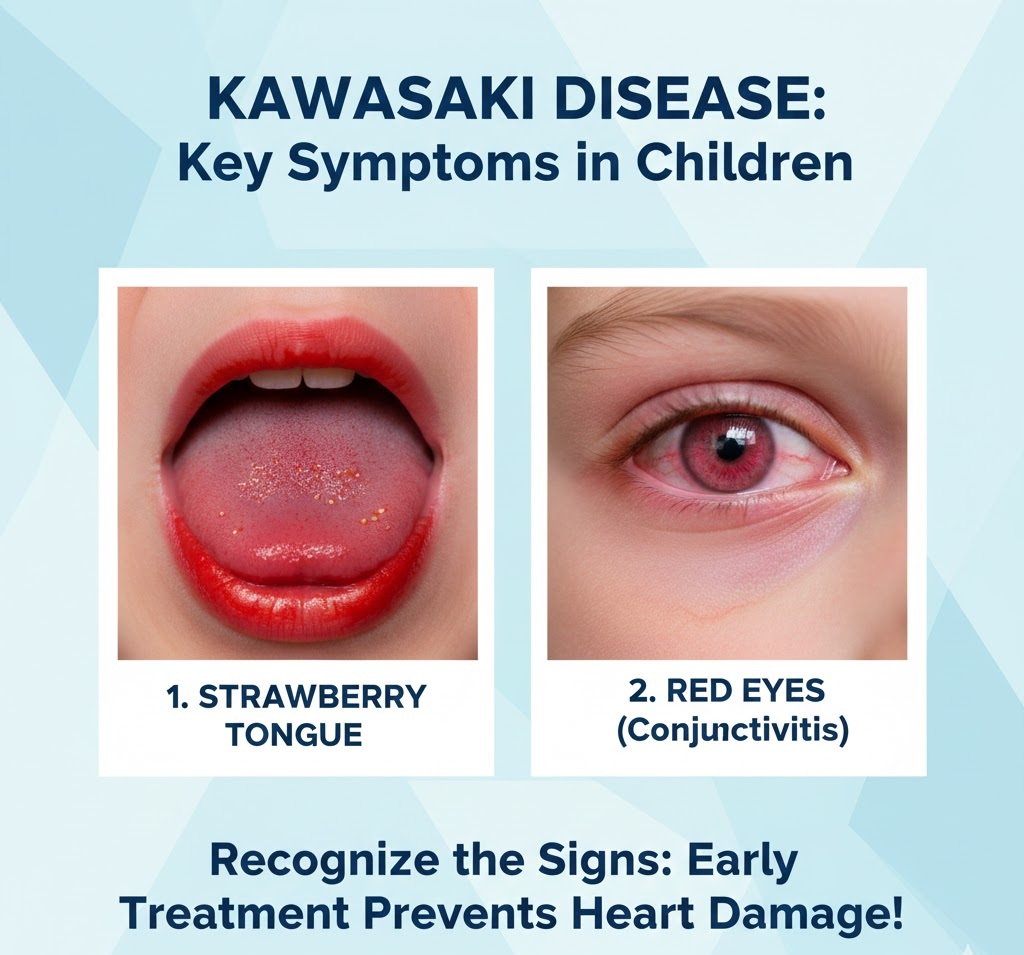
Kawasaki disease (also known as mucocutaneous lymph node syndrome) is a rare condition that causes vasculitis, or inflammation of the blood vessels, throughout the body. It primarily affects infants and young children and is the leading cause of acquired heart disease in children in developed countries.
Causes and Demographics
While the exact cause remains unknown, researchers believe it is an immune-mediated response triggered by environmental factors (like an infection) in children who are genetically predisposed. It is not contagious.
- Age: About 80% to 90% of cases occur in children under age 5.
- Gender: Boys are about 1.5 times more likely to develop the disease than girls.
- Ethnicity: It occurs in all ethnic groups, but children of Asian or Pacific Islander descent (particularly Japanese and Korean) have the highest incidence rates. In Japan, the rate is roughly 250 to 300 per 100,000 children, compared to about 9 to 20 per 100,000 in the United States.
Identifying the Symptoms
Diagnosis is based on a specific set of clinical signs, as there is no single laboratory test for the disease. The primary indicator is a fever lasting 5 or more days, plus at least four of the following:
- Changes in Extremities: Swelling of hands/feet or peeling skin around the nails.
- Generalized Rash: Often appearing on the trunk or groin area.
- Conjunctivitis: Redness in both eyes without discharge (pink eye).
- Oral Changes: Red, cracked lips; a “strawberry tongue” (red with bumps); or a very red throat.
- Cervical Lymphadenopathy: A swollen lymph node in the neck (usually one side).
Potential Heart Complications
The most serious aspect of Kawasaki disease is its effect on the coronary arteries, which supply blood to the heart muscle.
- Aneurysms: In about 25% of untreated cases, the inflammation causes the artery walls to weaken and bulge (aneurysm). This can lead to blood clots, which increase the risk of a heart attack, even in very young children.
- Myocarditis: Inflammation of the heart muscle itself.
- Valvular Problems: Issues with the heart valves that ensure proper blood flow.
Diagnosis and Treatment
Because the risk of heart damage is high, treatment usually begins as soon as the disease is suspected.
- Hospitalization: Children are typically treated in a hospital setting.
- IVIG (Intravenous Immunoglobulin): High doses of purified antibodies are given via IV to reduce vessel inflammation. This significantly lowers the risk of coronary aneurysms to less than 5%.
- Aspirin Therapy: Under strict medical supervision, aspirin is used to reduce fever and prevent blood clots.
- Caution: Aspirin is generally avoided in children due to the risk of Reye Syndrome, but it is a standard, life-saving exception for Kawasaki disease management.
Most children who receive prompt treatment recover fully without long-term damage. However, those who develop heart complications will need lifelong monitoring by a pediatric cardiologist.
About the Author


 Pharm'Up