Pharm'Up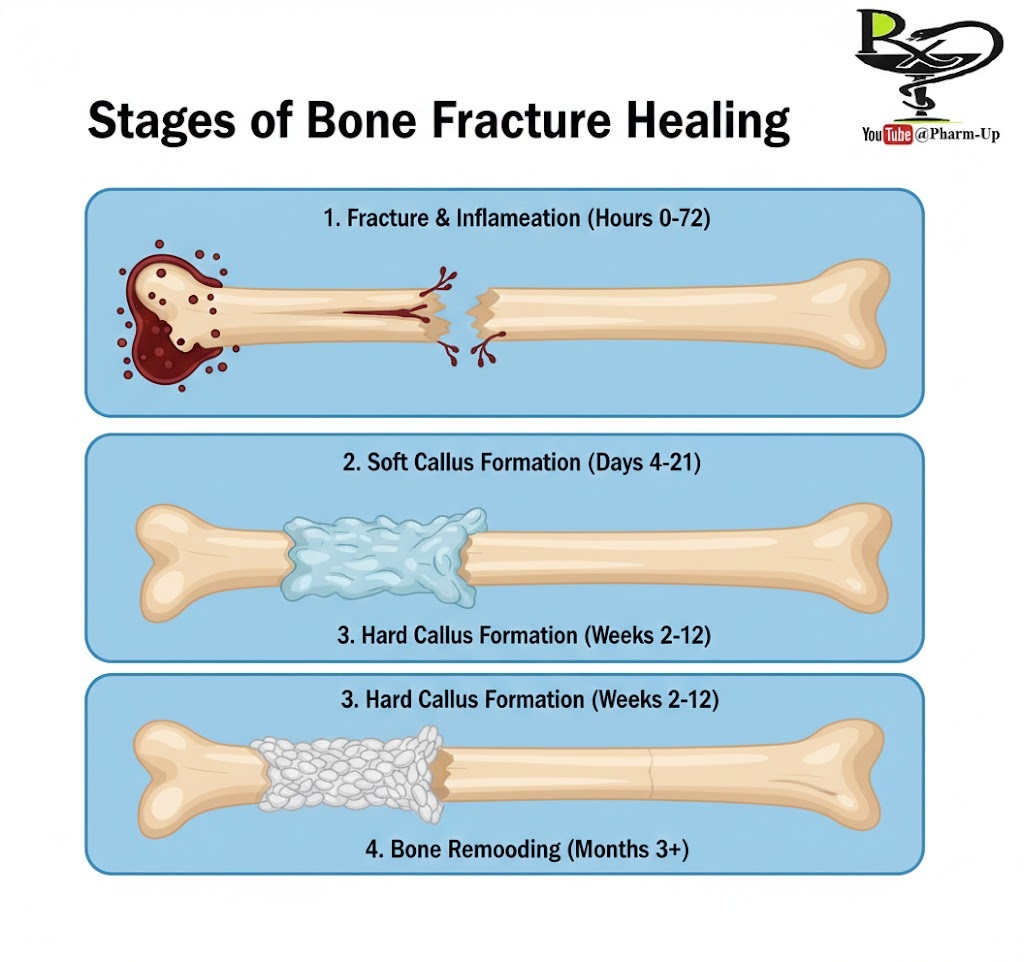
A fracture is a medical condition where the continuity of a bone is broken. While often used interchangeably with the word “break,” fractures can range from a tiny, hair-like crack to a complete shattering of the bone. Because bones are living tissues that house marrow and blood vessels, a fracture is more than just a structural break—it is a biological injury that requires specific conditions to heal.
1. Categorizing the Break: Types of Fractures
Medical professionals classify fractures to determine the best course of treatment. They look at the orientation of the break and whether it has damaged the surrounding tissue.
- By Skin Integrity:
- Closed (Simple): The bone breaks but does not puncture the skin.
- Open (Compound): The bone pierces the skin, or a deep wound exposes the bone. These carry a high risk of infection and require urgent surgical cleaning.
- By Severity of the Break:
- Complete: The bone is snapped into two or more distinct pieces.
- Incomplete (Greenstick): The bone is cracked or bent but not fully separated. This is common in children whose bones are more flexible.
- By the Pattern of the Break:
- Transverse: A straight horizontal line across the bone.
- Oblique: An angled or diagonal break.
- Spiral: A break that circles the bone, usually caused by a violent twisting motion.
- Comminuted: The bone is crushed or splintered into multiple fragments.
- Stress Fracture: A hairline crack caused by repetitive force or overuse, common in athletes.
2. Common Causes and Risk Factors
Bones are remarkably strong, but they break when the physical force applied to them is stronger than the bone itself.
- Trauma: High-impact events like motor vehicle accidents, falls from heights, or contact sports.
- Overuse: Repetitive motions (like long-distance running) that tire the muscles and place more stress on the bone.
- Osteoporosis: A condition that thins and weakens the bones, making them brittle enough to break even during minor activities like bending over or coughing.
- Low Bone Density: Often caused by a lack of calcium and Vitamin D, which are essential building blocks for bone strength.
3. Symptoms and Warning Signs
While a “snap” or “pop” is often heard at the time of injury, other symptoms include:
- Deformity: A limb looking out of position or having an unnatural “bend.”
- Swelling and Bruising: Caused by internal bleeding from the bone and surrounding tissue.
- Inability to Bear Weight: Intense pain when trying to use the affected limb.
- Crepitus: A grating sensation caused by bone fragments rubbing together.
4. Diagnosis and Medical Treatment
Diagnosis typically begins with a physical exam, followed by imaging like X-rays, CT scans, or MRIs to see the exact location and shape of the break.
- Immobilization: The most common treatment. Using a plaster or fiberglass cast or a splint ensures the bone ends stay aligned while they knit back together.
- Reduction: If the bone is out of place, a doctor must “set” it. Closed reduction is done by manipulation; open reduction requires surgery.
- Surgery (Internal Fixation): Surgeons use metal plates, pins, or screws to hold the bone fragments together internally.
- Physical Therapy: Once the cast is removed, exercises are vital to restore muscle strength and joint flexibility.
5. Prevention and Bone Health
You can proactively lower your risk of fractures by focusing on two areas: strength and safety.
- Nutrition: Ensure adequate intake of Calcium (dairy, leafy greens) and Vitamin D (sunlight, supplements) to maintain bone mineral density.
- Weight-Bearing Exercise: Activities like walking, jogging, and weightlifting signal the body to build denser, stronger bones.
- Home Safety: Minimize fall risks by removing loose rugs, installing bright lighting, and using non-slip mats in bathrooms.
About the Author