Pharm'Up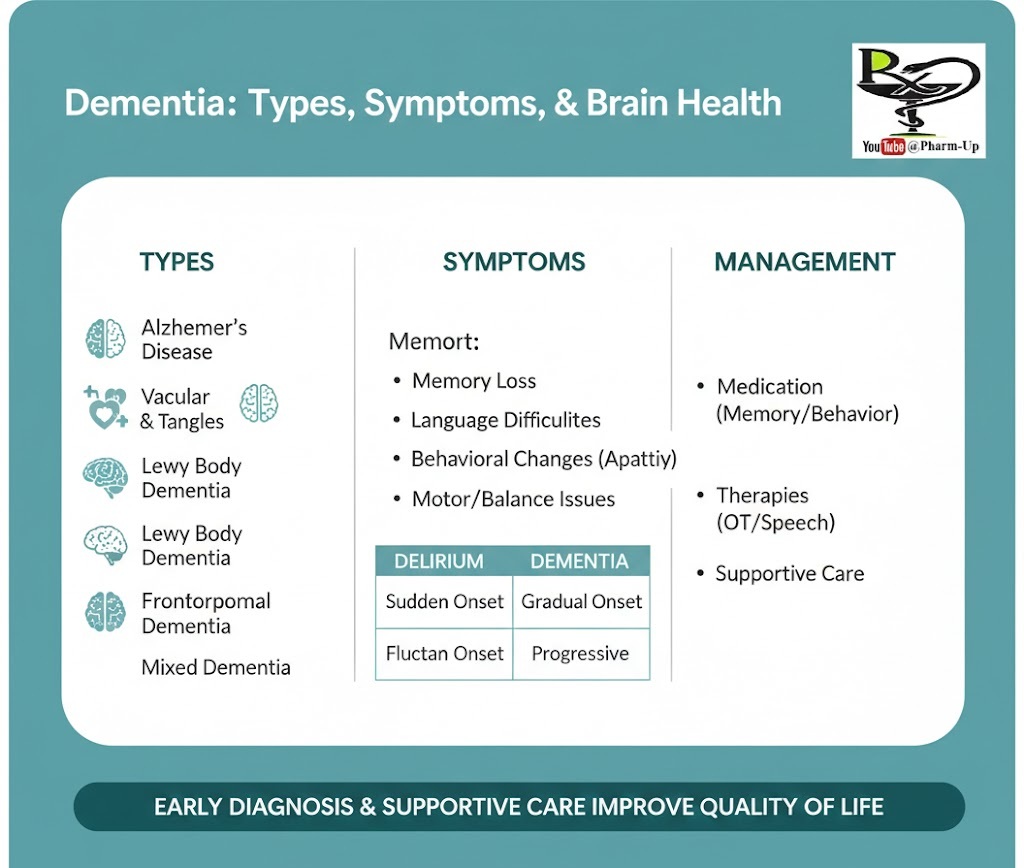
Dementia is not a single disease; it is an umbrella term for a decline in mental ability severe enough to interfere with daily life. While it is more common as people age, it is not a normal part of the aging process. It involves the physical death or dysfunction of brain cells.
Major Types of Dementia
Dementia types are often classified by the specific changes happening within the brain tissue.
- Alzheimer’s Disease: The most common type. It is characterized by the buildup of amyloid plaques (between cells) and tau tangles (inside cells), leading to a loss of nerve cell connections.
- Vascular Dementia: Resulting from impaired blood flow to the brain, often following a stroke or due to atherosclerosis.
- Lewy Body Dementia: Caused by abnormal protein deposits called Lewy bodies. This type often includes movement symptoms similar to Parkinson’s.
- Frontotemporal Dementia: Involves degeneration in the frontal and temporal lobes, primarily affecting personality, behavior, and language.
- Mixed Dementia: A condition where a person has more than one type of dementia simultaneously (e.g., Alzheimer’s and Vascular).
Symptoms and Progression
Symptoms vary based on the area of the brain affected but generally progress through stages from mild to severe.
| Category | Common Signs |
| Cognitive | Memory loss, getting lost in familiar places, and difficulty with complex tasks like managing finances. |
| Language | Struggling to find words or calling familiar objects by unusual names. |
| Behavioral | Apathy, loss of inhibitions, or significant personality changes. |
| Physical | In later stages, problems with balance, movement, and swallowing. |
Risk Factors and Diagnosis
While age is the most significant risk factor, lifestyle and genetics also play roles.
- Modifiable Risks: Smoking, excessive alcohol consumption, uncontrolled diabetes, and high blood pressure.
- Diagnostic Tools: Doctors use a combination of medical history, physical exams, and cognitive tests (like the MMSE). They may also use MRI or CT scans to look for brain shrinkage or vascular damage.
Management and Care
Most forms of dementia have no cure, so treatment focuses on managing symptoms and improving quality of life.
- Medications: Some drugs can temporarily improve memory or manage secondary symptoms like depression and sleep issues.
- Therapies: Occupational therapy helps adapt the home environment for safety; Speech therapy can assist with communication and swallowing.
- Supportive Care: Counseling for families and creative outlets like music or art therapy can reduce anxiety and agitation.
About the Author




 Pharm'Up