Pharm'Up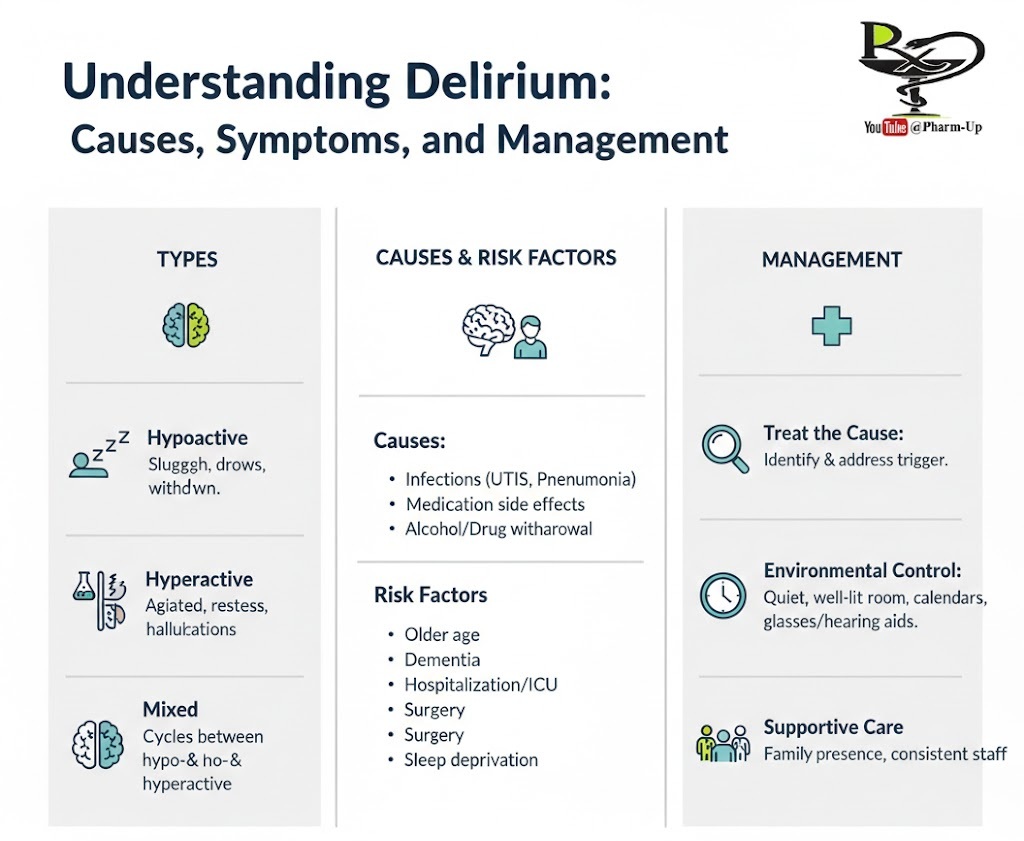
Delirium is a sudden, fluctuating change in mental state that causes confusion and disorientation. Unlike chronic conditions, delirium is often temporary and can be reversed if the underlying cause is identified and treated promptly.
Types of Delirium
Not all patients experience delirium in the same way. It is categorized into three primary types:
- Hypoactive: The person appears sluggish, drowsy, or withdrawn. This is often mistaken for depression.
- Hyperactive: The person is agitated, restless, or may experience hallucinations.
- Mixed: The person cycles between periods of being hypoactive and hyperactive.
Common Causes and Risk Factors
Delirium is usually a “red flag” that something else is wrong in the body. It is frequently seen in elderly patients or those in intensive care.
- Medical Issues: Infections (like UTIs or pneumonia), dehydration, electrolyte imbalances, and organ failure.
- Substances: Medication side effects (especially opioids or sedatives), or withdrawal from alcohol (Delirium Tremens).
- Environment: Sleep deprivation and the stress of hospitalization or surgery.
Symptoms vs. Dementia
Because delirium and dementia both involve confusion, they are often confused. However, they are distinct conditions:
| Feature | Delirium | Dementia |
| Onset | Sudden (hours or days) | Slow and progressive (years) |
| Attention | Greatly impaired; unable to focus | Usually alert until late stages |
| Fluctuation | Symptoms come and go throughout the day | Symptoms remain relatively stable |
| Reversibility | Often reversible with treatment | Usually permanent and progressive |
Diagnosis and Management
Diagnosis involves a combination of mental status testing, reviewing medical history, and conducting lab tests (blood or urine) to find the physiological trigger.
Treatment and Prevention Strategies:
- Treat the Cause: Addressing the infection or stopping the offending medication.
- Environmental Control: Keeping the room well-lit during the day, reducing noise at night, and ensuring the patient has their glasses or hearing aids.
- Orientation: Using clocks, calendars, and the presence of family members to help the patient stay connected to reality.
About the Author




 Pharm'Up