Pharm'Up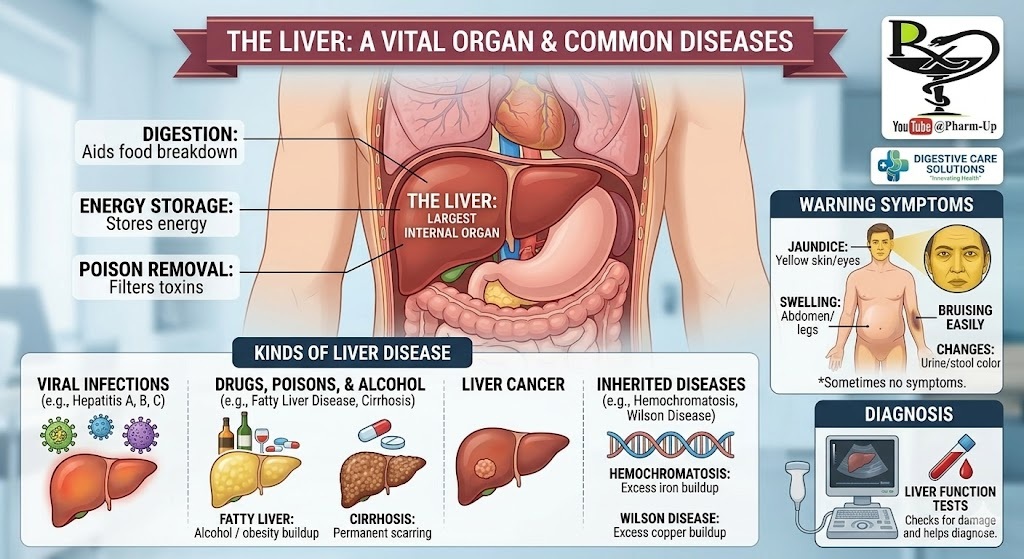
The liver is the largest internal organ in the human body, performing hundreds of essential tasks to keep you healthy. Its primary roles include:
- Digestion: Producing bile to help break down fats.
- Energy Storage: Storing glucose (as glycogen) to provide energy when the body needs it.
- Detoxification: Filtering toxins, poisons, and drugs out of the bloodstream.
Common Types of Liver Disease
Liver diseases are categorized by their cause. They can result from infections, lifestyle factors, or genetics:
- Viral Infections: Hepatitis A, B, and C are viruses that cause inflammation and damage to liver cells.
- Toxins and Alcohol: Long-term heavy alcohol use or exposure to certain poisons can lead to Fatty Liver Disease and Cirrhosis (permanent scarring).
- Genetic Disorders: Inherited conditions like Hemochromatosis (excess iron) and Wilson Disease (excess copper) cause substances to build up to toxic levels.
- Cancer: Primary liver cancer can develop on its own or as a result of chronic liver damage.
Symptoms to Watch For
In many cases, liver disease progresses silently with no symptoms in the early stages. When symptoms do appear, they often include:
- Jaundice: A noticeable yellowing of the skin and the whites of the eyes.
- Abdominal Changes: Swelling in the abdomen (ascites) and legs, or changes in the color of stool and urine.
- Physical Vulnerability: Bruising or bleeding easily.
Diagnosis and Testing
If liver damage is suspected, doctors typically use a combination of tools for diagnosis:
- Liver Function Tests (LFTs): Blood tests that measure levels of proteins and enzymes in your blood.
- Imaging: Ultrasounds, CT scans, or MRIs to look for physical abnormalities or scarring.
About the Author