Pharm'Up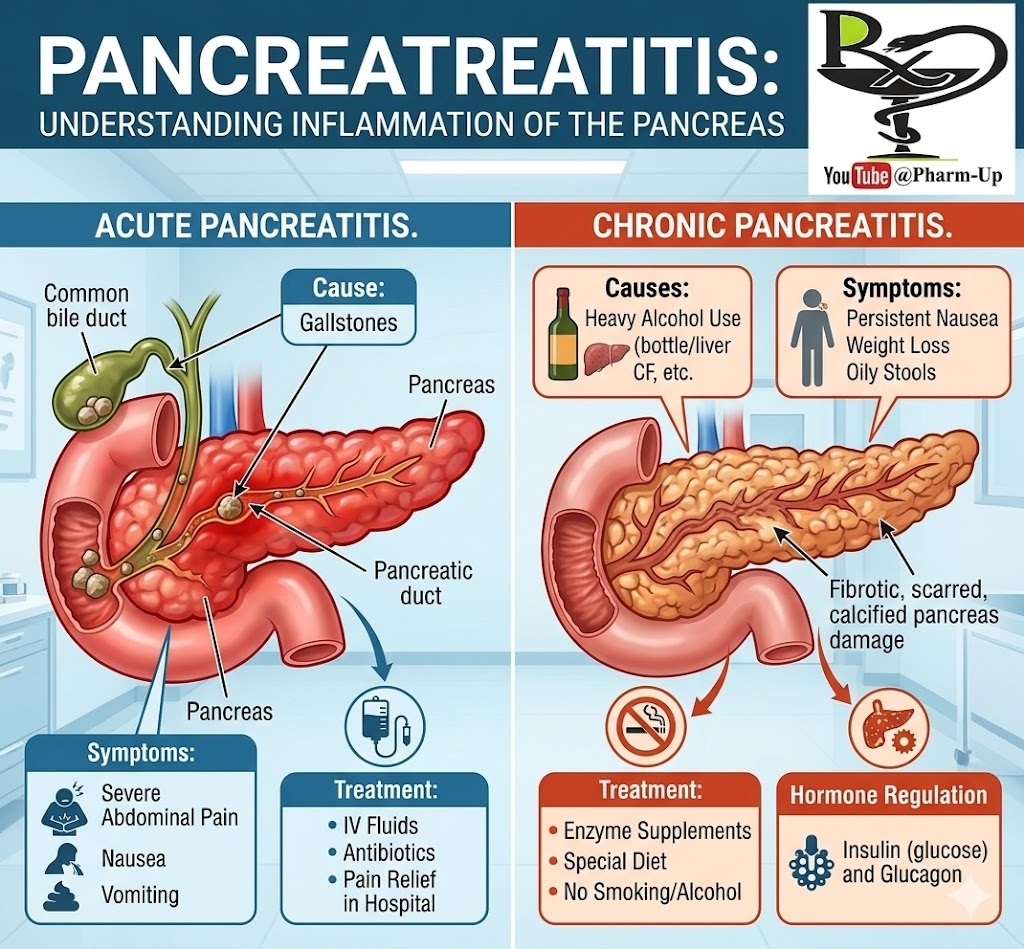
The pancreas is a vital organ located behind the stomach, near the beginning of the small intestine. It serves two primary roles:
- Digestion: It secretes digestive juices into the small intestine through the pancreatic duct.
- Hormone Regulation: It releases insulin and glucagon directly into the bloodstream to regulate blood sugar levels.
What is Pancreatitis?
Pancreatitis occurs when the pancreas becomes inflamed. This happens when digestive enzymes—which normally remain inactive until they reach the small intestine—activate prematurely and begin “digesting” the pancreas itself.
1. Acute Pancreatitis
- Nature: Occurs suddenly; usually resolves within a few days with medical treatment.
- Common Cause: Gallstones (which can block the pancreatic duct).
- Symptoms: Severe upper abdominal pain, nausea, and vomiting.
- Treatment: Hospitalization for IV fluids, antibiotics, and pain management.
2. Chronic Pancreatitis
- Nature: A persistent condition that does not heal and leads to permanent organ damage over time.
- Common Cause: Heavy alcohol use is the leading factor. Other causes include cystic fibrosis, high blood fats (lipids), or autoimmune conditions.
- Symptoms: Nausea, vomiting, weight loss, and oily stools (steatorrhea).
- Treatment: Hospitalization for stabilization, followed by long-term management including enzyme supplements, a specialized diet, and a strict avoidance of alcohol and smoking.
Comparison of Symptoms and Causes
| Feature | Acute Pancreatitis | Chronic Pancreatitis |
| Onset | Sudden | Gradual/Persistent |
| Primary Cause | Gallstones | Heavy alcohol use |
| Pain Level | Severe, sharp | Persistent, often recurring |
| Long-term Damage | Usually reversible | Permanent scarring |
| Key Symptom | Intense abdominal pain | Weight loss & oily stools |
About the Author