Pharm'Up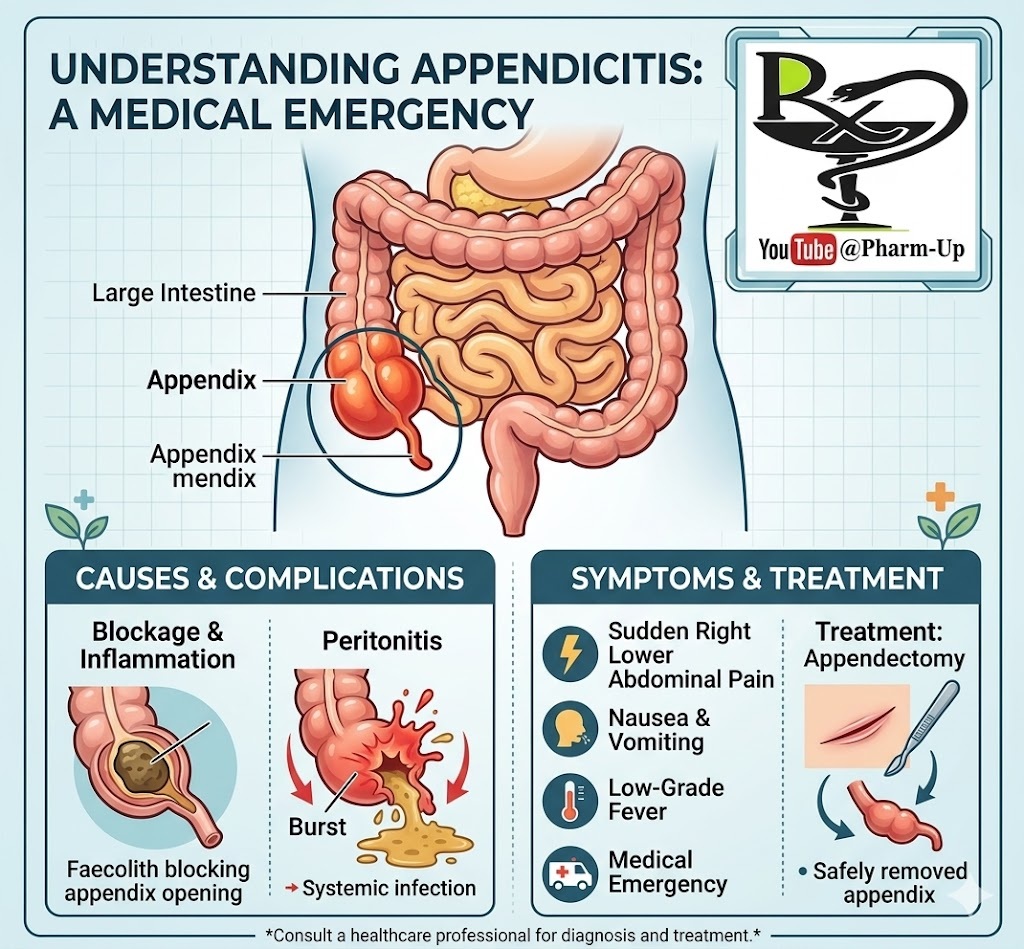
The appendix is a small, finger-shaped tube attached to the cecum, the first part of the large intestine. It is typically found in the lower right section of the abdomen. While historically believed to be a vestigial organ with no essential function, recent research suggests it may act as a “safe house” for beneficial gut bacteria, helping to restore healthy gut flora after digestive distress.
What is Appendicitis?
Appendicitis is the painful and potentially serious inflammation of the appendix. It most often occurs when the opening of the appendix becomes blocked, which can lead to increased pressure, restricted blood flow, and infection. If left untreated, the inflamed appendix can rupture (burst), spilling infectious material into the abdominal cavity. This dangerous complication is called peritonitis and requires immediate medical intervention.
Recognizing Key Symptoms
While symptoms can vary, the hallmark of appendicitis is abdominal pain.
- Classic Pain Progression: Typically starts as dull pain around the navel and then shifts to the lower right abdomen, where it becomes sharp and intensifies over a few hours.
- Other Common Symptoms:
- Sudden loss of appetite
- Nausea and vomiting
- Abdominal swelling
- Fever, often mild (but may spike if the appendix bursts)
- Difficulty passing gas, constipation, or diarrhea
- Important Note: Not everyone exhibits all of these symptoms.
Treatment as a Medical Emergency
Appendicitis is considered a medical emergency requiring prompt diagnosis and treatment to prevent serious complications.
- Treatment: The primary and most definitive treatment is the surgical removal of the appendix, a procedure known as an appendectomy.
- Who is Affected: While appendicitis can occur at any age, it is most common in individuals between 10 and 30 years old.
About the Author