Pharm'Up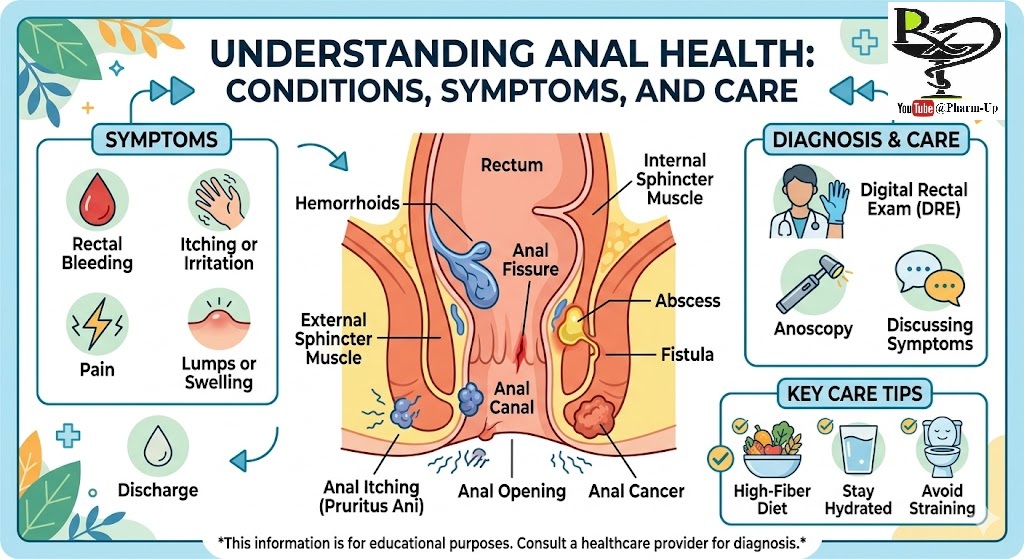
The anus is the final opening of the digestive tract, located at the end of the large intestine, through which stool is expelled from the body. Because this area is highly vascular and contains sensitive tissues, it is susceptible to several common medical conditions.
Common Anal Disorders
- Hemorrhoids: Swollen and inflamed veins in the rectum or anus that can cause discomfort and bleeding.
- Anal Fissures: Small, painful tears in the lining of the anal canal, often caused by straining during bowel movements.
- Abscesses & Fistulas: An abscess is an infected pocket of pus; a fistula is an abnormal tunnel connecting the anal canal to the skin.
- Pruritus Ani (Anal Itching): Persistent irritation or itching around the anal opening.
- Anal Cancer: A less common but serious condition involving malignant cell growth in the anal tissues.
Identifying Symptoms
Symptoms vary based on the specific disorder but frequently include:
- Pain: Especially during or after bowel movements.
- Bleeding: Often noticed as bright red blood on toilet paper or in the stool.
- Itching or Irritation: Persistent discomfort in the perianal area.
- Lumps or Swelling: Feeling a physical protrusion or inflammation.
- Discharge: Unusual moisture or mucus.
Diagnosis and Professional Consultation
Diagnosing these issues typically involves a physical examination. A healthcare provider may perform a Digital Rectal Exam (DRE) or use an anoscopy (a small tube with a light) to view the internal lining.
While discussing these symptoms can feel private or embarrassing, early intervention is key. Providing your doctor with specific details about the timing of pain or the nature of bleeding ensures a more accurate diagnosis and a faster path to recovery.
About the Author