Pharm'Up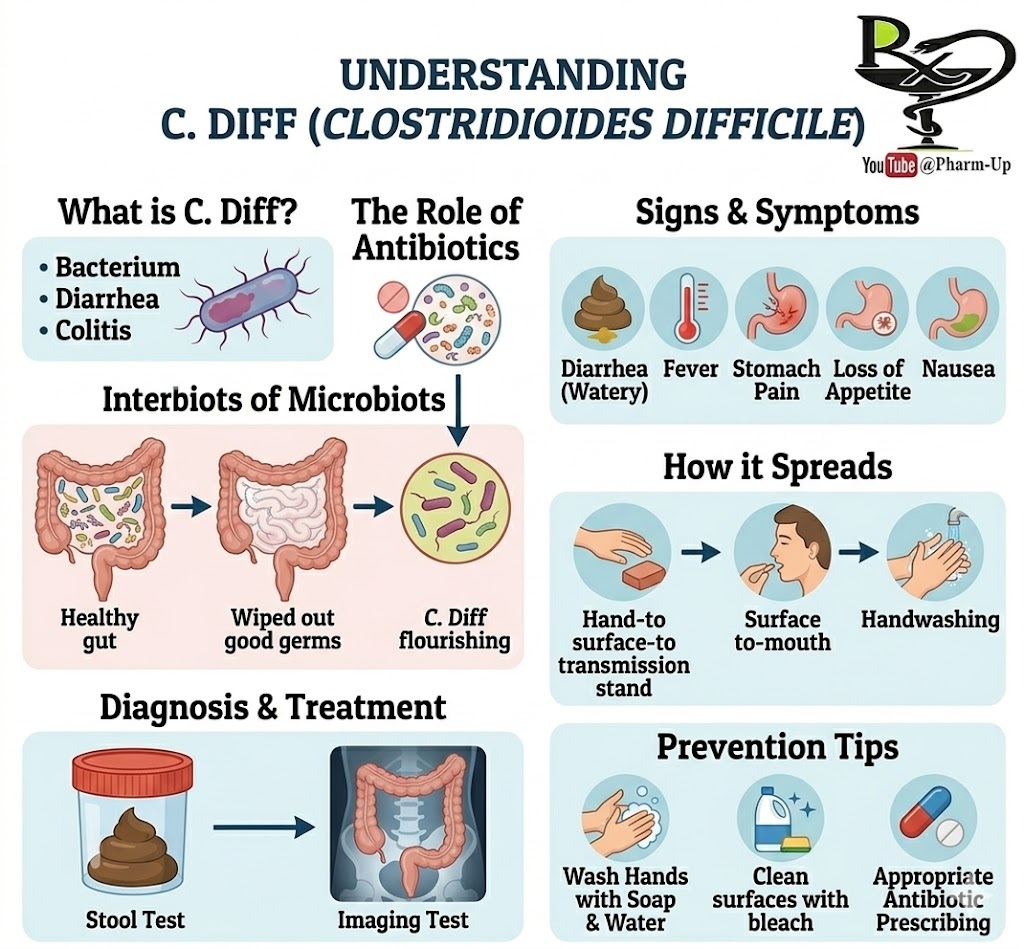
Clostridioides difficile, commonly known as C. diff, is a bacterium that triggers inflammation of the colon (colitis) and severe diarrhea. It is responsible for nearly half a million illnesses annually, making it a significant public health concern, particularly in healthcare settings.
The Role of Antibiotics
While C. diff exists in the environment, it rarely causes illness in healthy individuals with balanced gut bacteria. The primary trigger for an infection is antibiotic use.
Antibiotics are designed to kill harmful bacteria, but they often unintentionally destroy the “good” bacteria that protect your intestines. When these protective germs are gone, C. diff can flourish, release toxins, and attack the lining of the gut. This vulnerability can last for several months after you finish a course of antibiotics.
Risk Factors and Transmission
C. diff is highly contagious and spreads through contact with surfaces contaminated by feces. You are at a higher risk if you:
- Are aged 65 or older.
- Have recently stayed in a hospital or nursing home.
- Have a weakened immune system.
- Have a history of previous C. diff infections.
Symptoms and Diagnosis
The most common indicator of an infection is frequent, watery diarrhea. Other symptoms include:
- Fever and nausea.
- Loss of appetite.
- Abdominal pain or tenderness.
Diagnosis usually involves a laboratory stool test to detect C. diff toxins. In severe cases, doctors may use X-rays or CT scans to check for complications like a perforated colon.
Treatment and Recovery
Treatment is somewhat paradoxical: specific antibiotics (like vancomycin or fidaxomicin) are used to kill the C. diff bacteria.
- Recurrence: About 1 in 6 people will experience a repeat infection within 8 weeks.
- Fecal Microbiota Transplant (FMT): For those with recurrent infections, FMT may be used to transplant healthy donor stool into the patient’s colon to restore bacterial balance.
- Surgery: In extreme, life-threatening cases, surgery may be required to remove the diseased portion of the colon.
Prevention Tips
- Handwashing: Use soap and water. Hand sanitizers are often ineffective against C. diff spores.
- Disinfection: If someone is sick, clean bathroom surfaces with a bleach-based solution.
- Antibiotic Stewardship: Only take antibiotics when absolutely necessary and exactly as prescribed.
About the Author