Pharm'Up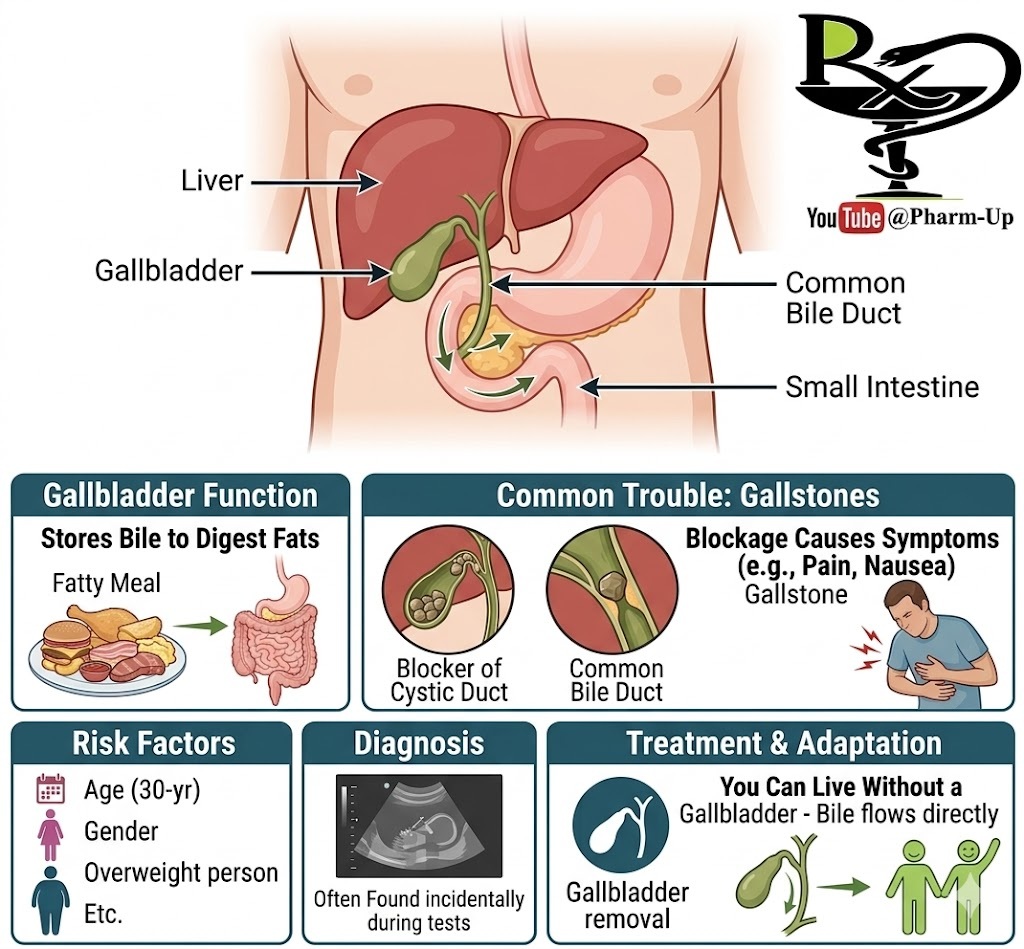
The gallbladder is a small, pear-shaped reservoir located just beneath the liver. Its primary role is to act as a storage tank for bile, a digestive fluid produced by the liver that is essential for the breakdown and absorption of fats.
How the Biliary System Works
When you consume food—particularly fats—your digestive system signals the gallbladder to contract. This squeeze sends bile through the common bile duct, a tube that connects the liver and gallbladder to the small intestine. Once in the intestine, the bile acts like a detergent, emulsifying fats so they can be processed by the body.
Gallstones: The Primary Source of Trouble
Gallbladder issues typically occur when the flow of bile is obstructed. The most common culprit is a gallstone. These are hardened deposits that form when substances in the bile (like cholesterol or bilirubin) crystallize.
- Gallstone Attacks: Often occurring after a heavy meal, an “attack” happens when a stone blocks a duct.
- Common Symptoms: Nausea, vomiting, and sharp pain in the upper right abdomen, back, or just under the right arm.
- Risk Factors: Age, being female, obesity, and certain ethnic backgrounds (including Native American and Mexican American) increase the likelihood of developing stones.
Diagnosis and Living Without a Gallbladder
Many people have gallstones without ever knowing it. They are frequently discovered incidentally during imaging tests (like ultrasounds or CT scans) for unrelated health issues.
- When to Treat: If gallstones are “silent” (causing no symptoms), treatment is usually unnecessary.
- Cholecystectomy: If the stones cause frequent pain or inflammation, the most common treatment is the surgical removal of the gallbladder.
- Adaptation: Fortunately, the gallbladder is not an essential organ. Without it, the liver simply drips bile continuously into the small intestine rather than storing it, allowing for a perfectly normal life and diet.
About the Author