Pharm'Up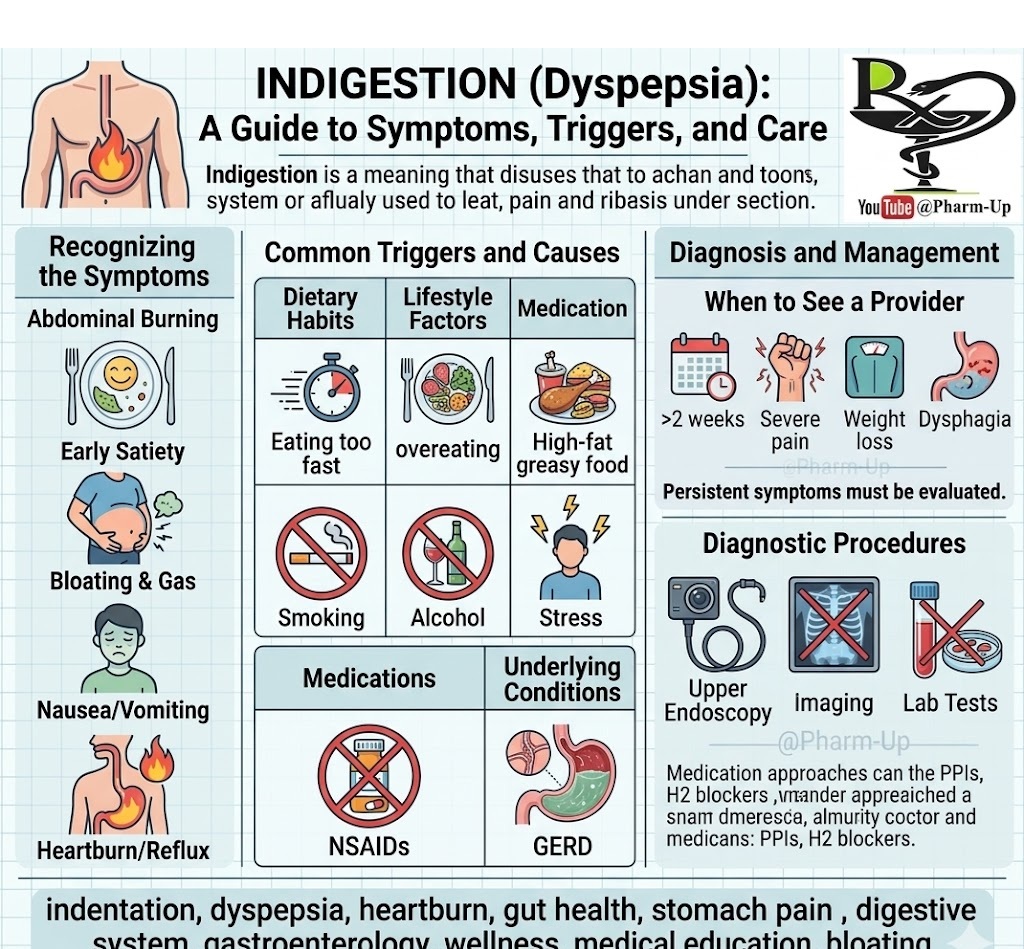
Indigestion, clinically known as dyspepsia, describes a range of discomforts occurring in the upper abdomen. It is not a disease itself but rather a group of symptoms that often occur shortly after eating or drinking. While frequently a minor issue, persistent indigestion can signal underlying digestive health concerns.
Recognizing the Symptoms
Indigestion often presents as a “perfect storm” of upper gastrointestinal discomfort. Common signs include:
- Abdominal Burning: A painful or burning sensation between the bottom of the breastbone and the navel.
- Early Satiety: Feeling uncomfortably full soon after starting a meal.
- Bloating and Gas: A heavy feeling in the stomach accompanied by belching.
- Nausea: A general feeling of sickness, which may occasionally lead to vomiting.
- Heartburn: Though distinct, acid reflux (heartburn) often occurs alongside indigestion.
Common Triggers and Causes
Indigestion is typically tied to lifestyle habits or how the digestive tract reacts to certain stimuli.
| Category | Common Triggers |
| Dietary Habits | Eating too quickly, overeating, or consuming high-fat, greasy, and spicy foods. |
| Lifestyle Factors | Smoking, excessive alcohol consumption, high stress levels, and fatigue. |
| Medications | Certain pain relievers (NSAIDs), antibiotics, and iron supplements. |
| Underlying Conditions | Gastritis, peptic ulcers, GERD (Gastroesophageal Reflux Disease), or gallstones. |
Diagnosis and Management
Most cases of indigestion are temporary and can be managed by avoiding known triggers. However, chronic issues require a professional diagnostic approach.
When to See a Provider
Self-treatment is common, but you should consult a healthcare professional if:
- Symptoms last for more than two weeks.
- Pain is severe or radiating to the jaw, neck, or arm.
- You experience unintended weight loss or frequent vomiting.
- You have difficulty swallowing (dysphagia).
Diagnostic Procedures
- Upper Endoscopy: Using a thin, flexible tube with a camera to examine the stomach lining.
- Imaging & Labs: X-rays or blood/stool tests to rule out infections (like H. pylori) or structural issues.
- Medication: Providers may suggest Proton Pump Inhibitors (PPIs) or H2 blockers to reduce stomach acid.
About the Author