Breakthrough Antimalarial MK-7602 A First-in-Class Weapon Against Drug Resistance
 Pharm'Up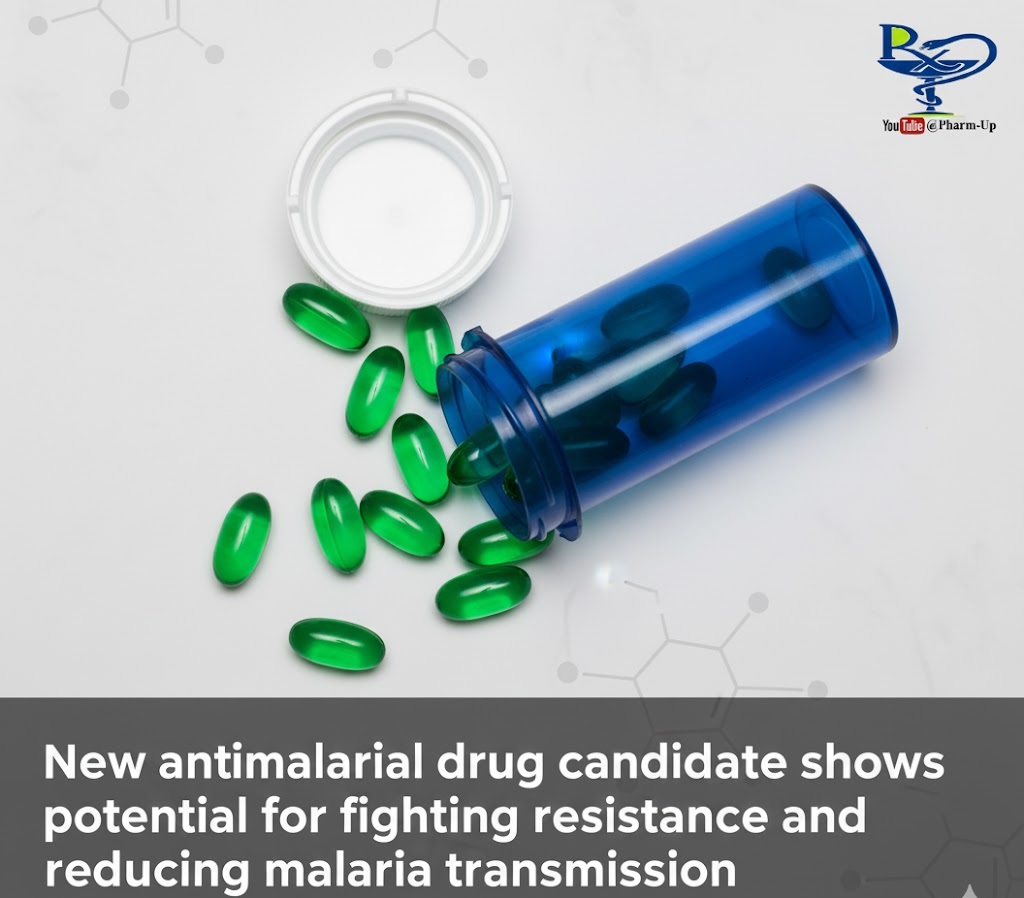
Researchers from the Walter and Eliza Hall Institute (WEHI) and global biopharmaceutical leader MSD (Merck & Co., Inc.) have unveiled a groundbreaking antimalarial drug candidate, MK-7602.
Published in the Lancet journal eBiomedicine, the research highlights a “first-in-class” clinical candidate designed to tackle the global crisis of drug-resistant malaria while simultaneously curbing transmission.
Dual-Action Mechanism: How it Works
Unlike traditional treatments, MK-7602 employs a unique dual-targeting strategy. It blocks two essential enzymes within the malaria parasite: Plasmepsin IX and Plasmepsin X. These enzymes are responsible for activating key proteins that allow the parasite to invade and exit red blood cells.
By targeting two enzymes at once, the drug creates a high barrier to resistance, making it significantly harder for parasites like Plasmodium falciparum and Plasmodium vivax to adapt and survive.
Multi-Stage Impact: Treatment and Transmission
MK-7602 is not just a cure; it is a potential tool for eradication. Pre-clinical studies demonstrate that the drug is effective at multiple stages of the parasite’s life cycle:
- Blood Stage: Successfully traps parasites inside red blood cells, halting the replication cycle.
- Liver Stage: Prevents the early-stage development of the infection.
- Transmission Stage: Blocks the spread of the parasite from humans back to mosquitoes, potentially breaking the cycle of infection in communities.
“The ability to target multiple stages of the parasite life cycle, combined with its high barrier to resistance, supports our ongoing efforts to find new ways to combat this devastating disease.” — Professor Alan Cowman AC, Lead Investigator, WEHI.
A Decade of Collaboration
The discovery of MK-7602 is the result of nearly ten years of collaboration between WEHI and MSD. The team utilized the advanced screening technologies at WEHI’s National Drug Discovery Centre to identify and optimize the compound.
While pre-clinical data is robust, early-stage Phase 1 clinical trials are already providing promising evidence of safety and tolerability in humans. Further studies are now underway to evaluate its efficacy across diverse patient populations.
Global Significance
Malaria continues to kill approximately 600,000 people annually, with a child dying every minute. With resistance to frontline drugs like artemisinin spreading rapidly, the development of MK-7602 represents a vital “new tool” in the global mission to eliminate malaria for good.
About the Author