Pharm'Up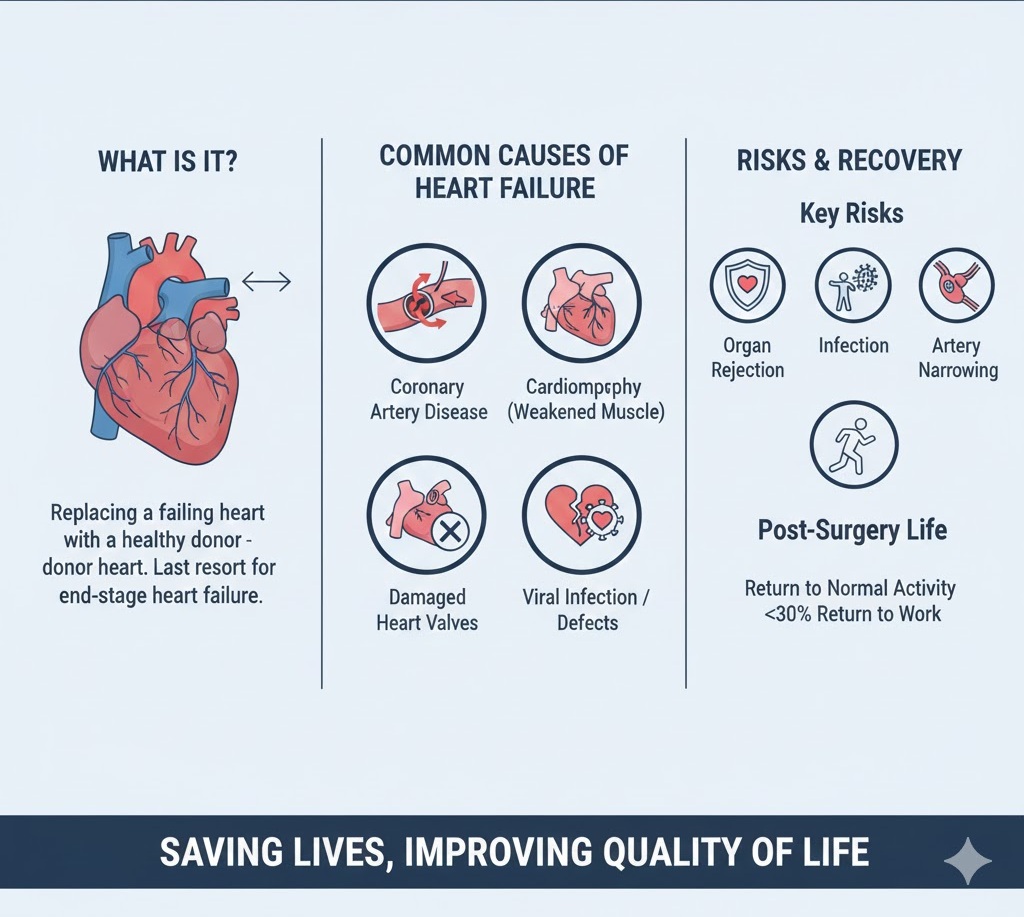
A heart transplant is a major surgical procedure where a patient’s failing heart is replaced with a healthy donor heart. It is considered a “last resort” treatment, reserved for individuals with end-stage heart failure who have not responded to medications, lifestyle changes, or other surgeries.
Why a Transplant Becomes Necessary
Heart failure occurs when the heart can’t pump enough blood to meet the body’s needs. Common causes that may lead to a transplant include:
- Advanced Coronary Heart Disease: Severe blockages that have permanently damaged the muscle.
- Cardiomyopathy: Weakening or scarring of the heart muscle.
- Valvular Disease: Damage to the heart’s valves that cannot be repaired.
- Congenital Heart Defects: Heart structures that have been malformed since birth.
- Viral Myocarditis: A viral infection that severely inflames and weakens the heart.
Risks and Post-Surgery Life
While life-saving, a transplant is a complex journey that requires lifelong commitment to medical care.
Key Risks Include:
- Organ Rejection: The immune system may attack the new heart as a “foreign” object.
- Infection: Immunosuppressant drugs (taken to prevent rejection) make it harder for the body to fight germs.
- Artery Problems: Over time, the arteries in the new heart can thicken or narrow.
Recovery and Activity: Most patients experience a significant improvement in quality of life and can return to normal daily activities and exercise. Interestingly, statistics show that fewer than 30% of transplant recipients return to traditional work, often due to a combination of physical recovery needs, employer limitations, or a shift in life priorities.
About the Author


 Pharm'Up