Pharm'Up
 Understanding Sickle Cell Disease (SCD)
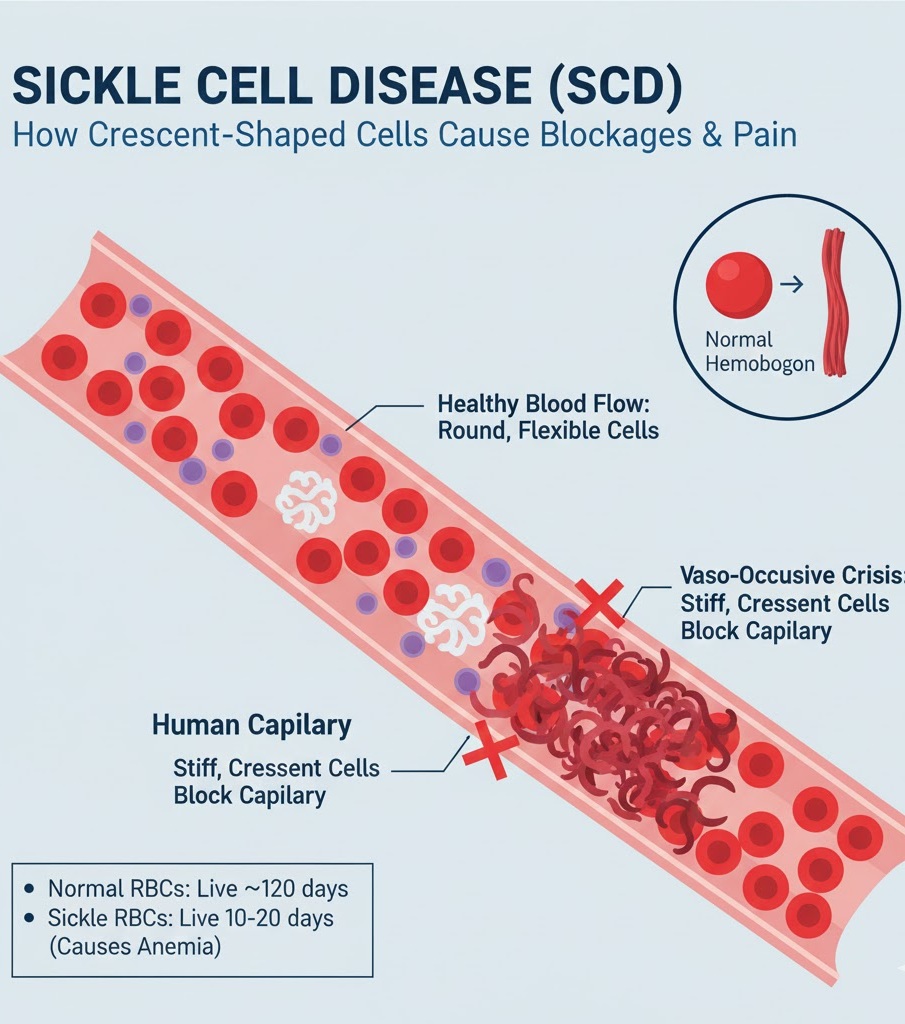
Sickle Cell Disease (SCD) is a group of inherited blood disorders that affect hemoglobin, the protein in red blood cells that carries oxygen. In people with SCD, the hemoglobin is abnormal, causing red blood cells to become stiff and take on a crescent or “sickle” shape.
How SCD Affects the Body
Unlike normal red blood cells, which are flexible and live for about 120 days, sickle cells are brittle and short-lived.
- Anemia: Sickle cells burst easily and survive only 10 to 20 days. The body cannot replace them fast enough, leading to a shortage of red blood cells (anemia), which causes extreme fatigue.
- Vaso-occlusive Crisis (Pain Crisis): The stiff, sickle-shaped cells often get stuck in small blood vessels, blocking blood flow. This deprives tissues of oxygen, leading to sudden, excruciating pain that may require hospitalization.
- Organ Damage: Repeated blockages can damage the spleen, kidneys, liver, and lungs over time.
Genetics and Risk
SCD is a genetic condition present at birth. It is passed down through autosomal recessive inheritance.
- SCD: Inheriting two sickle cell genes (one from each parent).
- Sickle Cell Trait: Inheriting only one sickle cell gene. These individuals are usually healthy “carriers” but can pass the gene to their children.
Demographics: In the U.S., SCD most commonly affects African Americans (1 in 365 births), but it also affects people of Hispanic, Southern European, Middle Eastern, and Asian Indian descent.
Symptoms and Diagnosis
Symptoms usually appear around 5 to 6 months of age and include:
- Dactylitis: Painful swelling of the hands and feet.
- Jaundice: Yellowing of the skin and eyes.
- Infections: Increased vulnerability to illnesses due to spleen damage.
Diagnosis:
All U.S. states perform newborn screening for SCD. For adults, a simple blood test (hemoglobin electrophoresis) or genetic testing can confirm the condition or carrier status.
Modern Treatment Options
While SCD is a lifelong condition, new treatments have significantly improved life expectancy.
| Treatment Type | Purpose |
| Medications | Hydroxyurea and Voxelotor help prevent cells from sickling. |
| Pain Management | Relief for acute crises (IV fluids, anti-inflammatories). |
| Blood Transfusions | Used to treat severe anemia or prevent strokes. |
| Stem Cell Transplant | A potential cure, but risky; usually reserved for children with a matching sibling donor. |
| Gene Therapy | A new frontier for those 12 that modifies the patient’s own DNA to produce healthy hemoglobin. |
About the Author