Pharm'Up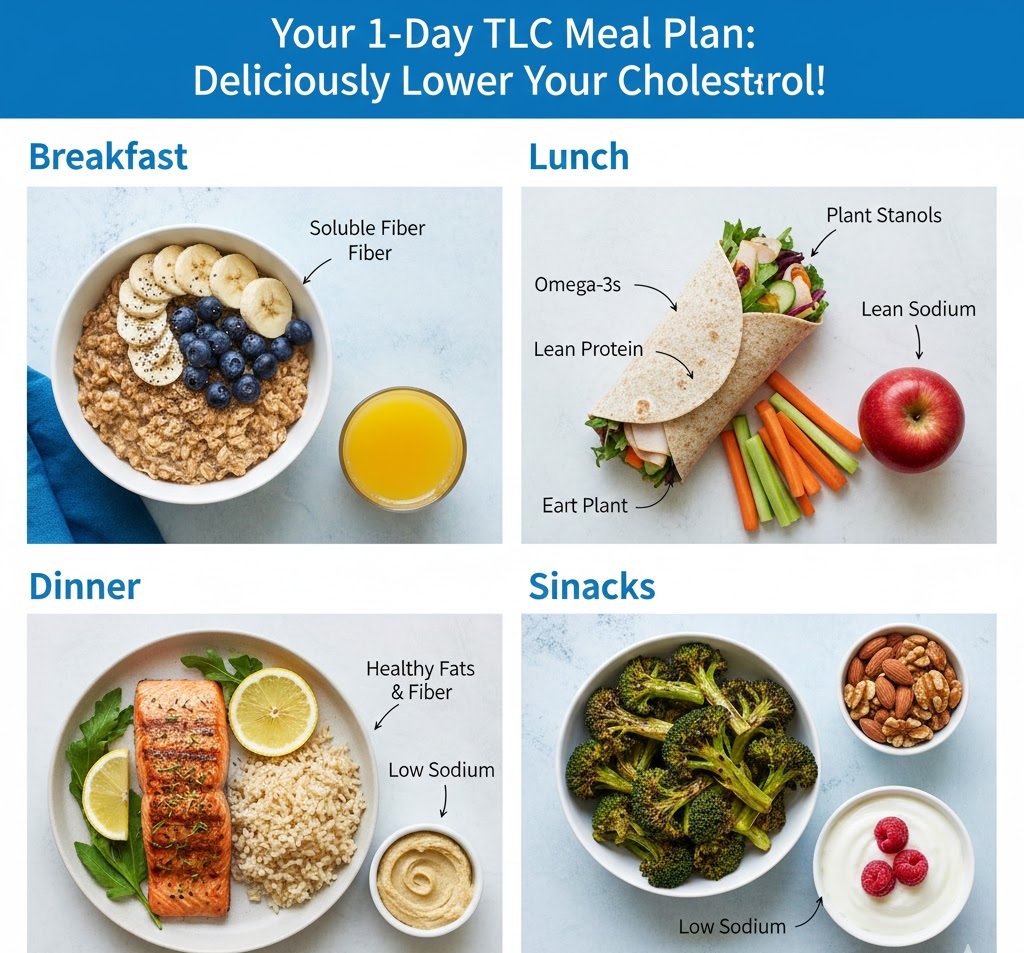
Diet is one of the most powerful tools for managing cholesterol. The Therapeutic Lifestyle Changes (TLC) and DASH eating plans are scientifically designed to lower LDL (bad) cholesterol and improve overall heart health by focusing on nutrient-dense foods and “smart” fats.
1. Managing Your Fats
Not all fats are created equal. The goal is to replace “bad” fats with “good” fats while keeping total fat intake between 25–35% of your daily calories.
- Limit Saturated Fats: These raise LDL more than anything else. They are found in fatty meats, full-fat dairy, and butter.
- Target: Less than 7% of your daily calories.
- Avoid Trans Fats: Found in many processed baked goods and fried foods.
- Choose Unsaturated Fats: Switch to oils like olive, canola, and safflower, and incorporate nuts and avocados.
| Daily Calorie Intake | Max Saturated Fat (7%) |
| 1,500 Calories | 10 grams |
| 2,000 Calories | 13 grams |
| 2,500 Calories | 17 grams |
2. The Power of Fiber and Plants
Certain plant components actively block the absorption of cholesterol in your digestive tract.
- Soluble Fiber: Acts like a sponge to soak up cholesterol. Aim for 10–25 grams per day.
- Sources: Oatmeal, oat bran, apples, bananas, lentils, and kidney beans.
- Plant Stanols and Sterols: These occur naturally in plants and help prevent cholesterol absorption. Aim for 2 grams per day.
- Sources: Whole grains, nuts, and fortified products like certain orange juices or margarines.
3. Boost Your Omega-3s
Omega-3 fatty acids help lower LDL and triglycerides while protecting your heart rhythm.
- Fish Sources: Salmon, tuna, and mackerel (aim for 2 servings per week).
- Note: If pregnant, avoid high-mercury fish.
- Plant Sources: Walnuts, flaxseed, chia seeds, and soybean oil.
4. What to Limit
- Dietary Cholesterol: Limit to less than 200 mg per day. Found in egg yolks, organ meats (liver), and whole-milk dairy.
- Sodium (Salt): Limit to 2,300 mg (about 1 teaspoon) per day. While it doesn’t lower cholesterol directly, it is essential for controlling blood pressure.
- Alcohol: Limit to 1 drink/day (women) or 2 drinks/day (men) to avoid extra calories and elevated triglycerides.
Reading the Label
The Nutrition Facts label is your best ally. Look at the “Saturated Fat” and “Trans Fat” lines first, and check the “Fiber” section to ensure you are getting enough heart-healthy roughage.
About the Author