Pharm'Up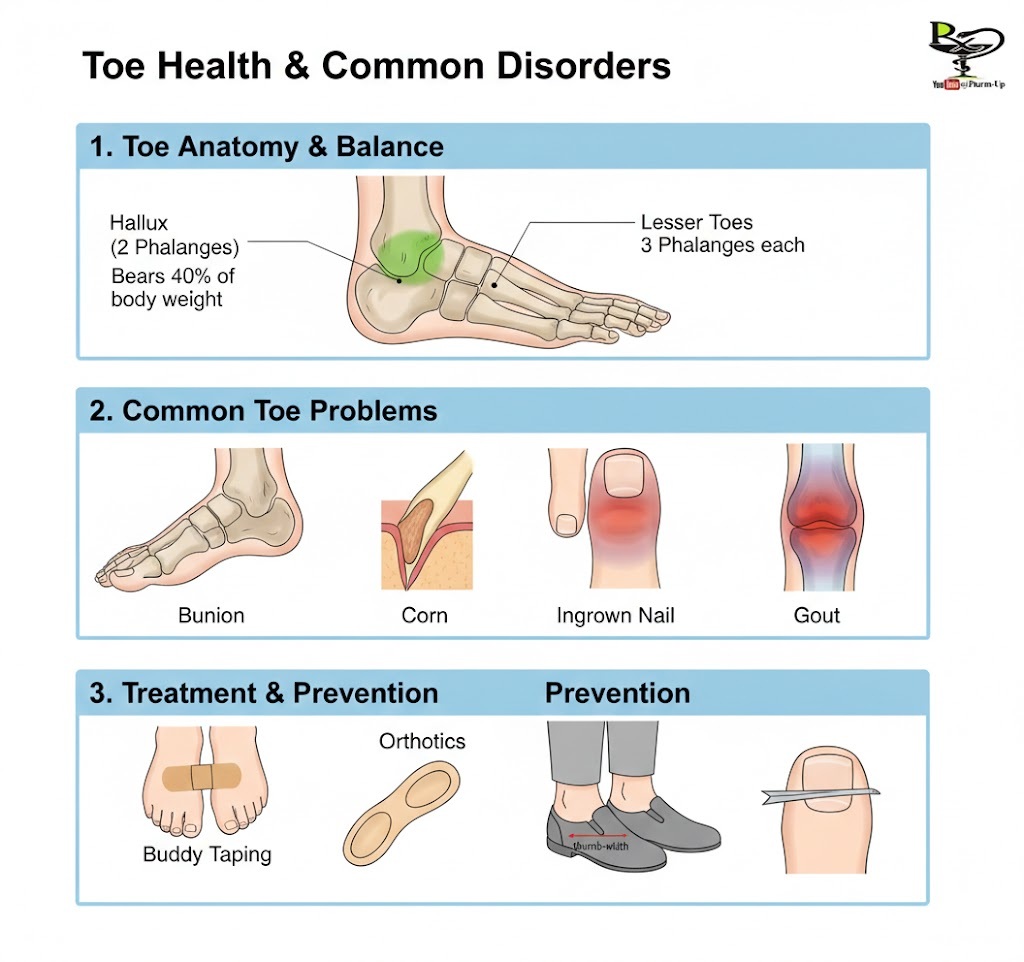
The feet are the foundation of human mobility, and the toes play a critical role in weight distribution, propulsion, and balance. Of the 26 bones in the human foot, 14 are located in the toes (phalanges). While small, these bones are susceptible to a wide range of injuries and systemic diseases that can significantly impair a person’s ability to walk or stand.
1. The Anatomy of Balance
Each toe, except for the big toe, consists of three bones: the proximal, middle, and distal phalanges. The big toe (hallux) has only two.
- The Big Toe: This is the most important toe for balance. It bears about 40% of the body’s weight during the “push-off” phase of walking.
- The Lesser Toes: These help the foot grip the ground and adjust to uneven surfaces.
2. Common Toe Injuries and Disorders
Toe problems are generally categorized into mechanical injuries, skin/nail issues, and systemic diseases.
- Fractures and Dislocations: Caused by “stubbing” the toe or dropping heavy objects. A broken toe often requires “buddy taping” (taping the broken toe to the one next to it).
- Bunions (Hallux Valgus): A structural deformity of the joint at the base of the big toe, often aggravated by narrow, tight shoes.
- Corns and Calluses: Thickened patches of skin caused by repeated friction or pressure from footwear.
- Ingrown Toenails: Occurs when the side of the nail grows into the skin, leading to pain, swelling, and potential infection.
- Hammer Toe: A deformity where the toe has an abnormal bend in the middle joint, usually caused by a muscle imbalance.
3. Systemic Conditions: Gout and Arthritis
Sometimes, toe pain isn’t caused by an injury but by an underlying health condition.
- Gout: A form of inflammatory arthritis characterized by sudden, severe attacks of pain and redness. It most commonly affects the joint at the base of the big toe due to the buildup of uric acid crystals.
- Rheumatoid Arthritis: An autoimmune disorder that can cause the joints in the toes to become inflamed and eventually deformed.
4. Diagnosis and Treatment Options
Treating toe issues ranges from simple home care to specialized medical intervention.
- Conservative Care: Using shoe inserts (orthotics), padding to protect bunions or corns, and wearing wide-toed shoes.
- Rest and Taping: For sprains and minor fractures, resting the foot and using “buddy tape” provides stability.
- Medications: NSAIDs (like ibuprofen) for swelling or specific uric-acid-lowering drugs for gout patients.
- Surgery: In severe cases, such as a debilitating bunion or a complex fracture, surgery may be required to realign the bone or remove a portion of the joint.
5. Prevention: Protecting Your Foundation
Maintaining toe health is largely a matter of proper mechanics and hygiene.
- Proper Footwear: Avoid shoes that “pinch” the toes. Ensure there is enough room to wiggle your toes freely.
- Correct Nail Trimming: Always cut toenails straight across. Cutting them in a curved shape increases the risk of ingrown nails.
- Weight Management: Reducing excess body weight lowers the mechanical stress on the small joints of the toes.
About the Author