Pharm'Up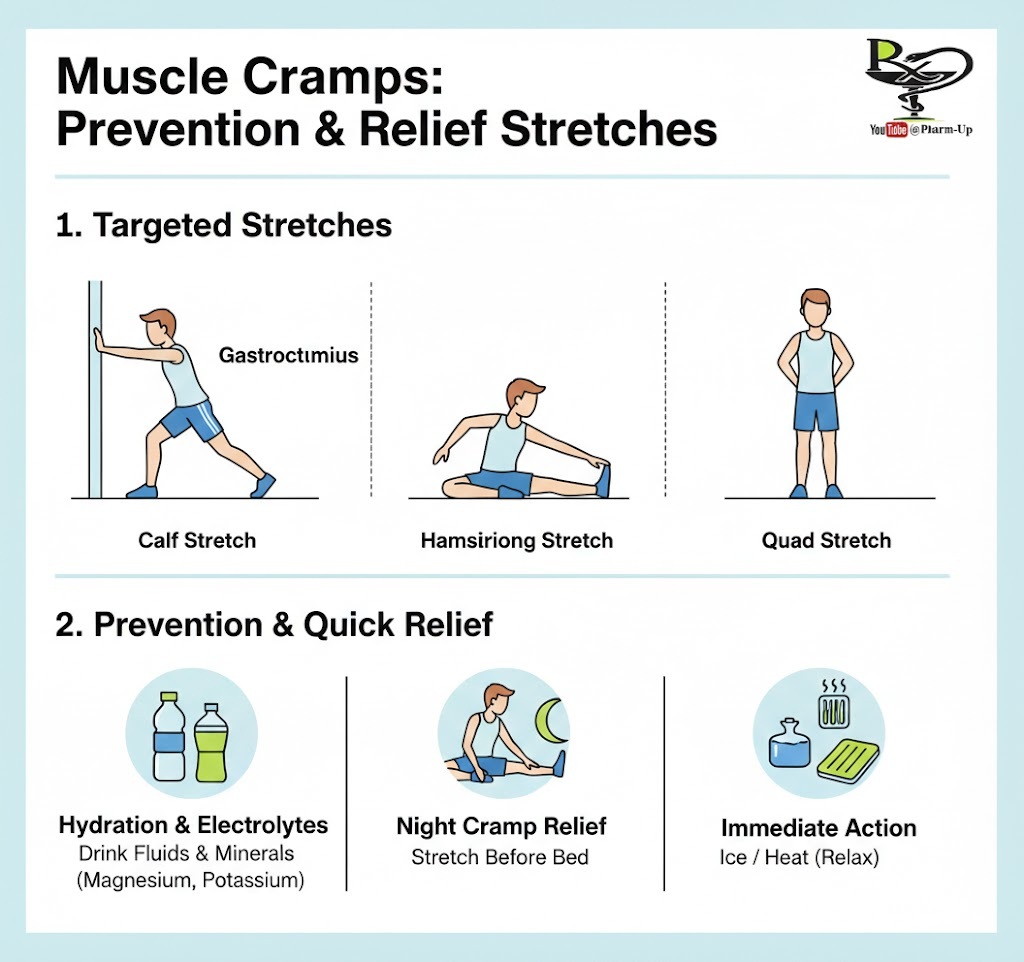
A muscle cramp is a sudden, tight, and intense involuntary contraction of a muscle that does not immediately relax. While they are usually harmless, the sharp pain can be incapacitating for a few moments. These spasms typically occur in the “skeletal muscles”—the muscles you normally control voluntarily—and are most frequent in the calves (often called a “charley horse”).
1. The Physiology of a Cramp
Normally, your brain sends an electrical signal to a muscle to contract, and then a second signal to relax. In a cramp, the muscle fibers fire continuously without the “relaxation” signal.
- The Trigger: This hyper-excitability of the nerves is often caused by a lack of nutrients or a buildup of metabolic waste.
- The Sensation: You may feel a hard lump beneath the skin; this is the muscle tissue physically knotted together.
2. Common Triggers and “Silent” Causes
While overexertion is the primary culprit, several physiological factors play a role:
- Electrolyte Imbalance: Minerals like Magnesium, Potassium, and Calcium are responsible for the electrical signals in your muscles. If these are low, the signals “short-circuit.”
- Dehydration: Water transports these electrolytes. When you are dehydrated, the fluid surrounding your cells shrinks, causing nerve endings to get squashed and fire spontaneously.
- Ischemia (Low Blood Flow): Narrowing of the arteries that move blood to your legs can cause cramp-like pain during exercise.
- Nocturnal Cramps: Leg cramps at night are very common in older adults and are often linked to muscle fatigue or prolonged sitting.
3. Immediate Relief Techniques
When a cramp strikes, the goal is to physically force the muscle fibers to elongate.
- Opposing Stretch: Pull the muscle in the opposite direction of the contraction. For a calf cramp, pull your toes upward toward your shin.
- Heat vs. Cold:
- Heat: Use a heating pad or warm bath to relax the muscle during the cramp.
- Cold: Use an ice pack afterward if the muscle feels tender or inflamed.
- Hydration: Drink water or an electrolyte-rich beverage immediately.
4. Risk Factors and When to Worry
You are at higher risk if you are an athlete training in high heat, a pregnant woman (due to mineral shifts), or an older adult with natural muscle loss.
Seek medical attention if:
- You have muscle atrophy (visible wasting away of the muscle).
- The cramps are followed by weakness that doesn’t go away.
- You are taking medications like statins or diuretics, which can affect mineral levels.
5. Prevention Strategies
- The “Bedtime Stretch”: If you get night cramps, spend 5 minutes doing light leg stretches before lying down.
- Magnesium-Rich Foods: Incorporate spinach, almonds, and black beans into your diet.
- Proper Footwear: Supportive shoes can prevent the foot and leg muscles from overworking during the day.
About the Author