Pharm'Up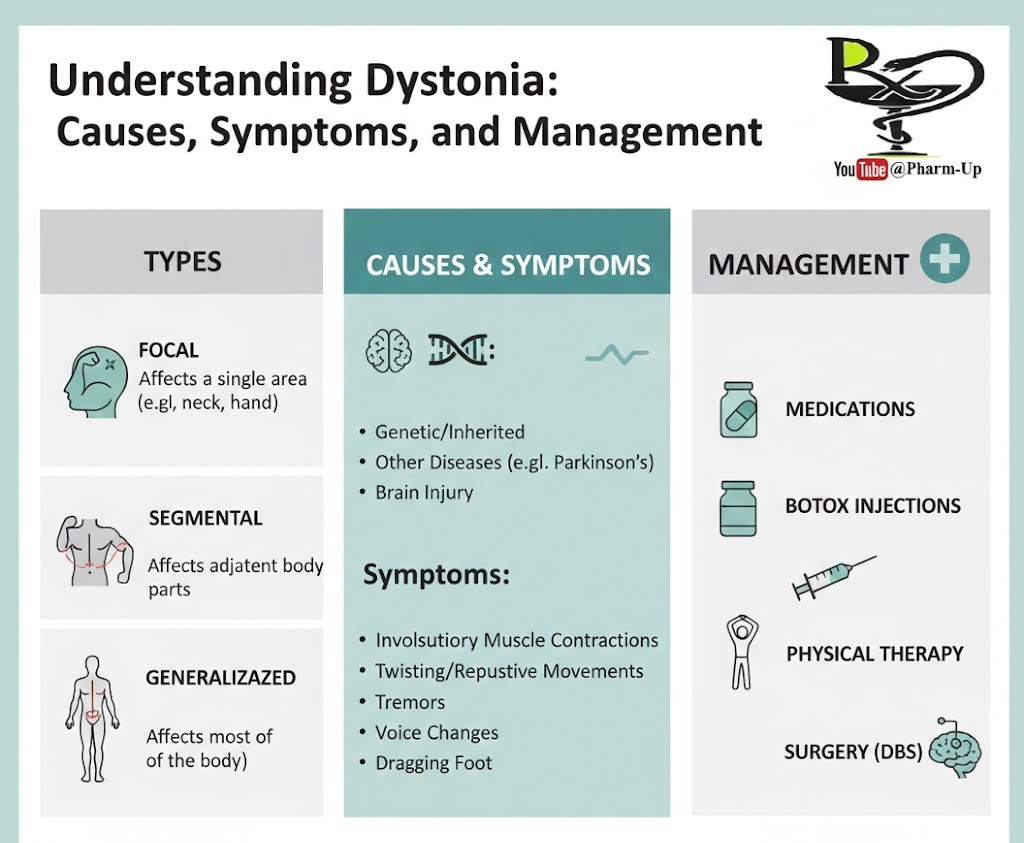
Dystonia is a complex neurological movement disorder characterized by sustained or repetitive muscle contractions. These involuntary movements often result in twisting postures or abnormal positions that can be physically taxing and, in many cases, painful.
How Dystonia Affects the Body
Dystonia is classified by the parts of the body it affects. It can be localized or widespread:
- Focal Dystonia: Affects a specific part of the body, such as the neck (Cervical Dystonia), the eyelids (Blepharospasm), or the hand (Writer’s Cramp).
- Segmental Dystonia: Affects two or more adjacent body parts.
- Generalized Dystonia: Affects most or all of the body, often involving the trunk and limbs.
Symptoms and Onset
Symptoms vary significantly depending on the individual and the muscle groups involved. Common signs include:
- A “dragging leg” or foot cramping after walking or running.
- Involuntary neck pulling or twisting.
- Uncontrolled blinking or eye closure.
- Speech and voice difficulties if the throat or tongue muscles are affected.
- Tremors or shaking in the hands or limbs.
Symptoms often follow a progression: they may initially appear only during specific actions (action dystonia) but can eventually occur while at rest.
Causes and the Brain’s Role
The exact cause of dystonia isn’t fully understood, but researchers believe it involves a malfunction in the basal ganglia. This area of the brain is responsible for processing the “messages” that initiate and regulate muscle contractions.
- Genetic/Inherited: Some individuals carry specific gene variants that predispose them to the condition.
- Acquired (Secondary): Dystonia can be caused by other factors, such as brain injury, stroke, infection, or as a symptom of other diseases like Parkinson’s.
Management and Treatment
While there is no current cure, several treatments are highly effective at reducing muscle spasms and managing pain:
- Botox (Botulinum Toxin) Injections: Often the first line of treatment for focal dystonia. It blocks the chemical messages that tell muscles to contract.
- Medications: Drugs that affect neurotransmitters (like dopamine or acetylcholine) can help regulate muscle signals.
- Physical & Speech Therapy: Targeted exercises help maintain range of motion and improve communication abilities.
- Deep Brain Stimulation (DBS): A surgical option where electrodes are implanted into the brain to regulate abnormal impulses.
About the Author