Pharm'Up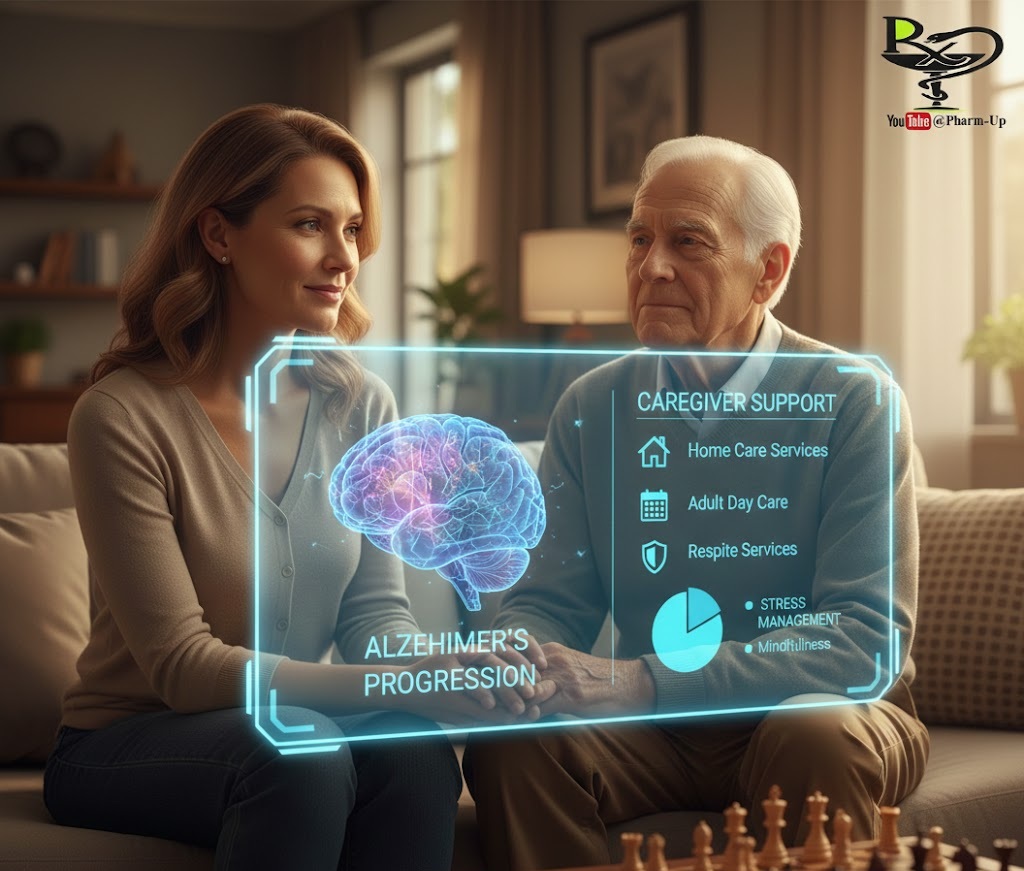
The Dual Reality of Caregiving
Caring for a loved one with Alzheimer’s Disease (AD) is a deeply personal journey. While it offers a unique opportunity to strengthen emotional bonds and find fulfillment through service, it is also uniquely demanding. Because AD alters the brain’s ability to process logic, memory, and judgment, caregivers often face challenges that go beyond physical labor, touching on deep emotional and psychological layers.
Core Responsibilities of an AD Caregiver
As the disease progresses through its stages, a caregiver’s role evolves from a “partner” to a “protector.” Key responsibilities include:
- Logistical Management: Organizing legal documents, managing finances, and ensuring bills are paid as the loved one loses the ability to handle complex tasks.
- Safety & Mobility: Modifying the home environment to prevent falls and making the difficult decision to stop them from driving when it is no longer safe.
- Health Maintenance: Coordinating a balanced diet, encouraging safe physical activity, and managing medication schedules.
- Daily Living Support: Assisting with personal hygiene (bathing, dressing) and providing constant emotional companionship to reduce the patient’s anxiety.
Preserving the Caregiver: Managing Stress
One of the most critical aspects of Alzheimer’s care is caregiver self-preservation. You cannot pour from an empty cup. To avoid burnout, it is essential to monitor your own mental and physical health.
Pro Tip: Recognize the signs of “Caregiver Stress Syndrome,” which include exhaustion, irritability, sleep problems, and feeling socially isolated.
Building Your Support Network
At a certain point, the level of care required may exceed what one person can provide. It is important to research and utilize available resources early:
| Service Type | What It Provides |
| Respite Care | Short-term relief for the primary caregiver to rest or travel. |
| Adult Day Care | Socialization and supervision for the patient during work hours. |
| Geriatric Care Managers | Professionals who help navigate the complex healthcare system. |
| Memory Care Units | Specialized wings in nursing homes designed for the safety of AD patients. |
| Palliative/Hospice | Focused on comfort and quality of life in the advanced stages. |
Planning for the Future
Education is your best tool. By learning about the stages of Alzheimer’s now, you can involve your loved one in financial and medical decisions while they still have the cognitive capacity to express their wishes.
About the Author