Pharm'Up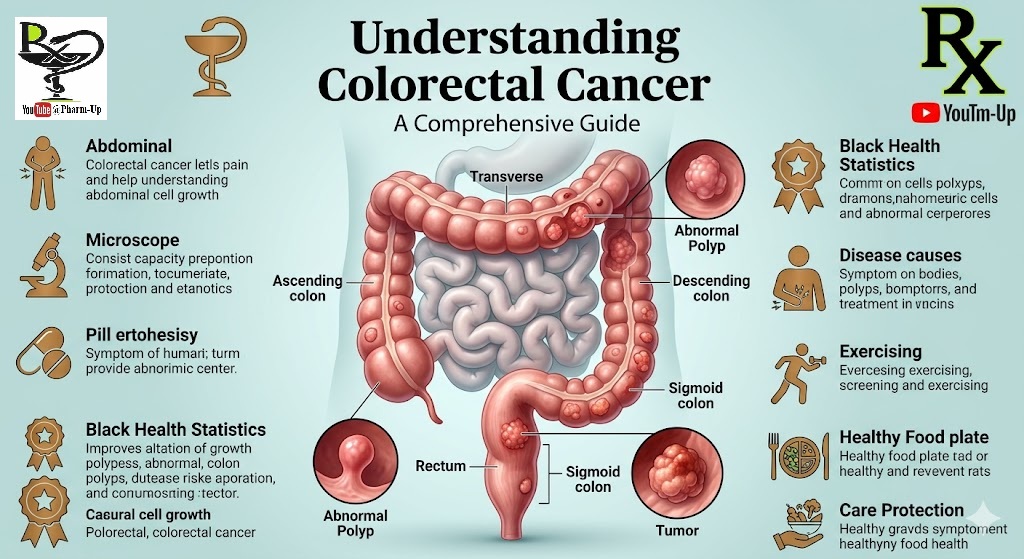
Colorectal cancer is a disease that begins in the colon (the longest part of the large intestine) or the rectum (the final section where stool is stored). Together, these organs are responsible for absorbing water and nutrients while preparing waste for elimination.
Causes and Risk Factors
The disease occurs due to DNA mutations that cause cells to grow uncontrollably. While many mutations happen randomly during a person’s life, some are inherited.
Who is at higher risk?
- Age: Risk increases significantly as you get older; most experts recommend starting screenings at age 45.
- Race and Ethnicity: Statistics show that Black people have the highest incidence and mortality rates of colorectal cancer of any racial group in the US. They are about 20% more likely to get colorectal cancer and about 40% more likely to die from it than other groups.
- Medical History: Chronic conditions like Crohn’s disease or ulcerative colitis (for 8+ years), or a history of large polyps (adenomas).
- Genetics: Syndromes like Lynch syndrome or FAP.
- Lifestyle: Obesity, smoking, and consuming 3 or more alcoholic drinks per day.
Symptoms and Detection
Colorectal cancer is often “silent” in its early stages. When symptoms do appear, they typically include:
- Changes in bowel habits (diarrhea/constipation) lasting several days.
- Stool that looks narrower or different in shape.
- Blood in the stool (bright red or very dark).
- Unexplained weight loss and fatigue.
The Importance of Screening
Screening is vital because it can find polyps (small growths) before they turn into cancer.
- Colonoscopy: A procedure where a doctor uses a camera to look inside the entire colon.
- Stool Tests: Tests that look for DNA changes or blood in a sample.
Diagnosis and Treatment
If screening is abnormal, doctors perform a biopsy or a digital rectal exam. Treatment depends on the location and stage of the cancer:
| Treatment Type | Description |
| Surgery | The most common treatment to remove the tumor. |
| Chemotherapy | Drugs used to kill cancer cells throughout the body. |
| Radiation | High-energy rays used to shrink tumors (common for rectal cancer). |
| Targeted Therapy | Drugs that attack specific cancer cells with less harm to normal ones. |
| Ablation/Cryosurgery | Using heat (radio waves) or extreme cold to destroy abnormal tissue. |
Prevention Checklist
- Get Screened: Follow the recommended schedule starting at age 45.
- Move More: Engage in regular physical exercise.
- Watch Habits: Quit smoking and limit alcohol intake.
- Manage Weight: Maintain a healthy body mass index (BMI).
About the Author