Pharm'Up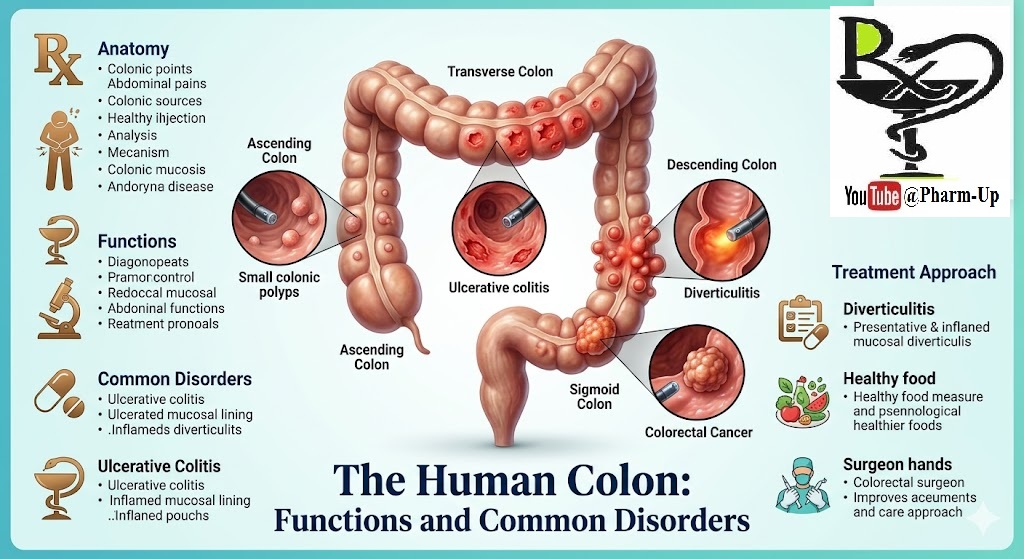
The colon, or large intestine, serves as the final processing plant of your digestive system. It is a long, muscular tube responsible for absorbing water and electrolytes from indigestible food matter, transforming waste into solid stool, and storing it until it is eliminated from the body.
Common Disorders of the Colon
When the colon is unable to function correctly, several different medical conditions may be responsible:
- Colonic Polyps: These are small clumps of cells that form on the lining of the colon. While most are harmless, over time, some polyps can develop into colorectal cancer.
- Colorectal Cancer: A serious disease where malignant cells form in the tissues of the colon or rectum. Regular screening is key to early detection.
- Ulcerative Colitis: A type of inflammatory bowel disease (IBD) that causes long-lasting inflammation and sores (ulcers) in the innermost lining of your large intestine and rectum.
- Diverticulitis: This occurs when small, bulging pouches (diverticula) that can form in the lining of your digestive system become inflamed or infected.
- Irritable Bowel Syndrome (IBS): A common disorder that affects the large intestine. Unlike IBD, it doesn’t cause inflammation or permanent damage but leads to cramping, abdominal pain, bloating, gas, and diarrhea or constipation.
Approach to Treatment
Because colonic diseases range from functional issues to life-threatening illnesses, treatments vary significantly based on the diagnosis:
- Lifestyle & Diet: Often the first line of defense for IBS or mild diverticulosis, involving high-fiber diets and hydration.
- Medication: Used to manage inflammation in Ulcerative Colitis or treat infections in Diverticulitis.
- Surgery: Necessary for removing cancerous tumors, large polyps, or severely damaged sections of the colon.
About the Author